Blue Origin's New Glenn Rocket Explodes in Fireball During Engine Test at Cape Canaveral
Jeff Bezos' towering rocket was destroyed Thursday night during a hot-fire test of its seven BE-4 engines. No one was injured, but the launch pad's gantry and one of its lightning towers appear to be gone.
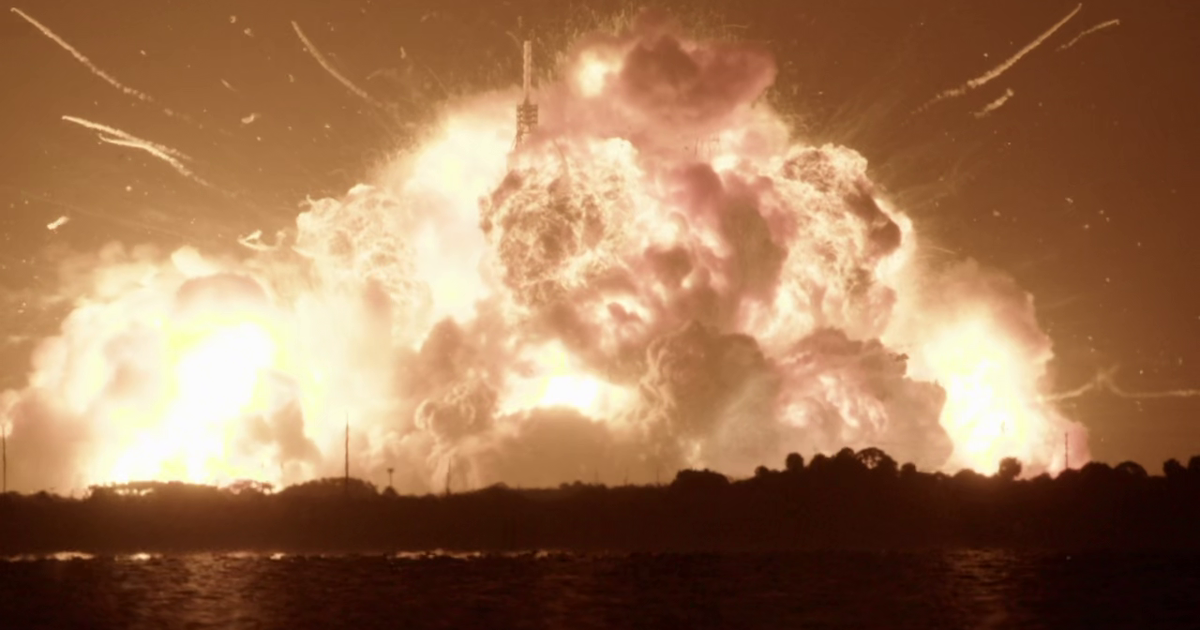
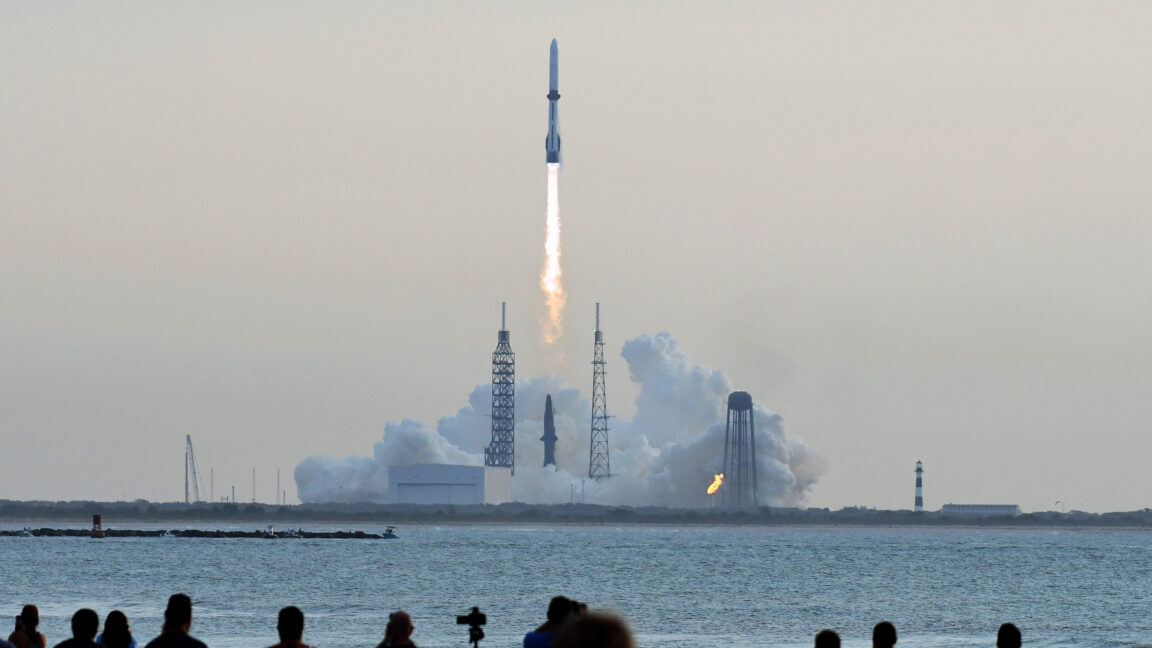
Blue Origin's New Glenn rocket exploded in a spectacular fireball on its launch pad at Cape Canaveral Thursday night, sending billowing clouds of fire, smoke and flaming debris into the sky and destroying the towering vehicle during what was meant to be a routine ground test. The blast struck around 9 p.m. EDT as engineers counted down to a brief firing of the rocket's seven methane-fueled BE-4 first-stage engines at Cape Canaveral Space Force Station.
There were no injuries. "All personnel are accounted for and safe," company founder Jeff Bezos said in a social media post after the explosion, adding that no payloads were aboard for the hot-fire test. Blue Origin's Amazon Leo internet satellites, which the company has been preparing to loft, were not on the rocket when it was lost.
As the smoke cleared, the damage to the pad appeared extensive. There was no sign of the erector-gantry used to move New Glenn from its hangar to the pad and to raise it from horizontal to vertical, and one of two tall lightning towers that frame the pad was no longer visible. The 29-story reusable rocket, developed over roughly a decade at a cost of billions of dollars, was a total loss.
New Glenn is the centerpiece of Bezos' long-running effort to compete with Elon Musk's SpaceX, whose Falcon fleet has come to dominate commercial launch. The vehicle is designed to carry heavy payloads to orbit and to be partially reusable, and Blue Origin has positioned it for national security launches, commercial satellite deployments and a role in NASA's broader exploration plans. Thursday's failure is a significant setback to that timeline.
The cause of the explosion was not immediately clear. Blue Origin said determining what went wrong — and what will be required to repair the pad and the program — will await a detailed analysis of engine telemetry and launch-pad video. Static-fire and hot-fire tests are intended precisely to catch problems before flight, but a catastrophic failure on the ground can damage critical infrastructure and stall a program for months.
The loss lands at a delicate moment for the company, which has been racing to ramp up New Glenn's flight cadence after years of development. For now, engineers face the painstaking work of sifting through data and debris to understand how a controlled test turned into one of the most dramatic explosions the Florida Space Coast has seen in years.