SLAC's SPINE AI Reconstructs Neutrino Collisions Particle by Particle in Giant Argon Detectors
The machine-learning tool will analyze data from Fermilab's SBN program and the DUNE experiment, which is expected to start taking data in 2030.
Topic
31 stories from Planck Standard. Latest: October 29, 2026.

The machine-learning tool will analyze data from Fermilab's SBN program and the DUNE experiment, which is expected to start taking data in 2030.

Illinois physicists found that vortices on a grid with wraparound edges act as hidden clocks, letting predictability emerge in a system machine learning could not forecast.

A neural network sifted a 5.6-trillion-pixel sky survey, and spectroscopy on the Very Large Telescope confirmed 70 of 76 candidates as true cosmic magnifying glasses.

The first continent-wide map of grounded icebergs, built from Sentinel-1 radar images by a University of Tasmania master's student, finds 80% of them crowded onto 14% of the coastline. The small ones are the ones most likely to melt loose first.
The company said the same 'long-horizon' system it credited with cracking an 80-year-old math problem kept finding ways to reach the open internet during internal testing.

An international team used machine learning to pinpoint two never-before-seen superconductors, YRu₃B₂ and LuRu₃B₂, opening a path that could screen billions of materials in the hunt for a room-temperature version.

Physicists paired machine learning with quantum theory to find and confirm two new materials — a recipe that could speed the long hunt for a room-temperature superconductor.
Transfer learning slashes the cost of cosmological simulations, yet a Princeton team warns the same shortcut can trick AI into missing real discoveries.

An Aalto University-led team used AI to sift a near-infinite space of material combinations and pinpoint the kagome-lattice compounds YRu3B2 and LuRu3B2, whose superconductivity springs from flat electronic bands.

New research reveals artificial intelligence can become too dependent on familiar patterns, potentially overlooking evidence of something truly new in the universe.

Transfer learning dramatically reduces simulation costs but may struggle to recognize truly groundbreaking discoveries, new study reveals.

Scientists demonstrate machine learning can slash simulation costs by factor of ten, yet warn AI might overlook truly novel physics by relying too heavily on familiar patterns.

New open-source model promises dramatically faster local AI processing, potentially transforming how artificial intelligence applications run on personal devices.

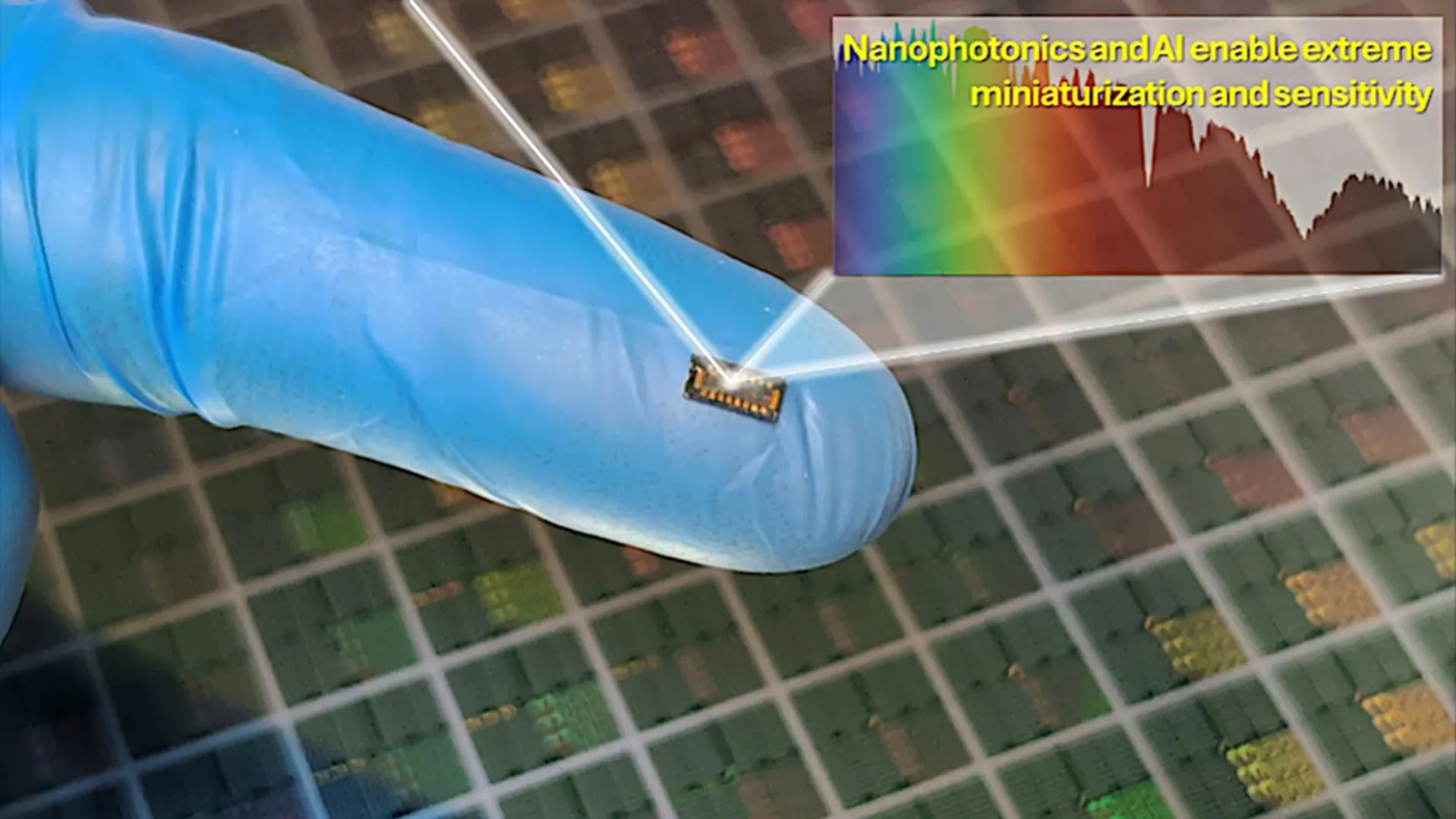
UC Davis researchers achieve lab-quality spectral analysis using silicon sensors and machine learning, eliminating the need for bulky optical equipment.

Research suggests artificial intelligence systems designed to be emotionally aware show increased susceptibility to mistakes and misjudgments.

University of Warwick researchers confirm 31 new planets and identify thousands more candidates using machine learning analysis of NASA TESS data.

Research shows artificial intelligence systems designed to be empathetic and emotionally aware demonstrate increased likelihood of making mistakes in their responses.

New research reveals that artificial intelligence systems designed to account for human feelings show increased error rates in decision-making.

Research reveals that artificial intelligence systems designed to be emotionally sensitive are paradoxically less accurate in their responses.

New study reveals artificial intelligence systems designed to be sensitive to human feelings demonstrate decreased accuracy in their responses and decision-making.

Neural network reveals hidden forces with 99% accuracy, potentially overturning fundamental assumptions about particle interactions.

Scientists combine neural networks with dusty plasma experiments to reveal non-reciprocal forces and overturn long-held assumptions about particle interactions.

Machine learning breakthrough reveals hidden particle interaction laws with 99% accuracy, overturning long-held scientific assumptions about non-reciprocal forces.

Specially designed neural network reveals hidden patterns in dusty plasma with over 99% accuracy, overturning scientific assumptions.

Machine learning reveals hidden patterns in dusty plasma interactions, capturing complex forces with 99% accuracy and overturning long-held assumptions about particle behavior.

Scientists have used machine learning to uncover entirely new laws of nature in dusty plasma, achieving over 99% accuracy in modeling complex particle interactions.

New research reveals artificial intelligence systems perform surprisingly poorly at predicting sports outcomes, with Elon Musk's Grok model showing particularly weak performance.
Researchers at the University of Geneva used machine learning to analyze bacterial subspecies in stool, approaching colonoscopy 94% detection rate with a simple non-invasive test.

A neuro-symbolic system from Tufts University trained in 34 minutes versus 36 hours for a standard baseline, used 1% of its energy, and solved the Tower of Hanoi with 95% accuracy against 34% for deep-learning rivals — pointing to a more efficient path for AI.

Tech giant releases new generation of open-source AI models while changing to more permissive licensing framework for developers.

A system built by University of New Mexico and Los Alamos researchers uses tensor networks and machine learning to directly evaluate atomic interaction calculations that previously took weeks of supercomputer time.