AI Discovers Revolutionary Physics Laws in Fourth State of Matter
Specially designed neural network reveals hidden patterns in dusty plasma with over 99% accuracy, overturning scientific assumptions.
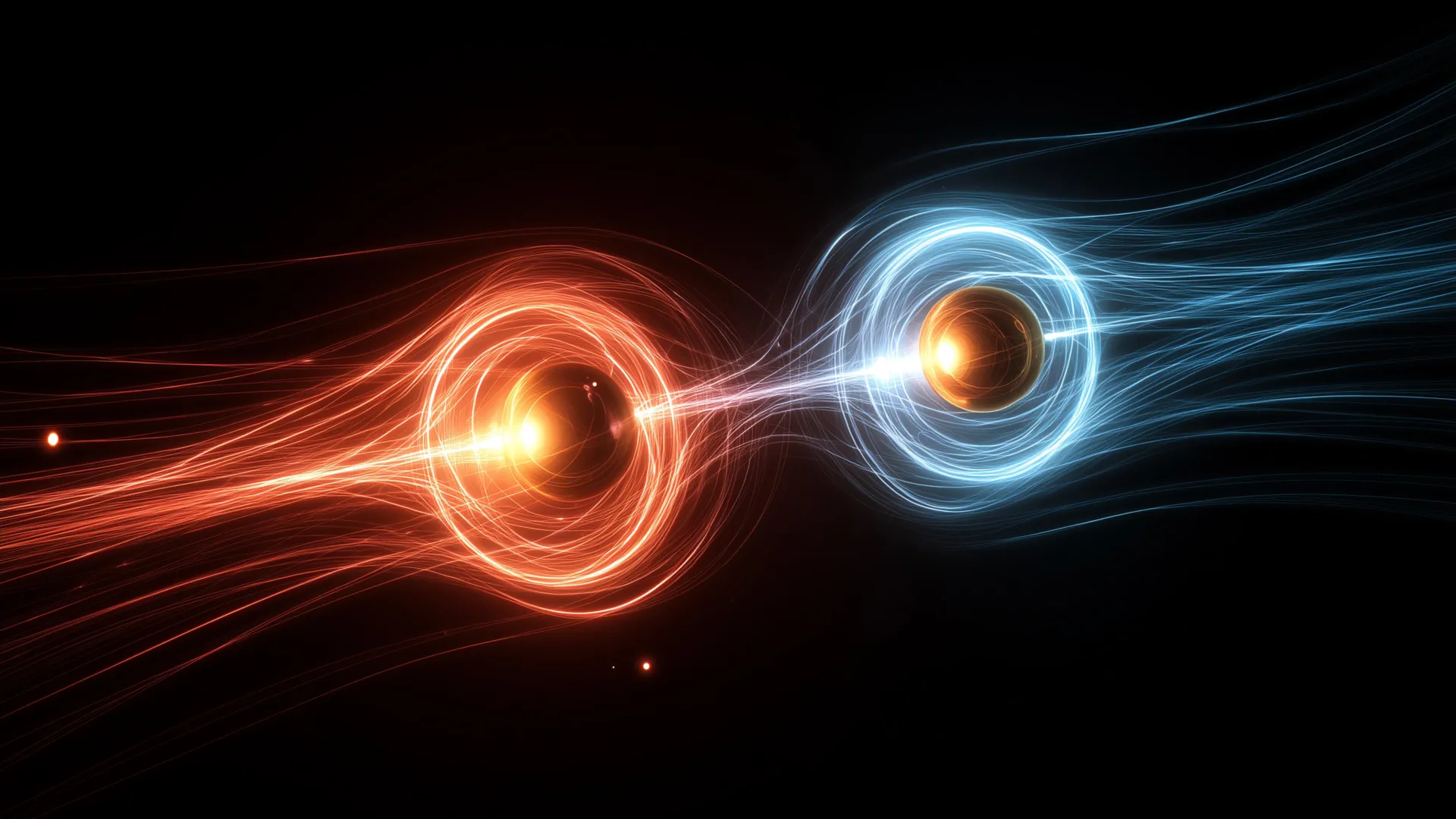
Scientists have achieved a breakthrough in using artificial intelligence to uncover entirely new laws of nature by studying dusty plasma, the mysterious "fourth state of matter" found everywhere from space to wildfires. The research team combined a specially designed neural network with precise 3D tracking of particles to reveal hidden patterns in how particles interact, capturing complex, one-way forces with remarkable accuracy and challenging long-held scientific assumptions.
The study, published in PNAS, represents a collaboration between experimental and theoretical physicists at Emory University who demonstrated that AI can do far more than analyze existing data or make predictions. "We showed that we can use AI to discover new physics," says Justin Burton, an Emory professor of experimental physics and senior co-author. "Our AI method is not a black box: we understand how and why it works. The framework it provides is also universal. It could potentially be applied to other many-body systems to open new routes to discovery."
The research focused on non-reciprocal forces in dusty plasma, where one particle influences another differently than it is influenced in return. These forces are notoriously difficult to measure and model using traditional methods. Using their AI approach, the researchers achieved an unprecedented level of accuracy, describing these forces with more than 99% precision. The system consists of ionized gas filled with interacting charged particles, including tiny grains of dust.
Ilya Nemenman, an Emory professor of theoretical physics and co-senior author, emphasized the significance of the findings: "What's even more interesting is that we show that some common theoretical assumptions about these forces are not quite accurate. We're able to correct these inaccuracies because we can now see what's occurring in such exquisite detail." The research was primarily supported by the National Science Foundation, with additional funding from the Simons Foundation.
The implications extend far beyond dusty plasma research. The team believes this AI-driven method could be applied broadly to systems made up of many interacting components, ranging from industrial materials such as paint and ink to groups of living cells. Vyacheslav Lukin, program director for the NSF Plasma Physics program, noted that "the dynamics of these complex systems is dominated by collective interactions that emerging AI techniques may help us to better describe, recognize, understand and even control."