Machine Learning Uncovers Two New Superconductors, Opening the Door to Thousands More
An Aalto University-led team used AI to sift a near-infinite space of material combinations and pinpoint the kagome-lattice compounds YRu3B2 and LuRu3B2, whose superconductivity springs from flat electronic bands.

An international team of physicists has used machine learning to discover two new superconductors, demonstrating a method that its authors say could accelerate the hunt for these prized materials from a painstaking crawl to an industrial pace.
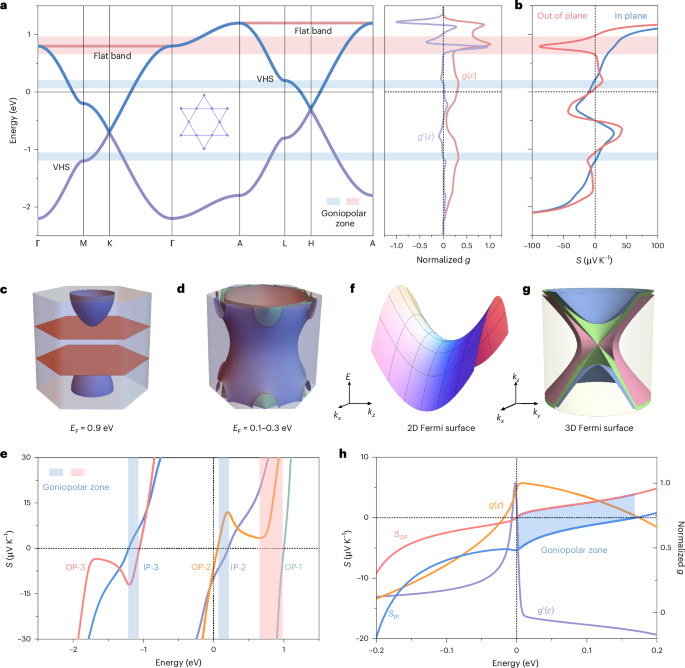
The two compounds, YRu3B2 and LuRu3B2, both belong to a family built around the kagome lattice — a geometric arrangement of atoms named for a traditional Japanese basket-weaving pattern of interlocking triangles. In these materials the ruthenium atoms form flat planar networks, and it is the electrons trapped in so-called flat bands within that structure that give rise to superconductivity, the frictionless flow of electricity that occurs in certain materials at low temperatures.
The breakthrough is less about the two specific crystals than about how they were found. Superconductivity has historically been discovered by trial, error, and intuition, with researchers testing candidate materials one at a time. The team, led by Aalto University Professor Paivi Torma and her SuperC consortium, instead used machine learning to filter what she described as a practically infinite number of possible elemental combinations, then applied a custom prescreening algorithm to the survivors before running detailed first-principles calculations on the most promising few. Only then did experimentalists synthesize and test the winners in the lab.
Those tests confirmed the predictions. Measurements of magnetization, specific heat, and electrical transport showed that both materials become superconducting, with critical temperatures of 0.81 kelvin for YRu3B2 and 0.95 kelvin for LuRu3B2 — figures far below room temperature but exactly where the calculations said they would be, validating the pipeline end to end.
The temperatures themselves are not the point. The significance lies in the demonstration that AI-guided screening can be scaled to billions of candidate materials, allowing researchers to systematically comb through the periodic table's combinatorial explosion rather than relying on luck. "Now new superconductors can be found much faster," Torma said, framing the two compounds as the first fruits of a search engine that could yield thousands more.
The ultimate prize remains a superconductor that works at room temperature and ordinary pressure. Such a material would transform how humanity generates, moves, and uses energy — eliminating the losses that plague power grids and slashing the enormous electricity and cooling demands of data centers and the information-technology sector. Researchers caution that goal is still distant, but a method that can rapidly triage vast numbers of candidates is exactly the kind of tool the field has lacked. By turning discovery into a screening problem, the Aalto-led work reframes one of condensed-matter physics' hardest searches as something computers can help brute-force.
In plain terms: scientists trained a computer to sort through a near-endless list of possible materials and it correctly picked out two brand-new superconductors, which the team then confirmed in the lab. The real prize is the method — an AI shortcut that could uncover thousands more and speed the search for a superconductor that works at everyday temperatures.