AI Transfer Learning Could Revolutionize Physics Discovery But May Miss Breakthrough Findings
Scientists demonstrate machine learning can slash simulation costs by factor of ten, yet warn AI might overlook truly novel physics by relying too heavily on familiar patterns.
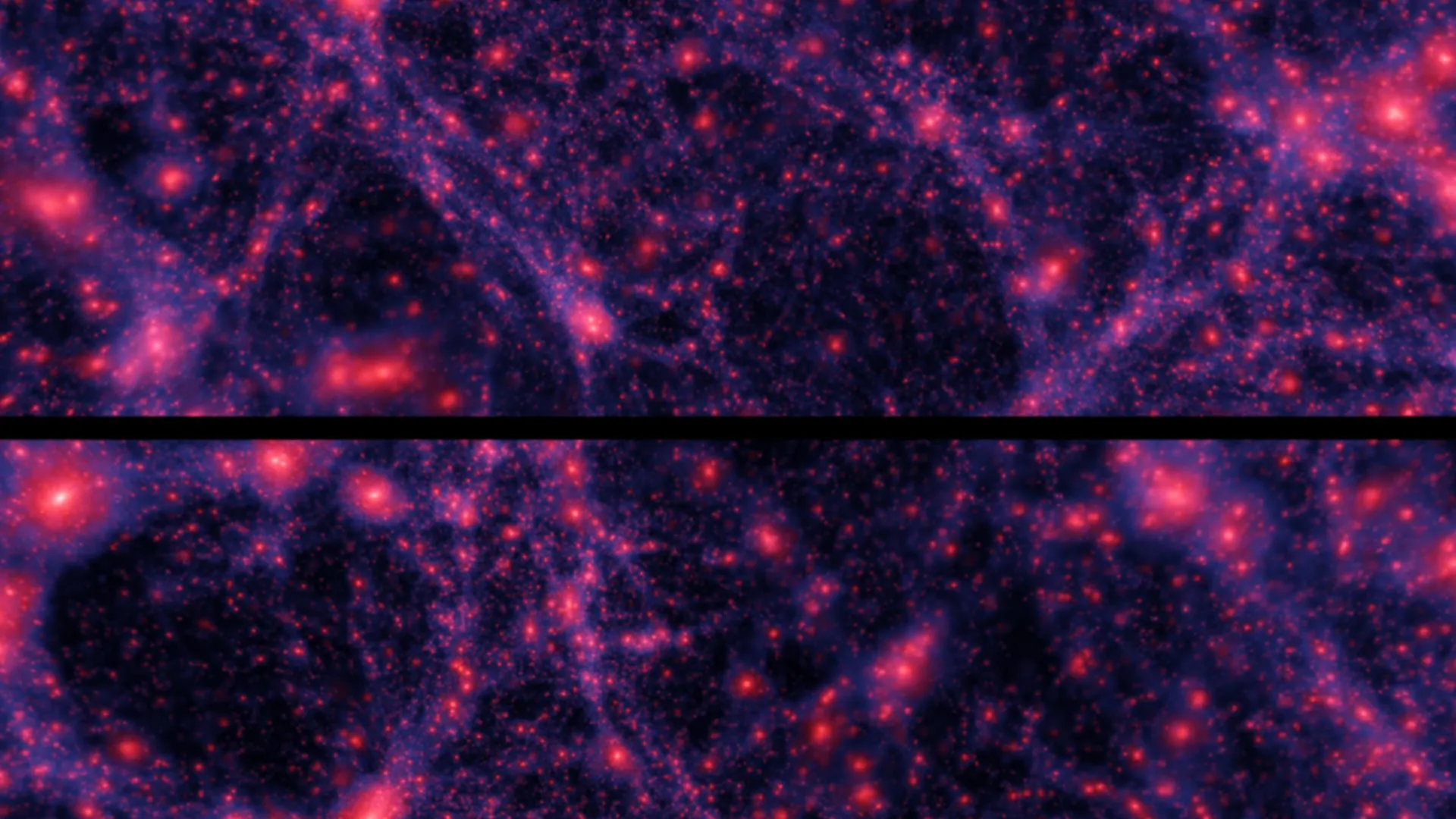
A groundbreaking study has revealed that artificial intelligence could dramatically accelerate the search for new physics in the universe, potentially reducing the need for expensive computer simulations by more than a factor of ten. However, the research published in the Journal of Cosmology and Astroparticle Physics also uncovered a surprising limitation: AI systems trained using transfer learning techniques may become so dependent on existing knowledge that they struggle to recognize genuinely revolutionary discoveries.
The research team, led by cosmologist Adrian Bayer at the Flatiron Institute and Princeton University, investigated how transfer learning could help scientists explore theories that go beyond the standard cosmological model. Transfer learning allows AI systems to apply knowledge gained from simpler tasks to more complex problems, similar to how students might read basic textbooks before tackling advanced material. In cosmology, this means training neural networks first on less computationally expensive simulations based on the standard Lambda-CDM model before moving to more sophisticated models that include potential new physics.
The results were striking in their efficiency gains. By pretraining AI systems on simpler simulations before exposing them to more complex models incorporating effects like massive neutrinos, modified gravity, and evolving dark energy, researchers achieved dramatic reductions in computational costs. The approach prevented AI systems from having to "digest everything at once," as undergraduate co-author Veena Krishnaraj explained, making the search for new physics far more practical and affordable.
However, the study also identified a concerning phenomenon called negative transfer, where prior training on familiar physics could actually hinder an AI system's ability to detect truly novel phenomena. When AI relies too heavily on patterns learned from existing physics models, it may miss evidence of something genuinely unprecedented. This represents a fundamental challenge for using machine learning in scientific discovery: the same efficiency that makes AI valuable could also cause it to overlook the most important breakthroughs.
The findings highlight both the promise and peril of AI-assisted scientific research. While transfer learning could make the exploration of new physics much faster and less expensive, researchers must carefully balance efficiency gains against the risk of missing revolutionary discoveries. The work suggests that future AI systems for scientific discovery will need to be designed with safeguards that preserve their ability to recognize truly unexpected phenomena while still benefiting from prior knowledge.