AI Could Accelerate Discovery of New Physics, But May Miss Revolutionary Breakthroughs
Transfer learning dramatically reduces simulation costs for cosmological research, yet scientists warn the technique could overlook truly novel phenomena.
Artificial intelligence is revolutionizing the search for new physics beyond the standard model of cosmology, but researchers have discovered a surprising limitation that could impact future discoveries. A new study published in the Journal of Cosmology and Astroparticle Physics reveals that while transfer learning can slash the computational costs of exploring new physics by more than tenfold, the same technique may struggle to recognize genuinely novel phenomena.
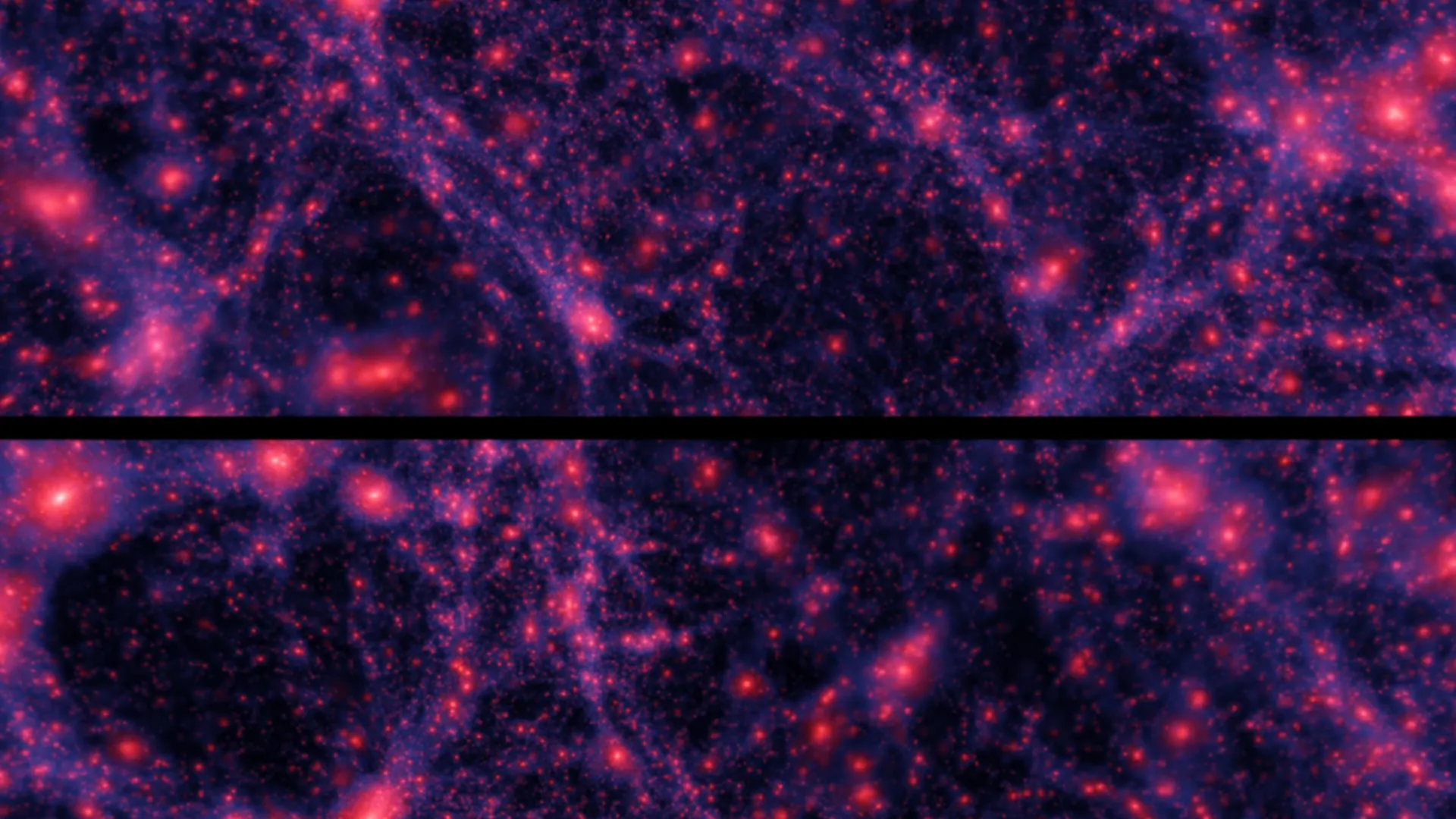
The research focused on Lambda-CDM, the current standard model of cosmology that successfully explains many large-scale features of the universe. However, scientists believe this model is incomplete, with recent observations pointing toward potential new physics involving massive neutrinos, modified gravity, and evolving dark energy. Investigating these possibilities traditionally requires generating enormous numbers of computationally expensive computer simulations.
Transfer learning offers a potential solution by first training AI systems on simpler, less expensive Lambda-CDM simulations before moving to more complex models that include new physics. "It's basically a shortcut," explains Adrian Bayer, a cosmologist at the Flatiron Institute and Princeton University who co-authored the study. "Usually people train the AI directly on the most computationally expensive simulations. What we do instead is first use simpler and less expensive Lambda-CDM simulations to give the AI an idea of what's happening."
The results were striking, with transfer learning reducing the number of expensive simulations required by more than a factor of ten in some cases. However, the study also revealed a phenomenon called negative transfer, where AI systems become too dependent on familiar patterns from their initial training. This dependence could potentially cause them to miss evidence of truly revolutionary physics that doesn't fit established models.
The findings highlight a fundamental tension in AI-assisted scientific discovery. While machine learning can dramatically accelerate research and reduce costs, scientists must remain vigilant about the possibility that AI systems trained on existing knowledge might overlook paradigm-shifting discoveries. As Bayer notes, this creates a need for careful balance between leveraging AI's efficiency and maintaining openness to unexpected scientific breakthroughs.