Scientists Give a Face to the Oldest Known Homo Sapiens, a 315,000-Year-Old Man From Morocco
A team rebuilt the Jebel Irhoud skull from fossil fragments using mostly open-source software. His estimated brain size falls well within the range of men alive today.

Researchers have digitally rebuilt the face of one of the oldest members of our species ever found, a person who lived about 315,000 years ago in what is now Morocco. The reconstruction, published in the journal Heritage by a team led by Brazilian 3D designer Cicero Moraes, stitches together scattered fossil fragments from the site of Jebel Irhoud into a single skull and then layers muscle, fat and skin on top.
The fossils have an unusual history. In the 1960s a miner working at Jebel Irhoud, a site about 100 kilometers west of Marrakesh, struck a skull with strikingly humanlike features. Archaeologists who dug further found more remains, estimated them to be around 40,000 years old, and classified the main skull, called Irhoud 1, as an African Neanderthal. In 2017 a team from the Max Planck Institute for Evolutionary Anthropology redated the site to about 315,000 years ago and concluded the fossils belonged to Homo sapiens. That pushed the origin of our species back by roughly 100,000 years and showed early modern humans lived across Africa, not just in the east.
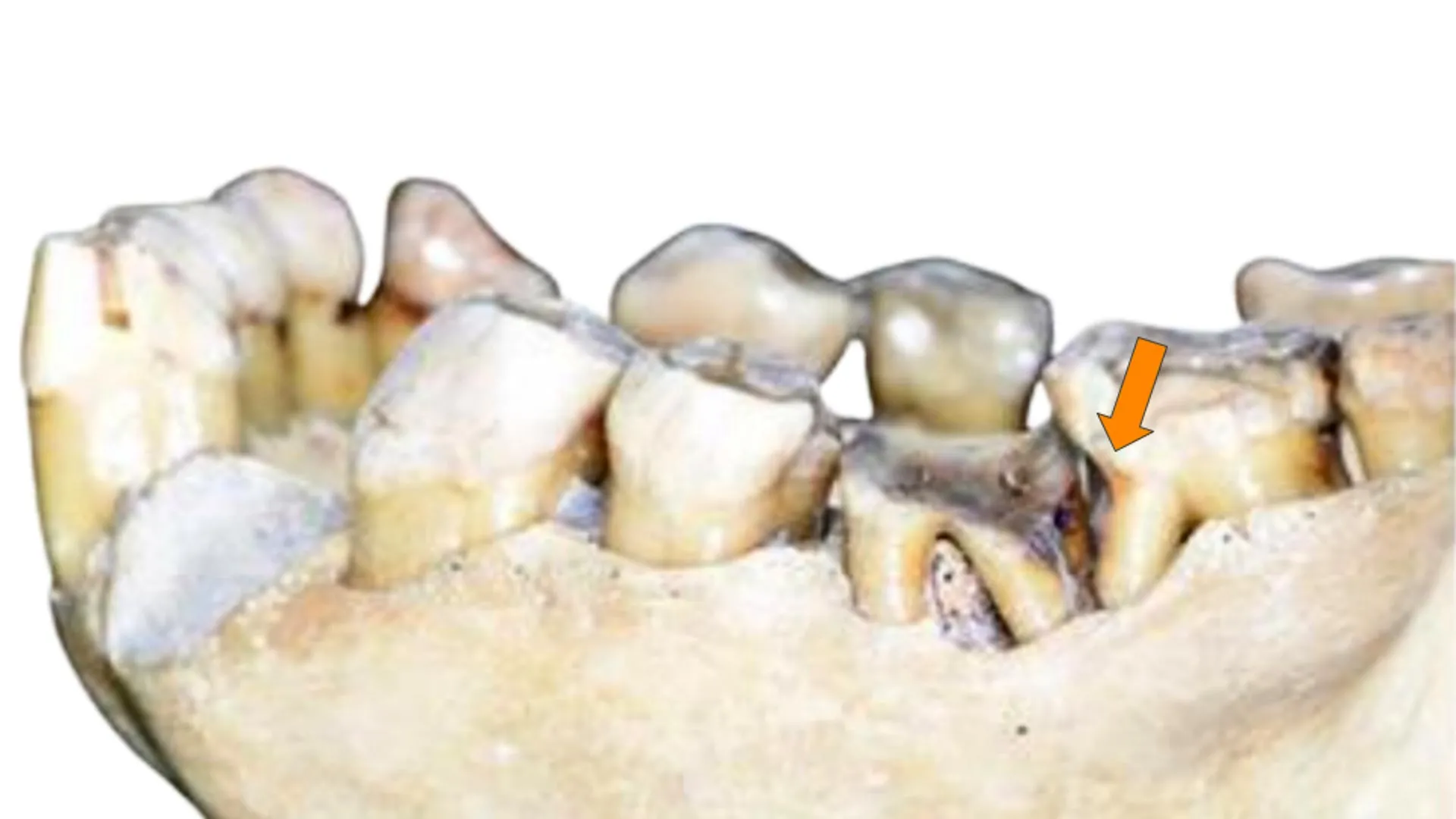
No complete face survived, so the new study had to build one. The researchers turned openly released images and video of the Irhoud 1 skull from the Max Planck Institute into a 3D digital model. They then added jaw and tooth fragments from other individuals found in the same layer of the site to make a composite skull. Using a CT scan of a modern adult skull as a template, they applied a technique called anatomical deformation, digitally stretching and bending the modern model until it matched the ancient fossil's shape.
With the skull complete, the team fit a digital model inside the braincase to create an endocast, a mold of the space the brain once filled. It measured 1,364 milliliters, which converts to an estimated brain volume of 1,230 cubic centimeters. That falls well within the normal range for men living today. The finding matters because earlier studies found the Jebel Irhoud people had modern-looking faces but longer, lower braincases than living humans, suggesting that the face evolved into its modern shape before the brain case did.
To add soft tissue, the researchers used tissue-depth measurements from modern people of African ancestry, then used anatomical templates to project features like the nose and chin. They produced two versions. One is a grayscale, hairless face that shows only what can be inferred from bone. The other is a full-color face with skin tone, hair and a beard, designed to help the public picture a real ancestor.
The authors stress that the second version involves artistic judgment. Hair and skin color don't survive in fossils, so those details follow anthropological conventions for ancient North African populations. Neither face shows exactly what any single person looked like, since the skull combines bones from more than one individual. The team says the value lies in the method: because it relies mostly on free software and openly shared scans, other researchers can apply it to incomplete fossils from around the world.