Queensland Bones Give Australia Only Its Second Named Cretaceous Bird
Tenuicruris piscanexum is known from two leg bones found near Richmond, including the first lower-leg bone of its kind from Australia's Cretaceous.
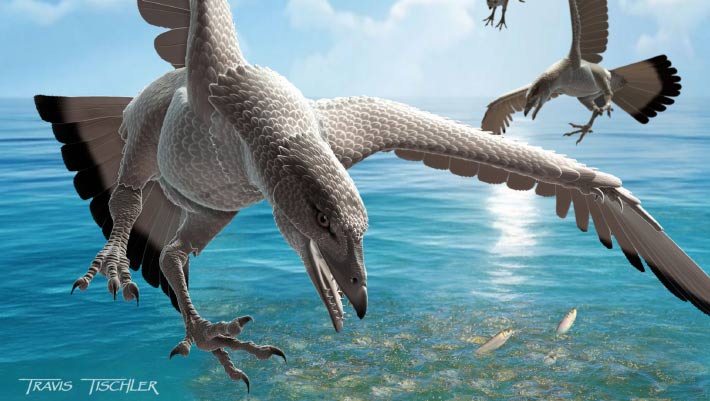
A shin bone about 6.5 centimeters long, found at a public fossil-hunting site in Queensland, has given Australia only the second Cretaceous bird ever formally named from the continent.
The new species, Tenuicruris piscanexum, lived about 105 million years ago and belonged to the Enantiornithes, a diverse group of early birds that flourished alongside the dinosaurs and died out with them. Researchers described it in the Journal of Vertebrate Paleontology, with the paper dated Sept. 28.
The bone is a tibiotarsus, the main bone of the lower leg, found at a public fossicking site about 12 kilometers northwest of the town of Richmond. A second specimen, a complete tarsometatarsus, which is the long bone of the foot, turned up at a separate site near Richmond. That makes it the first tarsometatarsus reported from Australia's Cretaceous rocks.
Both bones come from the Toolebuc Formation, the same layer that produced the only other named Cretaceous bird from Australia, Nanantius eos. That bird is known from a nearly complete left tibiotarsus found in marine deposits. The new find doubles the continent's tally of named birds from the age of dinosaurs.
The research was led by Dr. Matt White of the University of New England, with Dr. Dean Lomax of the University of Bristol among the authors. White said he recognized the specimens as bird bones immediately. "These specimens are especially significant because so few have been found in Australia," he said.
Bird bones from the Cretaceous are fragile and rarely survive, which is why a single leg bone can matter so much. Australia's record is especially thin. At the time, the Richmond area lay beneath a vast inland sea, and the Toolebuc Formation preserves a rich ecosystem that includes ichthyosaurs, pliosaurs, plesiosaurs, pterosaurs, turtles and many fish.
The researchers place the animal among the enantiornithines, many of which were small, toothed birds with a different shoulder structure from modern birds, and which are known mainly from fossils in China, Spain, Argentina and elsewhere. Finding another one in Australia adds a piece to a global picture of how early birds spread.
A tibiotarsus and a tarsometatarsus together make up most of a bird's lower leg, so the two bones let researchers compare proportions between individuals and with birds from other continents. The 6.5-centimeter shin bone suggests a small animal, in line with many enantiornithines, though one bone cannot fix its weight or how it moved.
More digging near Richmond could turn up additional bones. For now, the two leg bones are the only evidence of the animal, and researchers are cautious about what else they can say about its size or lifestyle.