Meet Kank australis: A Patagonian Raptor That Hunted Fish Like a Heron
The 70-million-year-old dinosaur paired a raptor's sickle claw with a long, flexible neck, revealing a fish-eating lifestyle unusual for its family of predators.
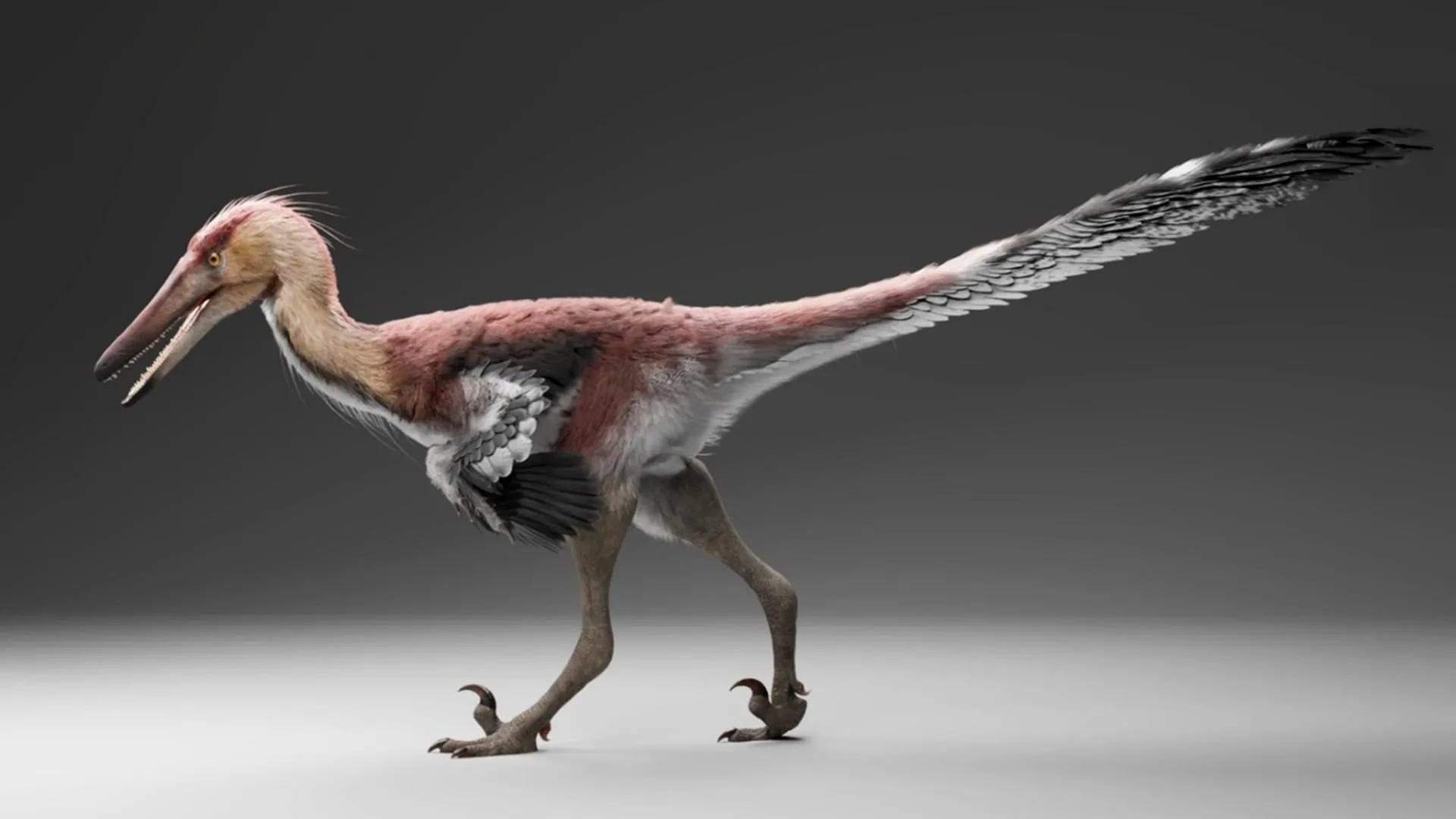
Scientists have identified a new species of raptor-like dinosaur from southern Patagonia that appears to have hunted fish using a long, flexible neck reminiscent of a modern heron — an unusual lifestyle for a group of predators better known for slashing claws and terrestrial pursuit.
The animal, named Kank australis, lived roughly 70 million years ago during the Late Cretaceous period, in what is now Santa Cruz Province in Argentina. The research, led by Dr. Matías Motta of the Museo Argentino de Ciencias Naturales "Bernardino Rivadavia" in Buenos Aires, was published in the Journal of Vertebrate Paleontology. Fossils of the dinosaur were recovered from the Chorrillo Formation at La Anita farm near El Calafate between 2018 and 2024, with a crucial neck vertebra unearthed in the final year of excavation.
Kank australis measured an estimated 2.5 to 3 meters — roughly 8 to 10 feet — and was smaller and more gracile than some of its relatives. It retained the hallmark of the raptor family: a specialized, sickle-shaped second-toe claw. But its skull bore sharp, ridged teeth, and its neck contained pneumatic, air-chambered vertebrae, a combination that points to a hunting style unlike that of its better-known cousins.
The neck was the key to the discovery. "The cervical vertebrae of Kank show special structures for muscle attachment" of the kind relevant to "herons" and their "complex neck movements," the researchers noted. That anatomy suggests the dinosaur could dart its head forward with speed and precision, snatching fish from the water much as wading birds do today — a behavior that broadens the known ecological range of the dromaeosaur lineage.
The find adds to a growing picture of the diverse predator communities that thrived in Cretaceous Patagonia in the final chapter before the mass extinction that wiped out the non-avian dinosaurs. Rather than competing head-to-head, different carnivores appear to have carved out distinct niches, with Kank australis apparently specializing in aquatic prey.
The Chorrillo Formation has emerged in recent years as one of the most productive windows into the final stretch of the age of dinosaurs in the Southern Hemisphere, yielding fossils of plant-eaters, predators and early mammals alike. Each new species recovered there helps researchers reconstruct how these ecosystems were assembled just before the asteroid impact that ended the Cretaceous.
For paleontologists, the discovery underscores how much remains to be learned from the rich fossil beds of southern Argentina, where new excavations continue to turn up species that defy tidy categories. Kank australis, with its raptor's claw and heron's neck, is a vivid reminder that the dinosaurs of the deep past experimented with body plans and behaviors far stranger than the popular image of these animals suggests.

/https://tf-cmsv2-smithsonianmag-media.s3.amazonaws.com/filer_public/3c/1f/3c1f6ba0-0486-41be-90f9-b9d192cfd29a/notebook-and-fossil.jpeg)