Gravitational Waves May Hide in Plain Sight Within Light Emitted by Atoms
Researchers propose detecting spacetime ripples by observing how they subtly change photon frequencies, potentially enabling ultra-compact gravitational wave detectors.
The physics desk
Physics from the quantum to the cosmos: particle physics, quantum computing, astrophysics, cosmology and the discoveries that change what is possible.
Researchers propose detecting spacetime ripples by observing how they subtly change photon frequencies, potentially enabling ultra-compact gravitational wave detectors.
Breakthrough observation reveals electrons behaving as nearly frictionless fluid while violating the Wiedemann-Franz law by over 200 times.
Revolutionary quantum sensing approach using Rydberg atoms could lead to ultra-compact detectors with micrometer-scale resolution.

Astronomers using LOFAR and India's uGMRT radio telescopes documented the dramatic reawakening of a dormant black hole in galaxy J1007+3540, with new plasma jets stretching nearly one million light-years.
New quantum sensing method using Rydberg atoms could dramatically improve measurement capabilities while enabling compact detector designs.
Swedish researchers develop theory for new quantum systems that protect information while enabling large-scale computing architectures.

Researchers found that plasma core rotation—not just cross-field drift—causes uneven heat loading in tokamak divertors, enabling better designs for future fusion plants.

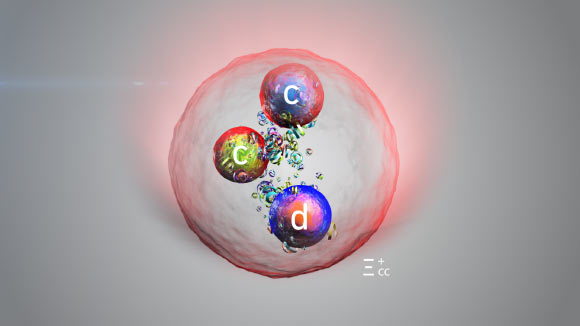
The Ξcc⁺ particle—containing two charm quarks and one down quark—was detected with a 7-sigma confidence level, the first discovery from CERN's upgraded detector.

Multiple landmark findings published in early 2026 — including spacetime quasicrystals and a new gravity anomaly — are pushing the Standard Model of particle physics to its limits.
Breakthrough quantum sensing approach using Rydberg atom chains could dramatically improve low-frequency electric field measurements with compact, highly accurate detectors.

Scientists propose revolutionary detection method that could lead to ultra-compact detectors using cold-atom systems, observing frequency shifts in emitted photons.
Breakthrough experiment directly measured how arsenic-73 captures protons to form selenium-74, shedding new light on the mysterious origin of proton-rich elements in supernovas.
Revolutionary new detection method could lead to ultra-compact gravitational wave detectors using cold-atom systems.

New theory suggests dark matter consists of multiple components that interact differently depending on their cosmic environment.
Swedish researchers propose revolutionary quantum system combining giant atoms and superatoms to protect quantum information while enabling large-scale computation.
Scientists observe exotic quantum state where electrical and thermal conduction separate by 200-fold, opening new frontiers in quantum technology.
Scientists observe exotic quantum state where electrons move collectively, breaking the Wiedemann-Franz law by more than 200 times.

A Nobel laureate-led team at STScI measured the universe's expansion rate at 73.50 ± 0.81 km/s/Mpc using a new unified statistical framework, confirming beyond doubt that the 'Hubble tension' between early- and late-universe measurements cannot be explained away.

Johns Hopkins astronomers used JWST to detect 150 Earth masses of heavy elements in the 15-Jupiter-mass exoplanet's atmosphere — a chemical signature of disk accretion that definitively separates it from brown dwarfs formed by stellar collapse.
Indian Institute of Science researchers found that at graphene's 'Dirac point,' electrons stop behaving as individual particles and instead flow collectively like a near-perfect fluid — decoupling electrical and thermal conductivity in a way classical physics says is impossible.
A Monash University team published breakthrough research in Nature Communications showing that deliberately disordered nanostructured metasurfaces outperform orderly ones, achieving broadband achromatic lensing, polarization imaging, and 9 other optical functions simultaneously in a single flat device.
International astronomers led by Stockholm University's Oskar Klein Centre discovered SN 2025mkn, a Type II supernova 9 billion light-years away whose light is bent and amplified by an entire foreground galaxy, creating a natural telescope of unprecedented power.
Researchers found that the spinning motion of plasma inside a tokamak — not just cross-field particle drift — drives the stubborn exhaust asymmetry that has defied simulation for decades, clearing a key path for commercial fusion.
Breakthrough experiment directly measures key nuclear process that creates selenium-74 in supernova explosions, cutting uncertainty in stellar models by half.
Researchers suggest a bold new theory to explain why gamma ray signals appear in the Milky Way but not in smaller galaxies, potentially requiring multiple dark matter components.
Researchers suggest gravitational waves may subtly alter the frequency of light emitted by atoms, potentially enabling ultra-compact detectors using cold-atom systems.

Metallic sodium nanoparticles 10 times larger than any previously tested produced clear quantum interference patterns in experiments published in Nature, pushing the boundary of where quantum mechanics visibly applies.

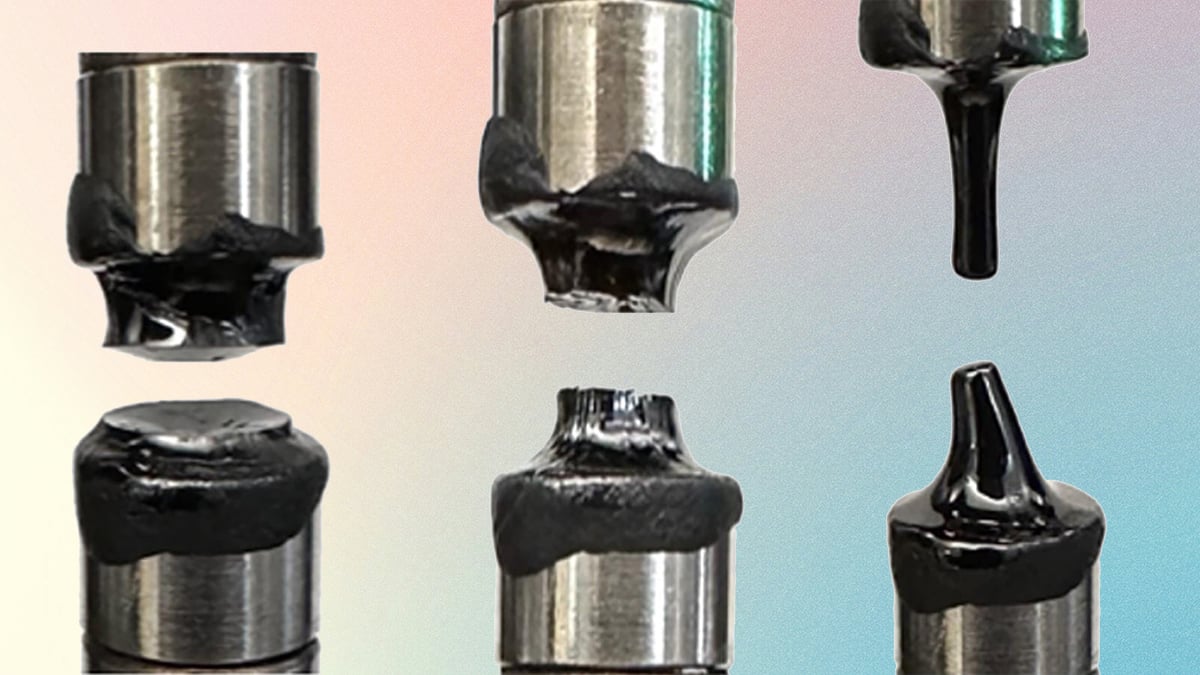
Drexel University researchers found that ordinary liquids fracture at a 'critical stress' of about 2 megaPascals, breaking at speeds of up to 1,500 meters per second in a phenomenon governed by viscosity rather than elasticity.
A 45-scientist team at Michigan State's FRIB measured the arsenic-73 + proton reaction that occurs inside supernovae, cutting uncertainty in p-nuclei abundance predictions by 50% and advancing a 60-year-old astrophysics mystery.
Stockholm University researchers suggest that gravitational waves subtly alter light emitted by atoms, offering a path to ultra-compact detectors using cold-atom systems.