Astronomers Achieve Most Precise Hubble Constant Measurement Ever — and the Universe's Biggest Mystery Just Got Deeper
A Nobel laureate-led team at STScI measured the universe's expansion rate at 73.50 ± 0.81 km/s/Mpc using a new unified statistical framework, confirming beyond doubt that the 'Hubble tension' between early- and late-universe measurements cannot be explained away.

Astronomers have achieved what may be the most precise single measurement of the universe's expansion rate in history — and in doing so, have confirmed that one of cosmology's deepest mysteries is real, stubbornly persistent, and almost certainly pointing toward physics that does not yet exist.
A research team led by scientists at the Space Telescope Science Institute (STScI), including Nobel Laureate Adam Riess, published results Tuesday in the journal Astronomy & Astrophysics establishing a new measurement of the Hubble constant at 73.50 ± 0.81 kilometers per second per megaparsec. The measurement, derived from a novel unified statistical framework combining cosmic microwave background observations of the early universe with direct measurements of nearby galaxies and supernovae, represents the smallest uncertainty ever achieved for this number — and it solidifies the so-called "Hubble tension" beyond any reasonable doubt.
The Hubble constant describes how fast the universe is currently expanding: for every megaparsec of distance between galaxies (about 3.26 million light-years), they are receding from each other at 73.50 kilometers per second in this new measurement. For decades, two fundamentally different methods of measuring this value have returned consistently different answers. Early-universe measurements based on the cosmic microwave background — the faint afterglow of the Big Bang, mapped in exquisite detail by the Planck satellite — yield a value of approximately 67 km/s/Mpc. Direct measurements of relatively nearby stars, galaxies, and supernovae yield values consistently near 73. The gap between these two numbers, roughly 9 percent, has resisted every attempt to explain it away as measurement error or systematic bias.
"Confirming the Hubble tension makes it even more important for us to reexamine the foundations of the current cosmological model and to identify any new phenomena that might modify the evolution of the universe," Riess said. The list of candidate explanations that theorists are seriously investigating is long and includes exotic forms of dark energy that behaved differently in the early universe than they do today, light particles called "early dark energy" that existed in the first seconds after the Big Bang and subsequently decayed, and modifications to the standard model of particle physics that would change the rate at which the universe expanded through its first several hundred thousand years.
The unified framework used to achieve the new measurement represents a methodological advance as significant as the number itself. Rather than relying on a single calibration "distance ladder" — the traditional chain of progressively less direct measurement steps used to gauge ever-more-distant objects — the STScI team developed a statistical architecture capable of simultaneously incorporating multiple independent measurement techniques, each with its own error sources, reducing both random and systematic uncertainties that have historically allowed skeptics to attribute the tension to flawed methodology. The approach is explicitly designed to be extended to data from the Vera C. Rubin Observatory's Legacy Survey of Space and Time, which will discover millions of new supernovae over the coming decade, potentially tightening constraints on the Hubble constant to below half a percent.
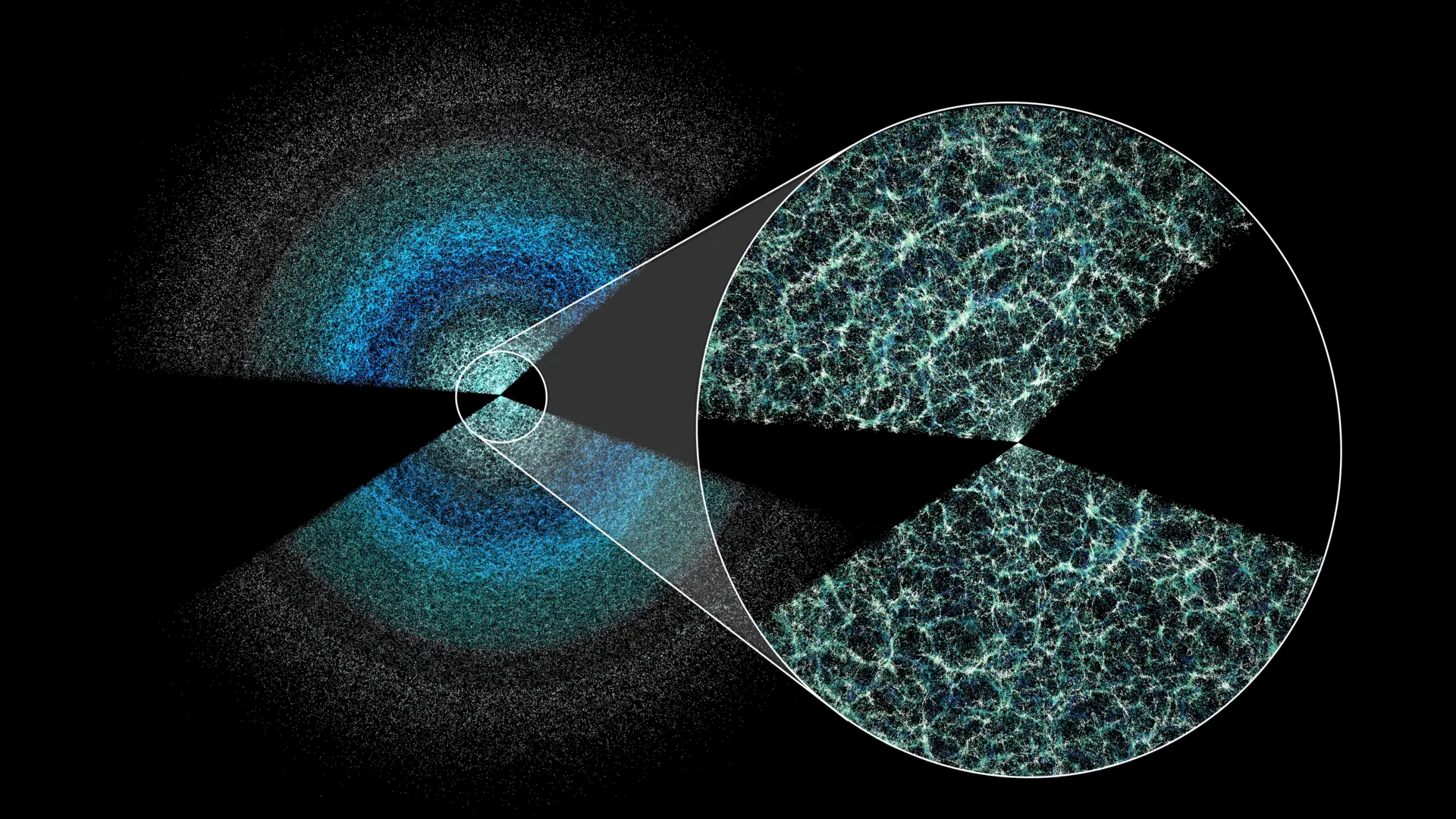
The implications of confirming the Hubble tension extend beyond cosmology into fundamental physics. The standard cosmological model, known as Lambda-CDM (Lambda Cold Dark Matter), has successfully explained the large-scale structure of the universe — the distribution of galaxies, galaxy clusters, and cosmic filaments — for nearly three decades. A confirmed and irresolvable discrepancy between early-universe and late-universe expansion rates suggests that the model is incomplete, requiring new physics to reconcile the two epochs. "A new mystery emerges from this measurement," the authors wrote, "but mysteries in physics are the engine of discovery."
For the non-specialist, the significance is perhaps best understood through analogy: imagine measuring the speed of a ball thrown from one end of a room using two different instruments — one calibrated to the laws of physics at the moment of the throw, and one calibrated to current measurements of the ball in flight — and finding that the two instruments consistently disagree, no matter how carefully you recalibrate them. The universe itself appears to be the ball, and the Hubble tension is the disagreement that won't go away. If the new measurement holds up to further scrutiny, it may represent one of the most consequential experimental results in the history of physics.