U.S. Sending a Third Aircraft Carrier and Up to 10,000 More Troops to the Middle East
The USS Theodore Roosevelt and Marines aboard the USS Makin Island head toward Iran as the U.S. blockade continues and Trump says new strikes are 'possible' after the midterms.
The Pentagon is sending a third aircraft carrier strike group and an amphibious force of several thousand Marines and sailors to the Middle East, adding roughly 9,000 to 10,000 troops to a region where the United States is already in a standoff with Iran, a U.S. official confirmed Thursday.
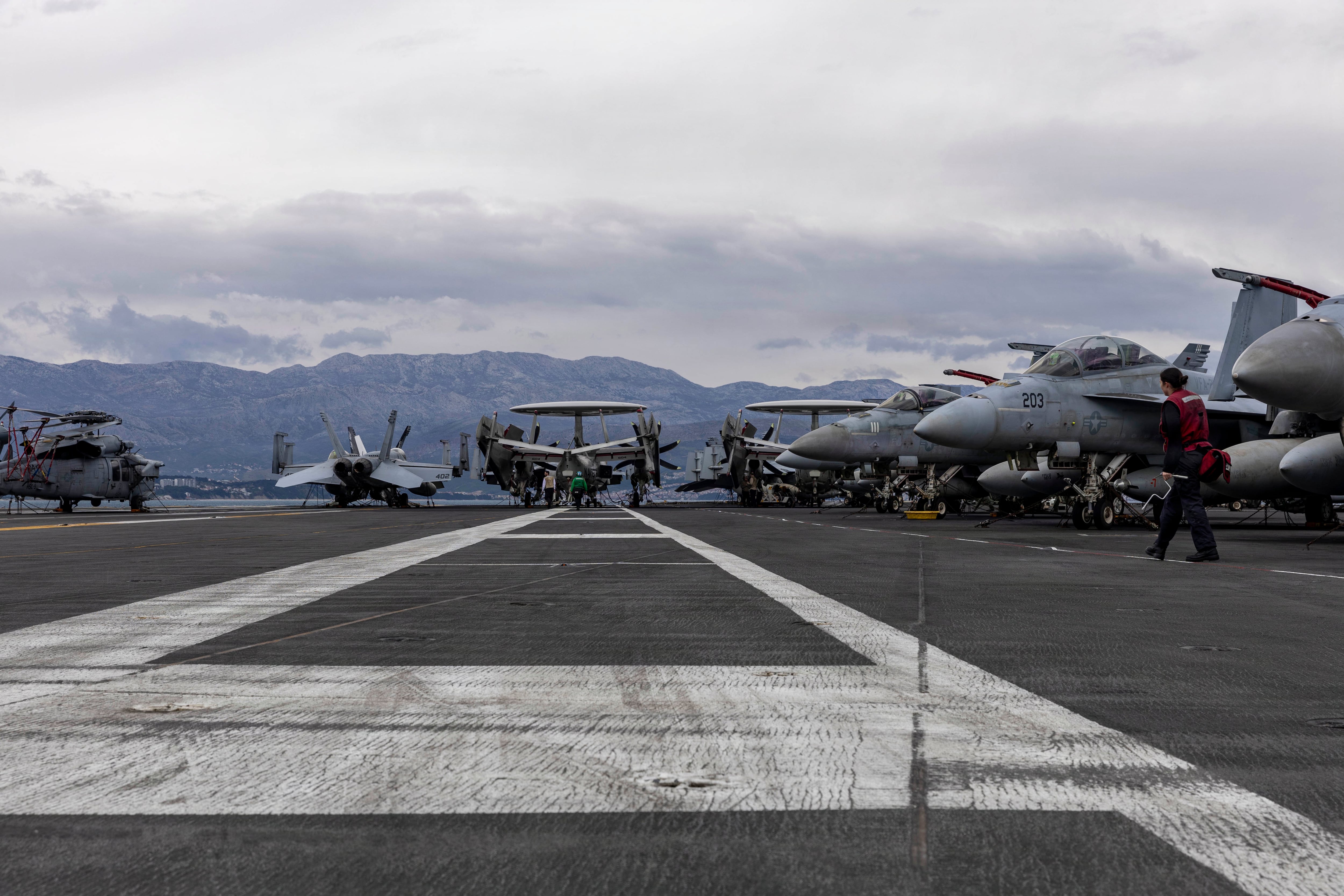
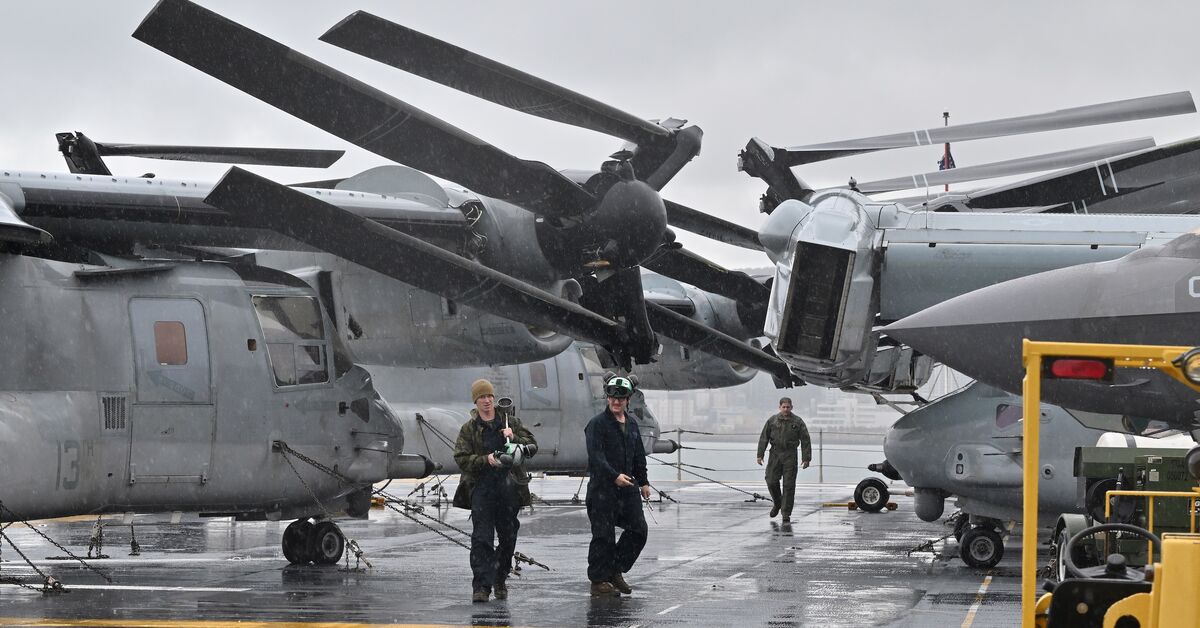
The carrier is the USS Theodore Roosevelt, which was dispatched across the Pacific on Sunday. A day later, the assault ship USS Makin Island left Naval Base San Diego carrying the 13th Marine Expeditionary Unit, about 2,200 Marines, as part of an Amphibious Ready Group. The Roosevelt will need at least two to three weeks to reach the Arabian Sea, where it is expected to relieve another carrier. The new forces are due to arrive by the end of November.
If the carrier USS George Washington is still in the theater when the Roosevelt arrives, the Navy will have three carrier strike groups in the region at once for the first time since April. More than 50,000 U.S. troops and about 20 Navy vessels are already concentrated in the Middle East.
The deployment comes as the U.S. blockade of Iran shows no sign of ending and talks between Washington and Tehran have stalled. On Monday, Secretary of State Marco Rubio ordered Iran's foreign minister, Abbas Araghchi, and his delegation to leave the United States after negotiations broke down. President Donald Trump has rejected Tehran's latest proposal, a seven-day ceasefire with a phased reopening of the Strait of Hormuz.
Trump has kept the threat of renewed military action alive. He told Fox News he believes the United States is "going to win the war" with Iran "very soon," and he has suggested in other remarks that a return to strikes is "possible," though he would rather not spell out his plans before November's midterm elections.
Washington has paired the military buildup with financial pressure. This week the Treasury Department sanctioned Iran's rail and automotive conglomerates, an effort it described as draining what remains of Tehran's revenue.
Inside Iran, the political picture is tense. President Masoud Pezeshkian has asked reformist activists to speak publicly about the need for negotiations with the United States, even as hardline factions press for a harder line. Iranian officials have said they are prepared for the war to resume.
For the Pentagon, the deployment is a way to keep a heavy force in place without pulling ships that have been at sea for months. It also gives the White House more options if talks fail. Military planners have long said that sustained operations near Iran strain carriers, crews and munitions stockpiles, and the arrival of fresh ships lets the Navy rotate tired units home.
The timing matters politically. Trump has tied any decision on new strikes to the period after the midterms, and the ships are due to arrive just weeks later, which would give him a larger force on hand when that decision comes.