Physicists Show No Light-Bending Material Can Ever Be Fully Transparent
A theory preprint finds a quantum process always converts some light into sound, setting a hard limit on clarity even for an ideal material.
No material that bends light can be perfectly transparent, according to a theoretical result that sets a fundamental limit on how clear anything can ever be. The finding comes from physicists Alberto Nicolis, Federico Piazza and Angelo Esposito, whose preprint appeared on arXiv on Oct. 8, 2026 and was described by Scientific American on Nov. 7.
Engineers have long worked around the ordinary reasons materials lose light. A perfectly clear material would need to be cold, so light is not lost to the jiggling of molecules, and chemically inert, so that no reactions or electric currents soak up photons. The new work asks what is left once all of those losses are removed, and finds that something always remains.
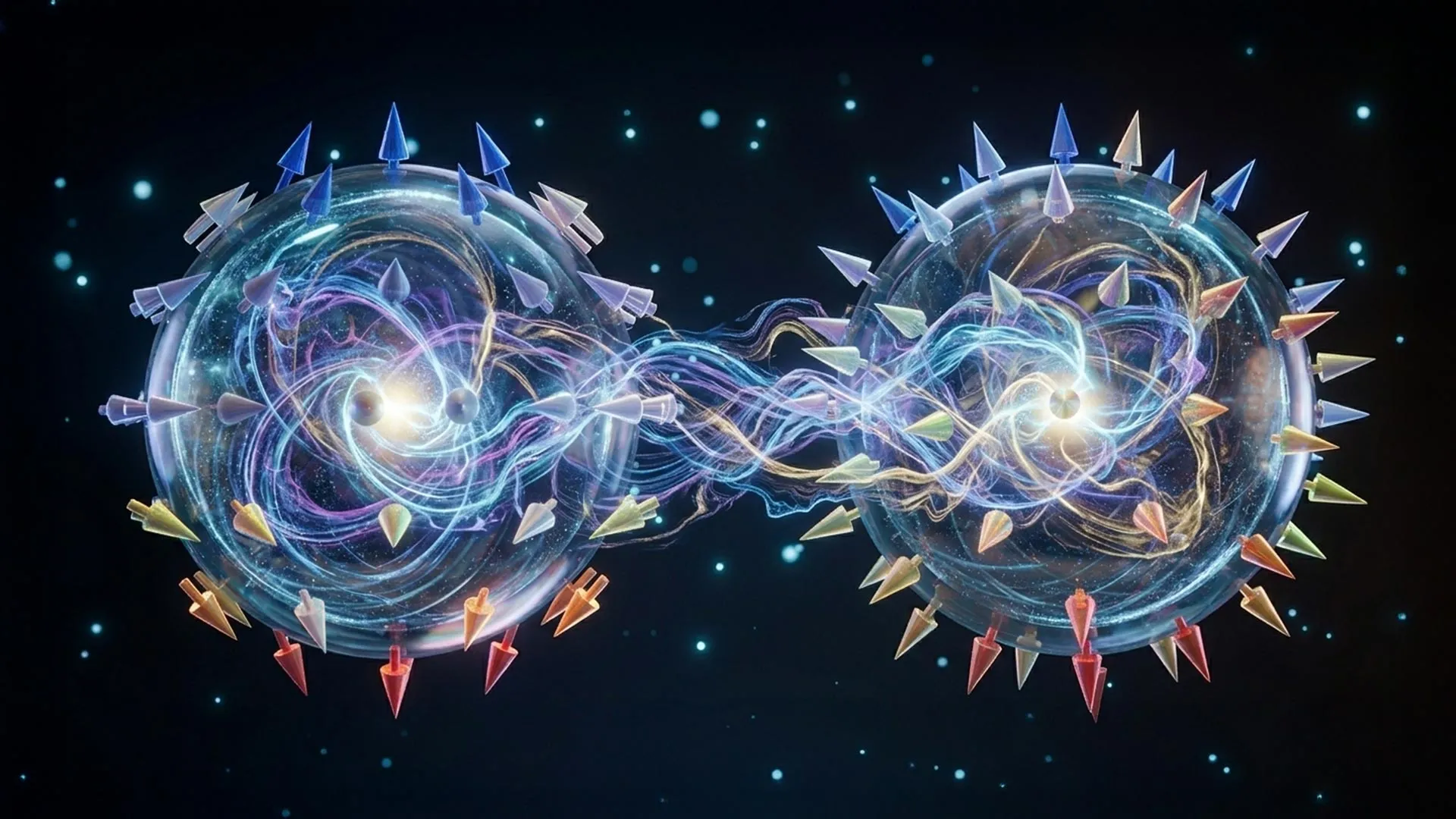
The answer is a quantum process that turns light waves into sound waves. Esposito arrived at it while thinking about a hypothetical particle called a dark photon moving through superfluid helium, the frictionless liquid that forms a few degrees above absolute zero. A dark photon striking an atomic nucleus in the helium would give it a kick. Ordinary photons, he realized, should behave the same way. "In interacting with one of the nuclei, it gives it a kick," Esposito said.
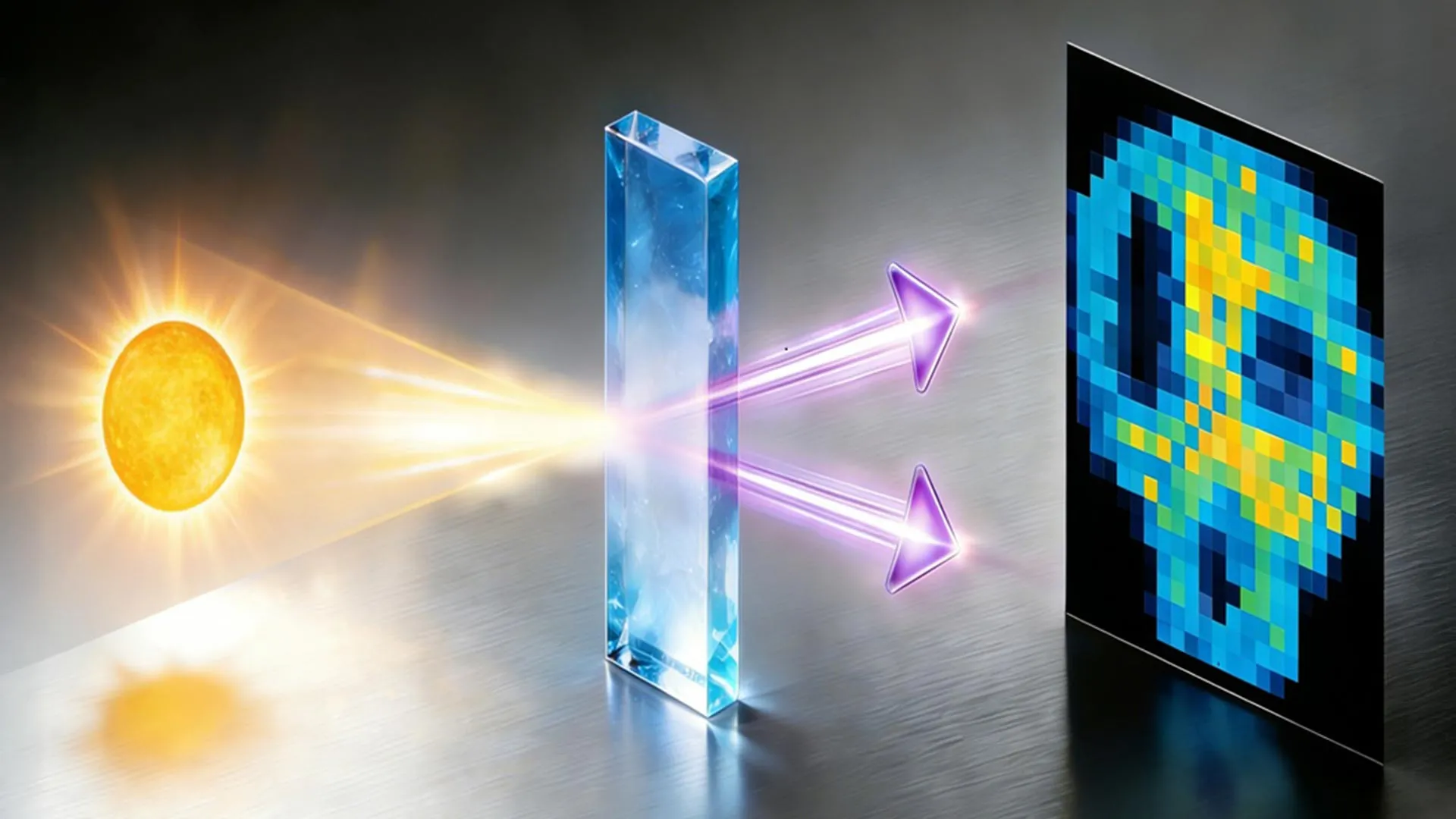
Each kick takes a little energy from the light and turns it into vibrations in the material, which is sound at the atomic scale. Repeated over distance, those kicks drain the photons until the light is too faint to detect.
The effect is tiny. In the idealized superfluid the authors considered, light could travel a distance equal to Earth's diameter before it noticeably dimmed. Still, it is not zero, and Esposito said the limit is not special to helium. "I think it's universal for all materials," he said.
The result puts a floor under efforts to build ultra-clear materials. Scientific American noted that gels developed by Ivan Smalyukh at the University of Colorado Boulder bend light almost as little as air does, yet a layer a foot thick would still transmit very little light. Real-world materials fall far short of the new theoretical ceiling, which applies to a perfect, frictionless case.
Borna Salehian, a physicist at ETH Zurich who was not involved in the work, put the value of such results plainly: "In theoretical physics, we look for fundamental limitations set by nature." The paper is a preprint and has not been peer reviewed, and Scientific American's account does not say it has been published in a journal.
The takeaway is a clean rule: whenever light has to bend inside matter, matter gets to push back, and that push costs the light a little energy.