Fossil Hunters in India Unearth Ceratocaudia, a Pint-Sized Jurassic Cousin of the Giant Sauropods
The 23-foot dinosaur, pieced together from more than 180 bone fragments in Gujarat, pushes the origins of a lineage that later produced titans like Brachiosaurus back by tens of millions of years.
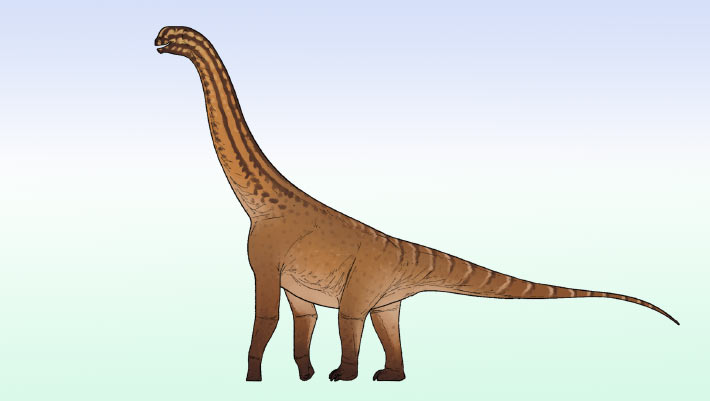
Paleontologists in western India have unearthed a previously unknown dinosaur that is rewriting the early history of one of the most iconic groups of animals ever to walk the Earth. Named Ceratocaudia antiqua, the creature was a comparatively diminutive relative of the colossal long-necked sauropods, and it lived during the Middle Jurassic, roughly 170 million years ago.
The fossils were recovered from the Kaladongar Formation in the Kachchh Basin, on the Khadir Uplift of Gujarat. A team from the Indian Institute of Technology Bombay and the Birbal Sahni Institute of Palaeosciences excavated more than 180 skeletal fragments — including vertebrae, ribs and pieces of the fore- and hind limbs — all thought to belong to a single individual. Their analysis was published online on July 16 in the Journal of Vertebrate Paleontology.
At an estimated 7 meters, or about 23 feet, long, Ceratocaudia was modest by sauropod standards, a far cry from later giants such as Diplodocus, Brachiosaurus and the school-bus-dwarfing Argentinosaurus. But it belonged to the same broad lineage, the neosauropods, and its age makes it one of the earliest members of that group known from anywhere in the world.
That antiquity is the discovery's real significance. By demonstrating that neosauropods were already established in what is now India during the Middle Jurassic, the find pushes back the known global spread of the lineage by tens of millions of years. It bolsters a growing view among researchers that the Indian subcontinent — then part of the southern supercontinent Gondwana — served as an important cradle and dispersal hub for these dinosaurs.
The animal's name nods to distinctive features preserved in its tail bones, which helped the team distinguish it from other early sauropodomorphs. Such anatomical details are crucial for untangling the branching family tree of a group whose members would eventually become the largest land animals in the history of life.
Because India was drifting as an isolated landmass for much of the age of dinosaurs, its fossil record offers a distinctive window on how sauropods evolved in relative isolation before spreading across the globe. Finds like Ceratocaudia help scientists test competing ideas about where key dinosaur groups originated and how they migrated between the fragments of the breaking-apart supercontinent.
For India, the discovery underscores the scientific richness of the Kachchh region's Jurassic rocks, which have yielded a string of important fossils in recent years. Researchers say further excavation at the site could reveal still more about how the ancestors of the planet's biggest dinosaurs first rose to prominence.

/https://tf-cmsv2-smithsonianmag-media.s3.amazonaws.com/filer_public/3c/1f/3c1f6ba0-0486-41be-90f9-b9d192cfd29a/notebook-and-fossil.jpeg)
