A Fossil That Sat in a Drawer for 40 Years Is Antarctica's First Dinosaur Bone
An 82-million-year-old tail vertebra collected on James Ross Island in 1985 has been identified as a titanosaur — the first dinosaur bone ever found on the continent.
/https://tf-cmsv2-smithsonianmag-media.s3.amazonaws.com/filer_public/3c/1f/3c1f6ba0-0486-41be-90f9-b9d192cfd29a/notebook-and-fossil.jpeg)
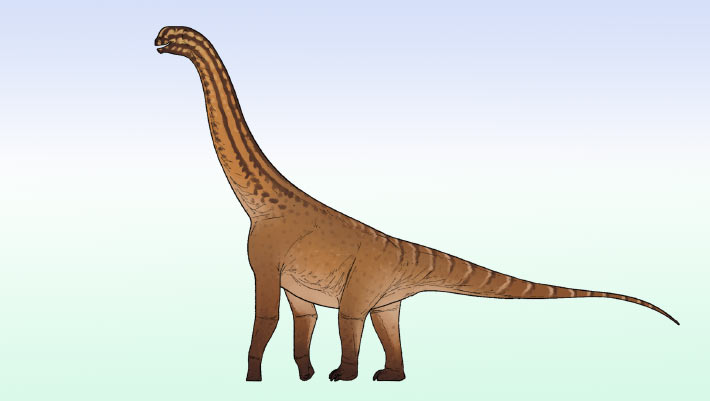
A fossil that spent 40 years forgotten in a museum drawer has turned out to be a small piece of scientific history: the first dinosaur bone ever found in Antarctica. Researchers reported in the journal Nature that a 10-centimeter tail vertebra, collected on James Ross Island in 1985, belonged to a titanosaur — a member of the group of long-necked, plant-eating sauropods that once roamed every continent on Earth.
The bone was picked up in December 1985 by the late British geologist Mike Thomson during an expedition to the icy island off the Antarctic Peninsula. In his field notebook, Thomson jotted down only that he had found the "vertebra of large reptile," and for decades the specimen was catalogued as a marine reptile and stored, unremarkable and unstudied, in the collections of the British Antarctic Survey.
It was paleontologist Mark Evans who eventually recognized what generations of researchers had missed. Reexamining the fossil, scientists identified a telltale combination of features — a hollow at one end and a rounded bump at the other — that is unique to titanosaurs. That signature settled the identification, transforming a misfiled curiosity into the earliest evidence of dinosaurs on the frozen continent.
The animal it came from lived roughly 82 million years ago, during the Late Cretaceous, and was modest by titanosaur standards, an estimated 23 feet long — smaller than the towering, bus-sized giants the group is famous for. The find represents only the second sauropod body fossil recovered from Antarctica and the first bone from any dinosaur, filling a conspicuous gap in a continent whose thick ice sheets make fossil hunting extraordinarily difficult.
The discovery reinforces the picture of a very different Antarctica tens of millions of years ago, when the region was warmer, ice-free and cloaked in forests capable of supporting large land animals. It also underscores how much scientific treasure may still be hiding in plain sight inside museum cabinets. A specimen collected before many of today's paleontologists were born, dismissed and shelved for four decades, needed only a fresh set of eyes to rewrite what researchers know about dinosaurs at the bottom of the world.