The Century-Old Puzzle of Water in Tiny Spaces Is Solved — and It's About Pressure, Not Magic
Cambridge physicists used quantum-accurate simulations to show that water squeezed into nanoscale gaps isn't inherently more reactive; crushing internal pressures explain the effect that has baffled labs for a decade.
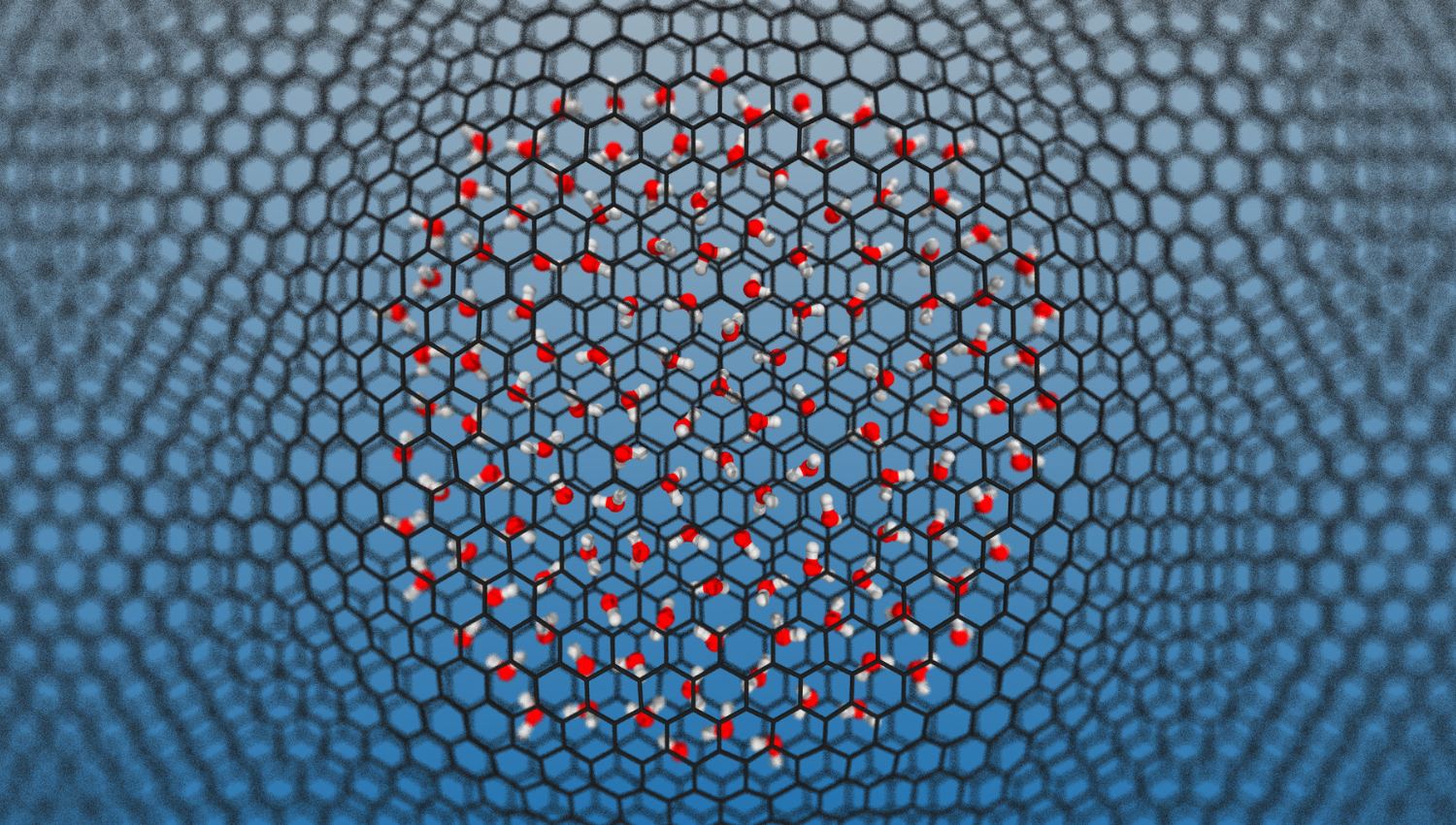
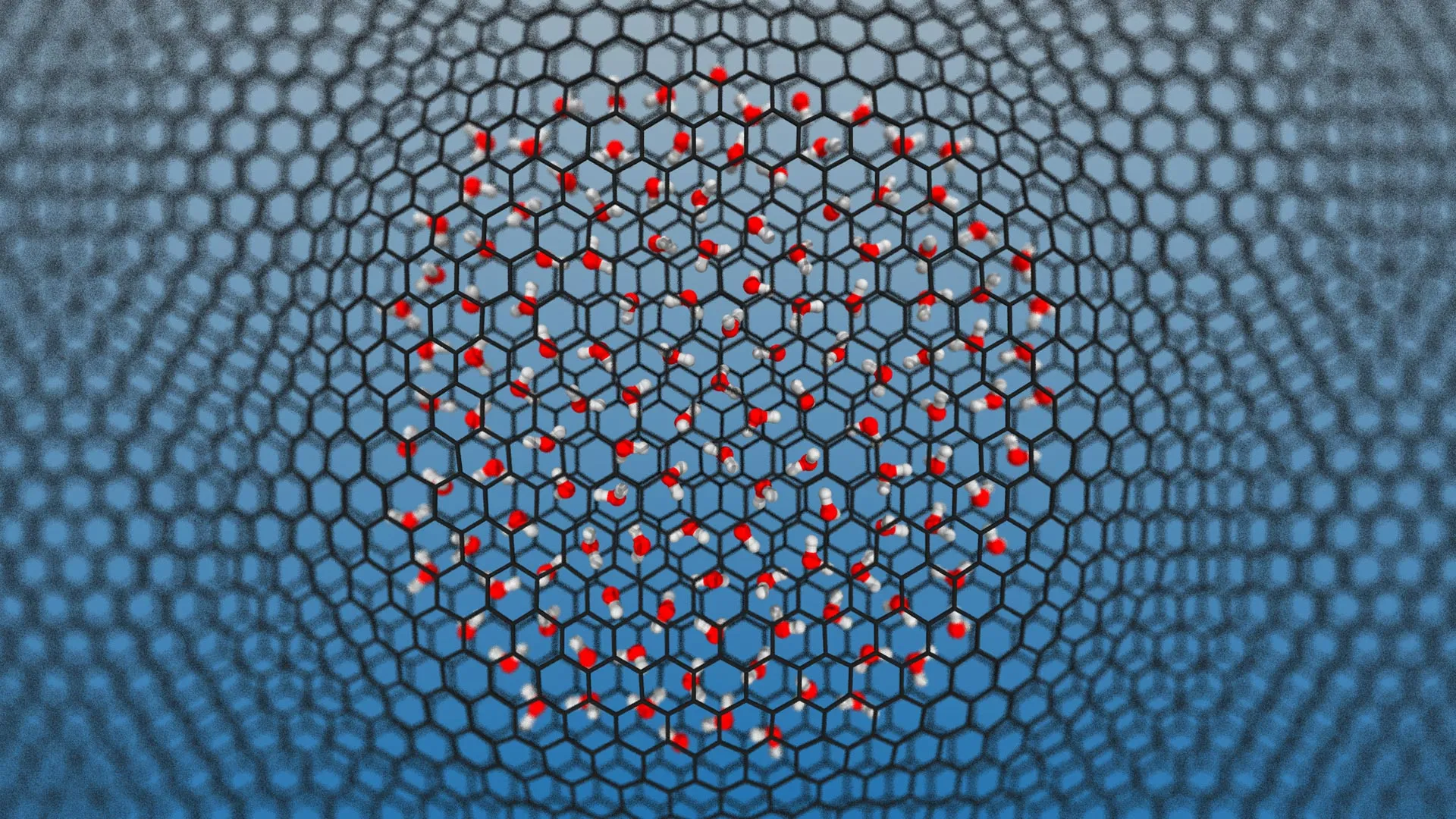
For more than a decade, scientists have puzzled over a strange behavior of one of the most familiar substances on Earth. Water squeezed into vanishingly small spaces — the nanoscale gaps between atomically thin sheets of material — seemed to become far more chemically reactive than ordinary water, splitting apart more readily and behaving in ways that defied easy explanation. Now researchers at the University of Cambridge say they have resolved the mystery, and the answer is less exotic than many had assumed.
Writing in the journal Science Advances, the team reports that confinement alone does not intrinsically change water's chemistry. Instead, the intense pressures that build up inside these microscopic gaps account for most of the apparent effect. When water is trapped between rigid, atomically thin walls, the pressures can soar to extraordinary levels, and it is that crushing squeeze — not some special property of confinement itself — that drives the enhanced reactivity researchers had observed.
The finding neatly explains why a decade of experiments produced maddeningly contradictory results. Different laboratories, the researchers say, were effectively comparing water at different pressures and densities without realizing it, yielding conclusions that appeared to conflict. Once pressure is properly accounted for, the confusion largely dissolves. "The confinement does not intrinsically change water's reactivity," the team found; the surrounding material matters only insofar as it interacts with the products of the reaction.
To reach that conclusion, the scientists studied water confined between sheets of graphene and hexagonal boron nitride, two atomically thin materials that share a nearly identical structure but have very different surface chemistry. They relied on machine-learning-based simulations capable of reproducing quantum-mechanical accuracy while exploring a far wider range of conditions than conventional computational methods allow — a technique that has increasingly become a workhorse of modern materials science.
The choice of walls turned out to matter in a revealing way. In water confined by boron nitride, hydroxide ions forming near the edges bonded chemically with the surrounding material, stabilizing the ions, lowering the energy needed to split water and boosting dissociation. No such effect appeared with graphene, whose chemically inert surface stays out of the reaction. Beyond settling a long-standing scientific debate, the results carry practical weight for technologies that depend on water chemistry in tight spaces — including hydrogen fuel cells, next-generation batteries and catalytic systems — where understanding exactly what drives reactivity could help engineers design more efficient devices.