Scientists Discover 'Pink Floyd' Spider That Hunts Prey Six Times Its Size
Tiny wall-dwelling predator helps control urban pests like mosquitoes and flies, raising questions about its mysterious Galápagos connection.
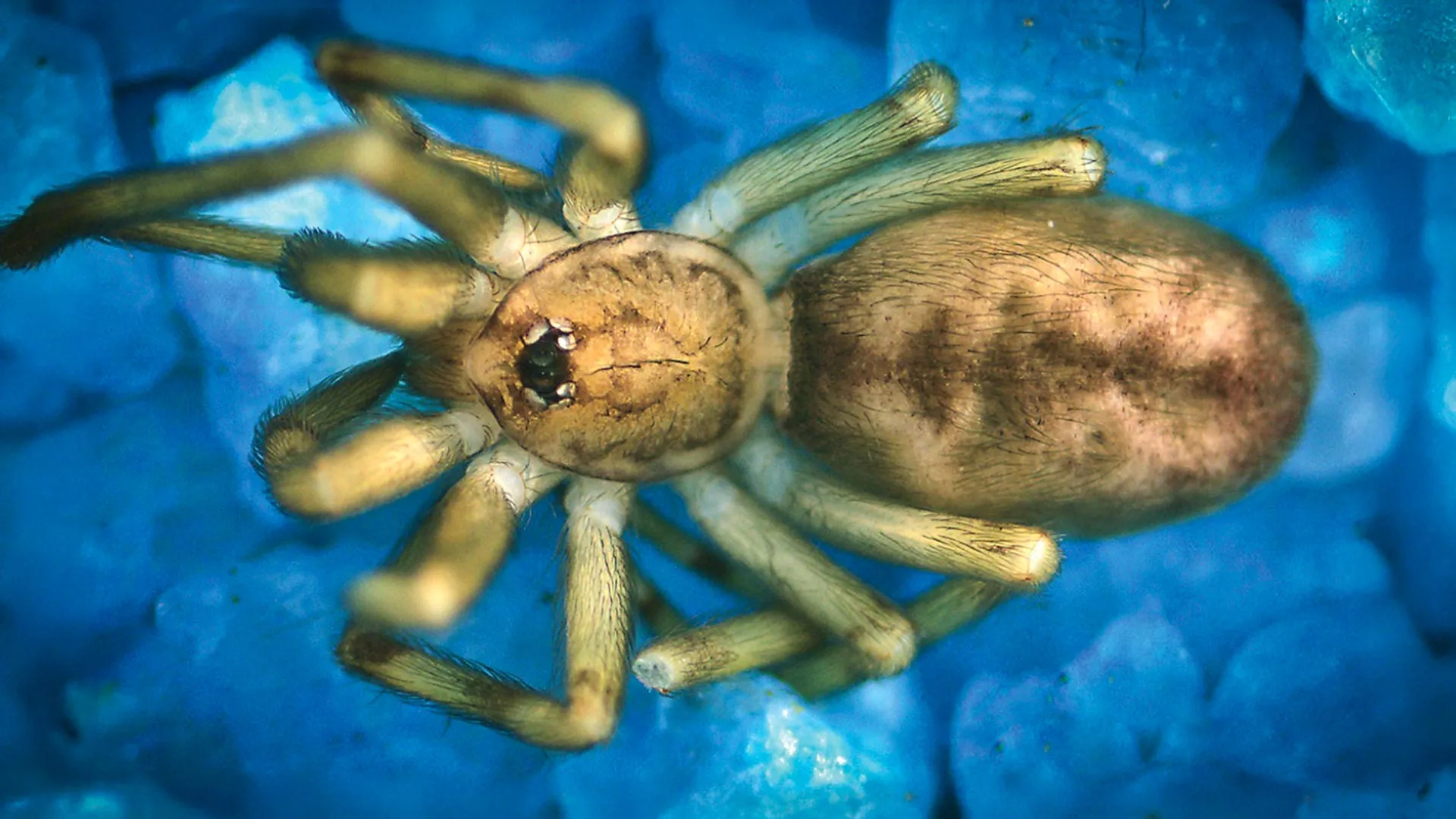
Researchers from several South American institutions have identified a remarkable new spider species that pays homage to the legendary rock band Pink Floyd while revealing extraordinary predatory abilities. Named Pikelinia floydmuraria, this tiny arachnid measures just 3 to 4 millimeters in length yet demonstrates an impressive capacity to capture ants up to six times larger than its own body size, making it a formidable urban pest controller despite its diminutive stature.
The spider's scientific name cleverly combines musical tribute with biological accuracy—"floydmuraria" honors Pink Floyd while "muraria," derived from the Latin word for "wall," reflects the species' tendency to inhabit building walls. This nomenclature subtly references the band's famous album "The Wall," demonstrating the researchers' creative approach to scientific naming conventions. The findings, published in the open-access journal Zoosytematics and Evolution, expand understanding of the previously understudied Pikelinia genus.
Dietary studies of P. floydmuraria and related Pikelinia populations revealed that these urban-dwelling spiders primarily target common household pests including ants (Hymenoptera), flies and mosquitoes (Diptera), and beetles (Coleoptera). The spiders employ a clever hunting strategy by positioning their webs near artificial light sources, taking advantage of insects' attraction to light to improve their capture rates. This behavior makes them particularly effective at controlling mosquitoes and houseflies in urban environments.
Perhaps most intriguingly, the research also provided new insights into Pikelinia fasciata, a related species from the Galápagos Islands first identified in 1902. Strong similarities between the Colombian spider and the Galápagos species, including nearly identical male reproductive structures, suggest a possible close evolutionary relationship despite the vast Pacific Ocean separating their habitats. This connection raises fascinating questions about how these species might be related and whether their similarities result from common ancestry or convergent evolution.
The identification of P. floydmuraria represents only the second known Pikelinia species recorded in Colombia, highlighting how much remains unknown about spider biodiversity in the region. Researchers emphasize that additional molecular and DNA-based studies will be crucial for understanding the species' evolutionary background, tracing its geographic origins, and fully measuring its ecological impact as a natural controller of urban pests.