Caffeine Boosts Ant Learning, Could Transform Pest Control
Argentine ants given caffeinated sugar took more direct paths to food, reducing travel time by 38%. The discovery suggests caffeine could make poisoned baits more effective.
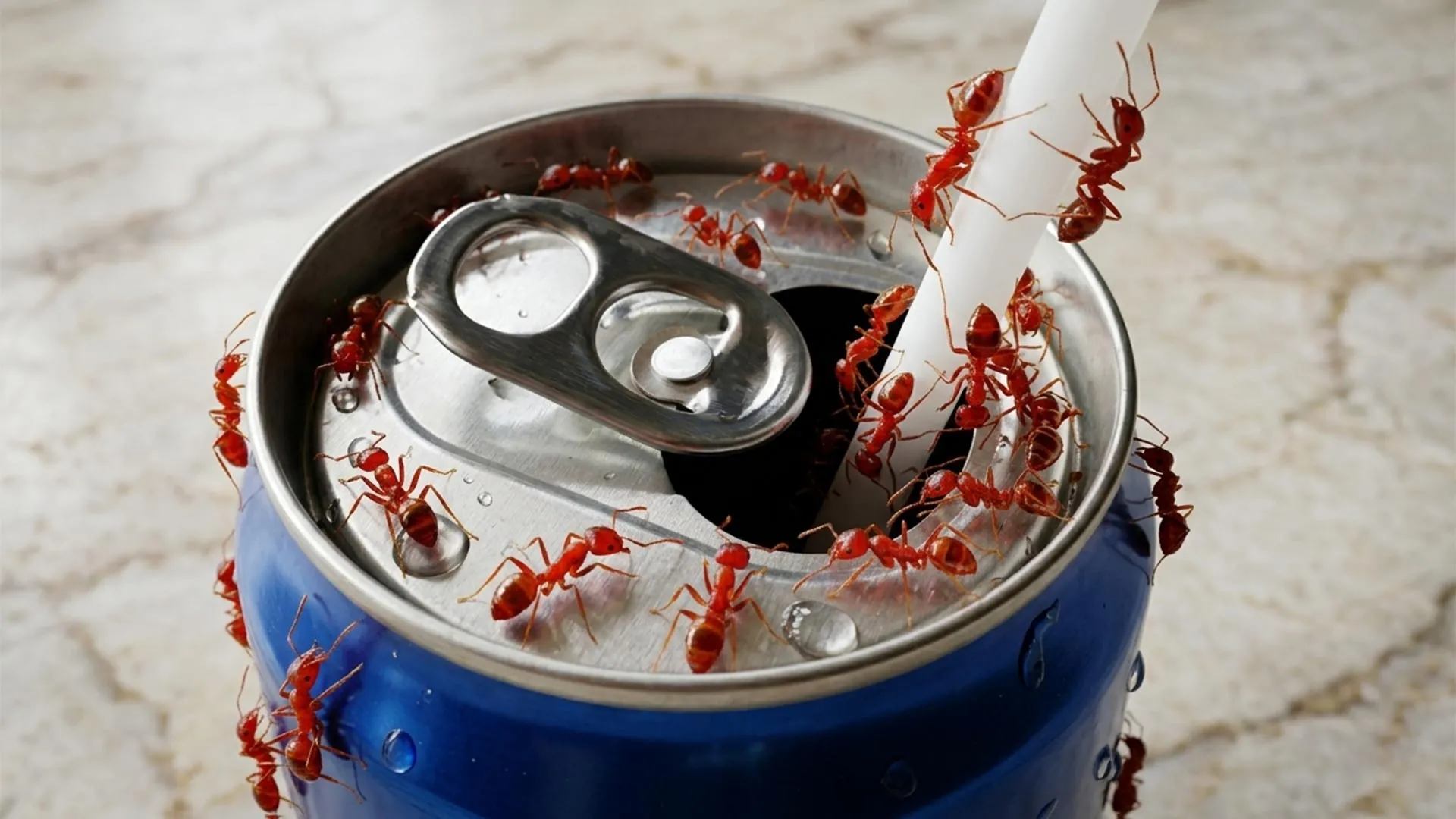
Invasive Argentine ants that consume caffeine-laced sugar become significantly more efficient at navigating back to food sources, according to new research that could revolutionize pest control strategies. Scientists found that ants given moderate doses of caffeine took more direct routes to rewards and reduced their travel time by up to 38%, even though they didn't move any faster. The improved performance appears to result from enhanced learning and memory capabilities rather than increased physical activity.
The study, published in iScience, focused on Argentine ants (Linepithema humile), one of the world's most destructive and expensive invasive species. These ants cause billions of dollars in agricultural damage annually and have proven notoriously difficult to control using conventional poisoned bait strategies. Current control methods often fail because colonies may ignore baits entirely or abandon them before the poison spreads effectively throughout the nest.
"The idea with this project was to find some cognitive way of getting the ants to consume more of the poisonous baits we put in the field," explained Henrique Galante, the study's first author and a doctoral researcher at the University of Regensburg. "We found that intermediate doses of caffeine actually boost learning -- when you give them a bit of caffeine, it pushes them into having straighter paths and being able to reach the reward faster."
Researchers tested different caffeine concentrations on 142 ants using a controlled laboratory setup. Ants crossed a small bridge onto a test surface where they encountered sugar solutions containing either no caffeine, 25 parts per million (natural plant levels), 250 ppm (similar to energy drinks), or 2,000 ppm (a potentially toxic dose). The team tracked each ant's movement and measured both travel time and path efficiency across four trials per ant.
Ants receiving only sugar showed minimal improvement over repeated trials, indicating poor learning of the reward location. In contrast, ants given low or moderate caffeine doses quickly became more efficient navigators. The 250 ppm group showed the most dramatic improvements, taking increasingly direct paths to the food source. However, ants receiving the highest caffeine dose performed poorly, suggesting that excessive amounts impair rather than enhance cognitive function. The research team believes this learning enhancement could make poisoned baits more attractive to target ant colonies, as caffeine-enhanced ants would return more frequently and recruit more nestmates to the bait location.