Scientists Discover Hidden Nasal Map That Reveals How Smell Actually Works
Researchers map millions of neurons in mice to uncover organized stripe patterns in smell receptors, solving a long-standing mystery about olfactory system organization.
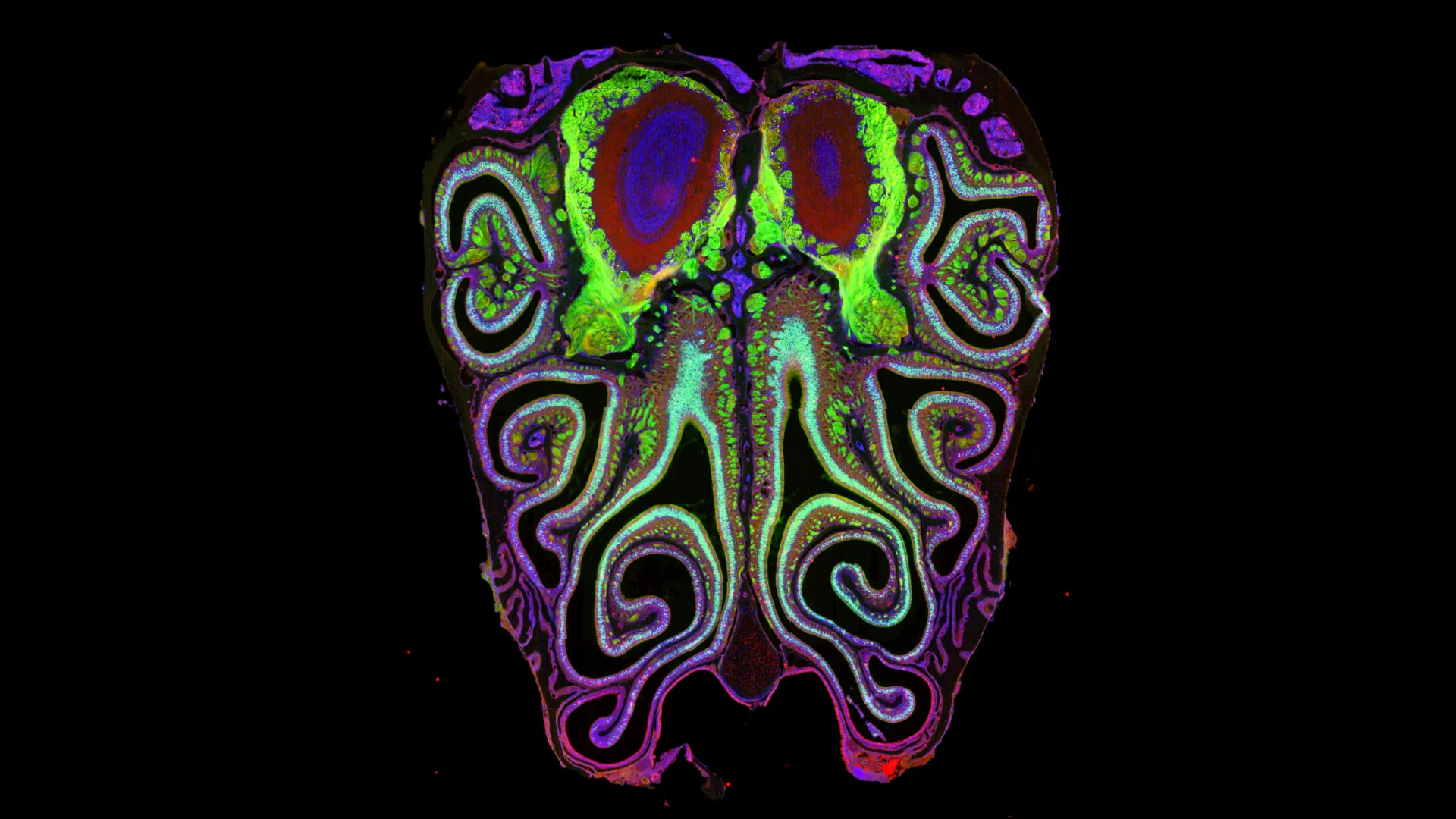
Harvard Medical School researchers have solved one of the most enduring mysteries in sensory biology by creating the first detailed map of how smell receptors are organized in the nose. Their groundbreaking study of millions of neurons in mice reveals that smell receptors aren't randomly distributed as previously thought, but instead form highly organized horizontal stripes that run from the top to the bottom of the nasal cavity, fundamentally changing scientific understanding of how the olfactory system works.
"Olfaction is super-mysterious," said Sandeep Robert Datta, professor of neurobiology at Harvard Medical School and senior author of the study published in Cell. "Compared with vision, hearing, and touch, the basic biology of smell has remained less understood." The complexity of the smell system, with mice possessing about 20 million olfactory neurons expressing more than a thousand different receptor types, has made it particularly challenging to map, unlike human color vision which relies on just three main receptor types.
The research team analyzed approximately 5.5 million neurons across more than 300 mice using advanced genetic techniques including single-cell sequencing and spatial transcriptomics. This massive dataset, which Datta describes as "arguably the most sequenced neural tissue ever," was necessary to detect the subtle organizational patterns that had eluded scientists for decades. The scale of data required demonstrates why previous studies with smaller sample sizes had concluded that receptor placement was mostly random.
The newly discovered striped organization in the nose directly corresponds to similar maps in the olfactory bulb of the brain, revealing a coordinated system that efficiently processes smell information from nose to neural circuits. This nose-to-brain alignment suggests that the organization serves a critical functional purpose in how mammals detect and interpret the vast array of chemical signals in their environment.
"Our results bring order to a system that was previously thought to lack order, which changes conceptually how we think this works," Datta explained. The findings not only solve a long-standing puzzle in sensory biology but also provide new insights into how sensory information is processed. Scientists have understood the organization of receptors in eyes, ears, and skin for years, making smell the last major sense to reveal its organizational secrets. This breakthrough opens new avenues for understanding smell disorders and could eventually inform treatments for conditions like anosmia, the loss of smell that affects millions of people worldwide.