A Millisecond Pulsar Fired 114 Giant Pulses in a Single Hour. Some Lasted Barely a Millionth of a Second
PSR J1227-4853 spins 592 times a second. Indian astronomers found 235 giant pulses in 174 hours of observation, some 10,000 times brighter than the star's ordinary signal.

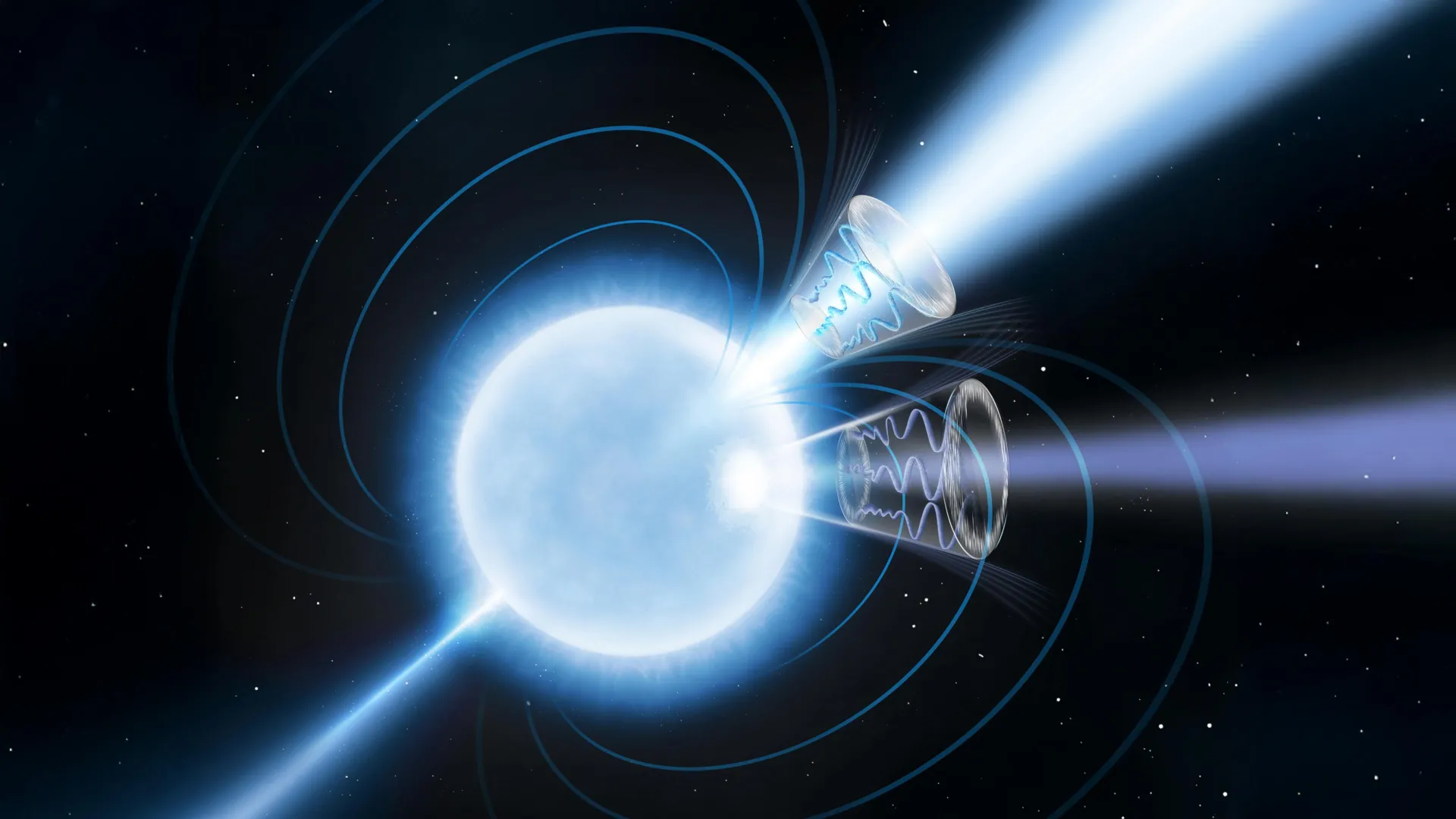
A neutron star about the size of a city, spinning once every 1.69 milliseconds, spent one hour in December 2020 firing off 114 radio flashes so bright they dwarfed everything else it emits. Astronomers have only just finished counting them.
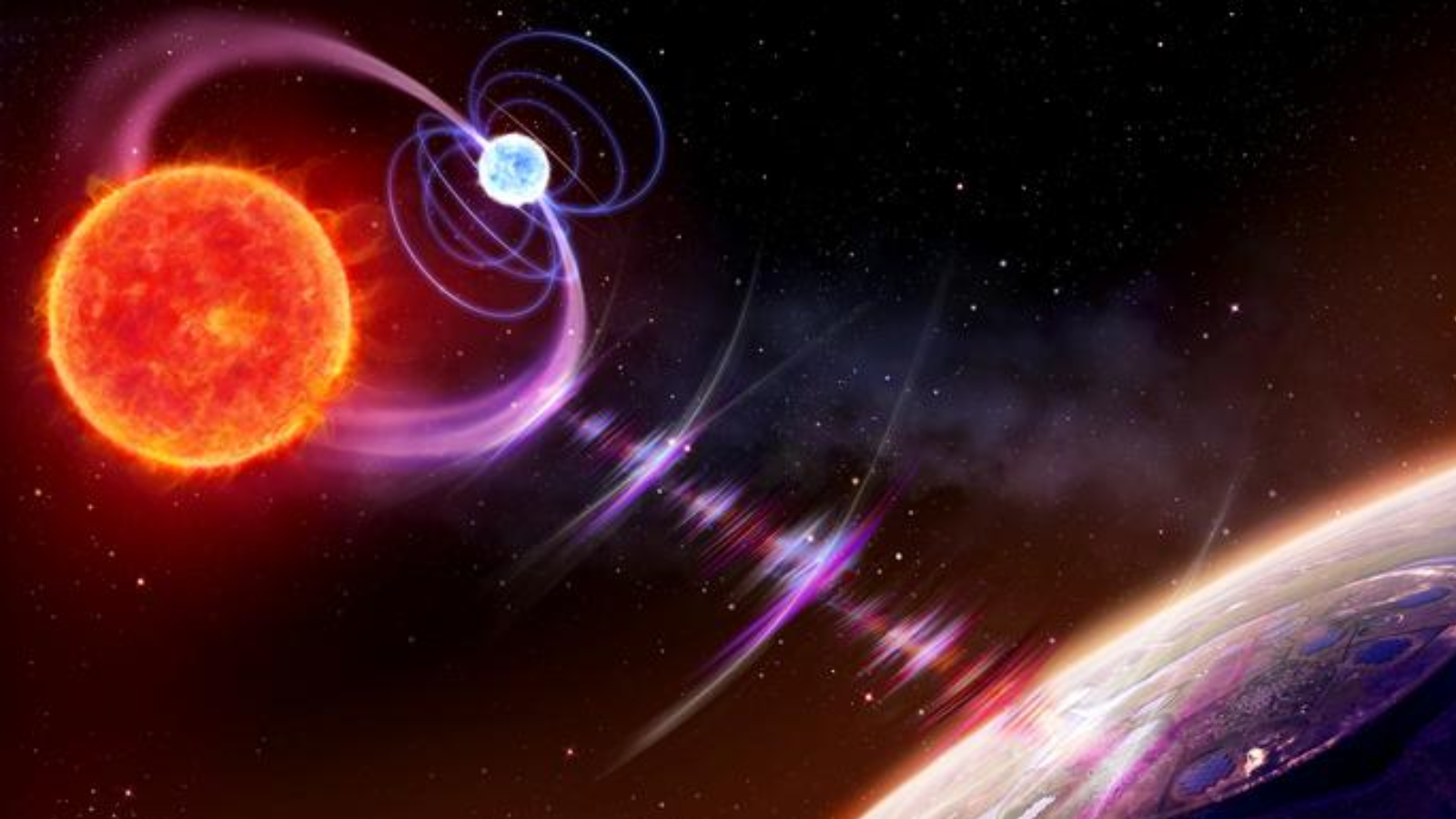
The object is PSR J1227-4853, a millisecond pulsar in a compact binary system. A team led by Saptarshi Sarkar of the National Center for Radio Astrophysics in India went through 174 hours of observations taken with the Giant Metrewave Radio Telescope and found 235 of what astronomers call giant pulses — sudden, extremely narrow bursts that can reach up to 10,000 times the brightness of the star's normal beam. The single-hour tally of 114, recorded on December 6, 2020, is the most extreme rate seen from this kind of source.
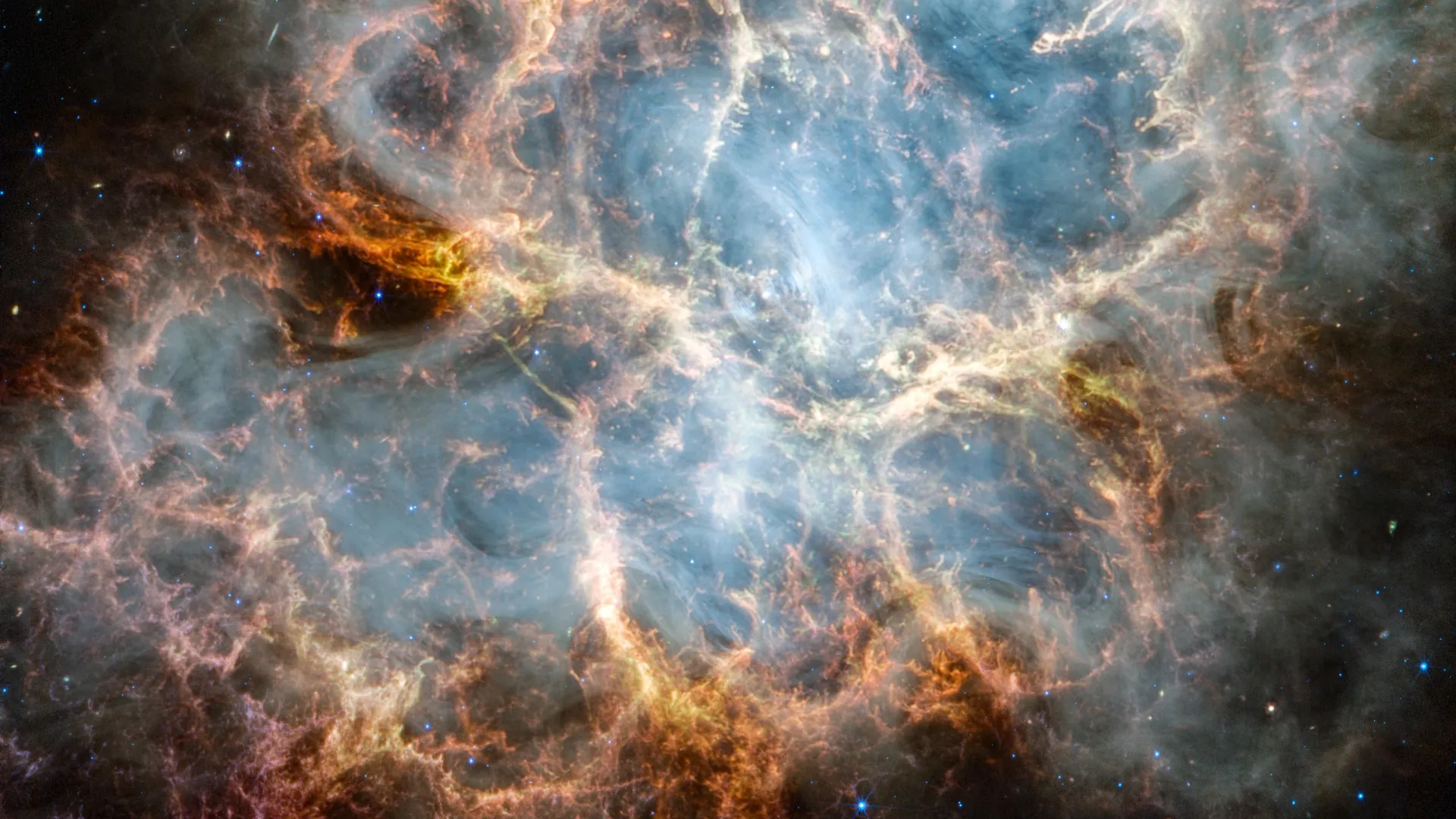
Giant pulses are rare. Of the thousands of known pulsars, only 19 had previously been observed emitting them at all. The Crab pulsar is the famous example, and most of the others are either very young or very strongly magnetized at the surface where the radio emission is generated. A pulsar in a tight binary, whose spin has been sped up over millions of years by material stolen from a companion star, is not the sort of object where this behavior was expected to be routine.
The pulses themselves are almost absurdly brief. The shortest ran about 1.28 millionths of a second. That number is not a curiosity — it is a constraint. A burst that short must be produced in a region no larger than a few hundred meters across, which puts a hard limit on where in the pulsar's magnetosphere the emission can originate and on how coherent the process has to be to reach the observed brightness.
The finding is also being read as a possible bridge to a much larger mystery. Repeating fast radio bursts, the millisecond-scale flashes seen from other galaxies, share several features with giant pulses: extreme brightness, short duration, and clustering in time rather than arriving at a steady rate. The authors write that their result "may suggest potential phenomenological parallels between GPs from compact binaries and repeating FRBs," which is careful language for the idea that some fast radio bursts might be giant pulses turned up to an extraordinary degree.
Proving that would require catching the same object doing both, or finding a population of binaries whose giant pulses scale continuously toward FRB energies. Neither has happened. What has happened is that a pulsar nobody expected to be a prolific giant-pulse emitter has produced the densest burst storm on record for its class, in a dataset that took years of telescope time to accumulate.
The work was published July 31 in The Astrophysical Journal.