Lost Field Notebooks Solve 55-Million-Year-Old Fossil Fish Mystery
The spectacular 1.2-meter fossil discovered on a remote New Zealand cliff has been identified as an ancient tarpon-like predator thanks to the late collector's recovered notebooks.
A remarkable fossil fish discovered nearly three decades ago on a remote New Zealand cliff has finally revealed its full story, thanks to the unexpected recovery of the original collector's long-lost field notebooks. The 1.2-meter fossil, preserved in stunning three-dimensional detail, has been identified as an ancient tarpon-like predator that cruised New Zealand waters approximately 55 million years ago.
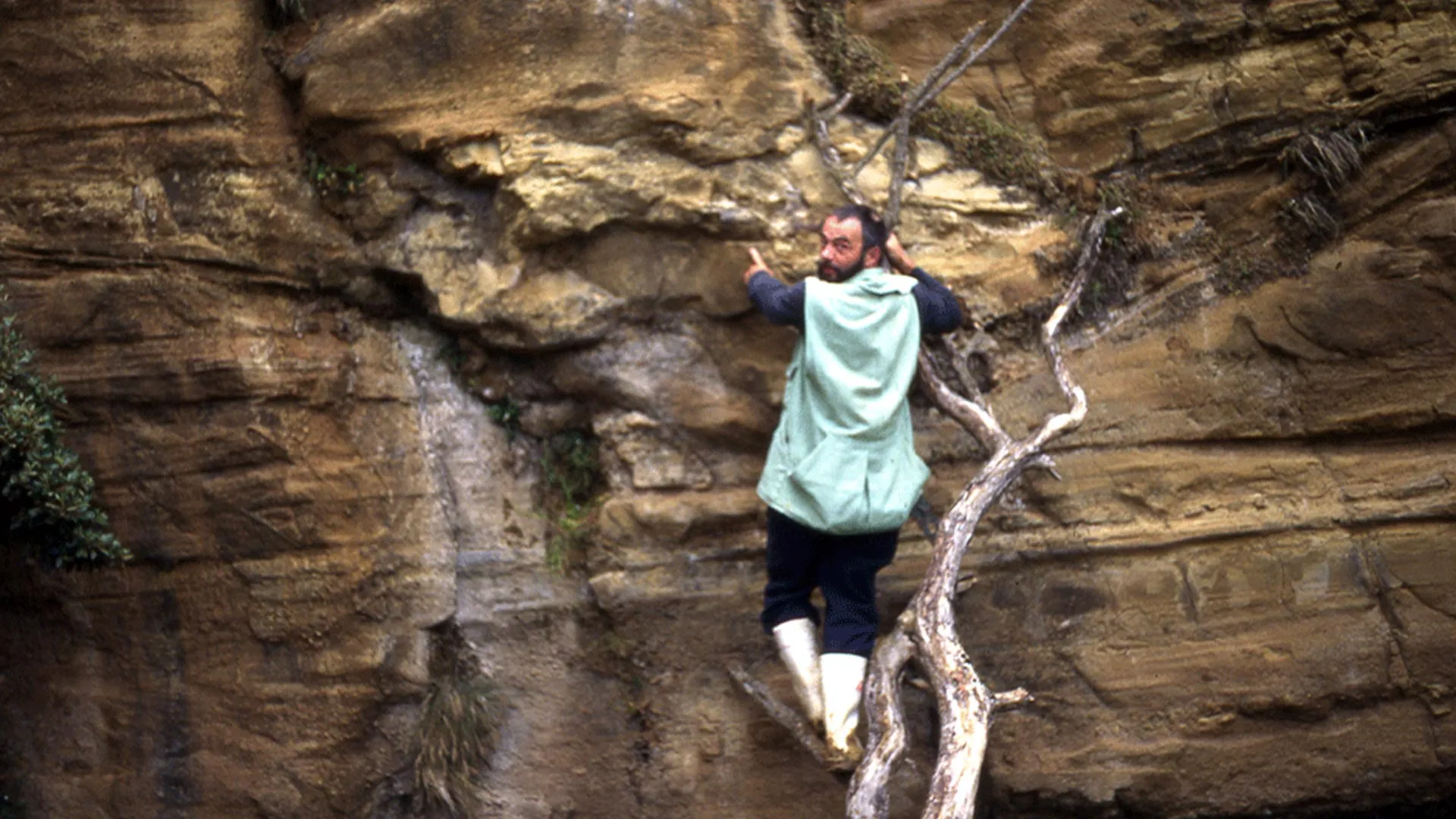
The scientific journey began in 1999 when Dr. Richard Köhler spotted the three-dimensionally preserved, mummified fish fossil embedded in a steep cliff section above Waihere Bay on Pitt Island in the Chatham Islands. The fossil was nearly impossible to reach, requiring Köhler to walk 3 kilometers back to his lodging to borrow a ladder, then return to carefully extract the specimen in several large, extremely heavy blocks.
Once brought to the University of Otago's Department of Geology, the fossil was immediately recognized as significant by Emeritus Professor Daphne Lee and the late Professor Ewan Fordyce. The specimen was "quite unlike any other fish fossil known from Aotearoa, New Zealand," Lee recalls. After painstaking preparation by fossil preparator Andrew Grebneff, the fossil eventually attracted the attention of Professor Mike Gottfried, a fossil fish specialist from Michigan State University.
Researchers determined that the ancient creature was a tarpon, a species no longer found in New Zealand waters. Modern tarpon are large predatory fish that typically swallow smaller fish whole, and the fossil's anatomy suggests it lived similarly. Its elongated body, thick rigid scales, powerful tail fin, and large upward-facing mouth all indicate it was an active predator near the top of the food chain 55 million years ago.
The critical breakthrough came in early 2025 when one of Richard's children, studying at Otago, visited the department hoping to locate photographs of his father. After meeting with Professor Lee, Richard's family decided to donate his field notebooks, including those from the original Pitt Island expedition. This enabled researchers to obtain the specific locality information needed to prepare proper documentation and scientifically catalogue the fossil, finally allowing the completed study to be published after years of delay.