Last U.S. Troops Leave Iraq, Ending a 12-Year Mission Trump Calls an 'Excursion Into Hell'
The Pentagon says the withdrawal is complete, but Kurdish officials worry about losing U.S. air defenses and Iran-backed militias have yet to disarm.
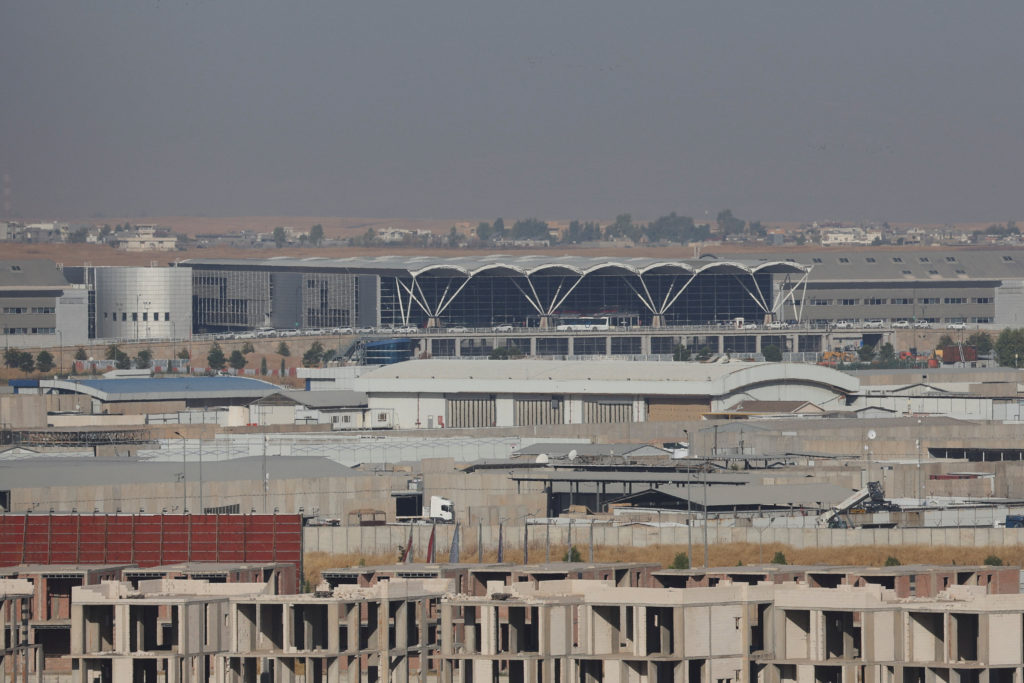
The U.S. military has finished pulling its troops out of Iraq, the Pentagon said Wednesday, closing a 12-year counter-terrorism mission against the Islamic State group. The last American forces departed an air base in Iraq's northern Kurdish region on September 30, the deadline set for the final phase of the pullout.
President Donald Trump announced the exit on Truth Social. "Today, I am pleased to announce that the last American forces are leaving Iraq!" he wrote. He said it had taken a long time, "with very bad decision-making that got us involved in this quagmire in the first place, but soon, that will be part of history." He called Operation Inherent Resolve, the name of the campaign against ISIS, "a very expensive excursion into hell."
Trump contrasted the departure with the 2021 withdrawal from Afghanistan. "Unlike Afghanistan, where much military equipment and everything else was left behind, and 13 warriors lie dead, with many badly wounded, this orderly departure of coalition forces and equipment from Erbil Air Base marks the end of a very expensive excursion into hell," he wrote. He described the move as a victory for both the United States and Iraq.
The withdrawal carries out an agreement that Washington and Baghdad reached in 2024. Iraqi Prime Minister Ali al-Zaidi presided over a handover ceremony and said the moment marks "a new phase, one defined by Iraq's sovereignty," and a transition to an Iraqi-led security effort. Pentagon spokesperson Sean Parnell said the United States will keep providing "targeted training and intelligence support" to its Iraqi partners.
The timing is awkward. The exit comes while the United States is locked in a war and a stalled negotiation with Iran, and Iraq sits between the two. Officials in Iraq's Kurdish region have said they are anxious about the departure, particularly the removal of U.S. air defense systems. The Kurdish Peshmerga Ministry noted that the region faced more than 1,000 drone and ballistic-missile attacks during the recent U.S.-Iran conflict.
Iraq's government had originally linked the American deadline to a plan to disarm armed groups that operate outside state control. That part has not gone to plan. Powerful Iran-backed militias rejected the disarmament terms or set conditions that could not be met, and al-Zaidi has since pushed the militia disarmament deadline back to June 2027.
That leaves the country with no American combat presence and a set of armed factions still answering, in many cases, to Tehran. Critics of the pullout say that gap could be filled by those groups, while supporters of it argue that a 12-year mission had long outlived its purpose and that Iraqi forces must carry their own security.
The mission began in 2014, when a U.S.-led coalition moved to push back ISIS after the group seized large parts of Iraq and Syria. For the Pentagon, the end of the Iraq deployment frees up forces and equipment at a moment when it is also managing the Iran conflict and a leadership overhaul under Defense Secretary Pete Hegseth. Whether the exit holds as a clean break, or becomes a new source of instability in the region, will depend on what the Iran-backed militias do next.