Giant Deer Bones Hint Humans Reached Ireland 1,000 Years Earlier
Possible butchery marks on bones from a Waterford cave date to about 13,500 years ago, though researchers say human involvement is not yet proven.

Marks on the leg bones of an extinct giant deer suggest that hunter-gatherers may have been living in southern Ireland about 13,500 years ago, nearly a thousand years earlier than the evidence has so far confirmed.
The findings, published Thursday in the Proceedings of the Royal Irish Academy, come from new digging at Ballynamintra Cave near Dungarvan in County Waterford, combined with a fresh look at animal bones excavated there between 1878 and 1882 and held by the National Museum of Ireland.
Until now, the earliest firm sign of people in Ireland before the Mesolithic period has been a single butchered brown bear bone from a cave in County Clare, dated to between about 12,800 and 12,600 years ago. Hunter-gatherers had returned to neighboring Britain much earlier, by around 15,000 years ago, as the last ice sheets pulled back.
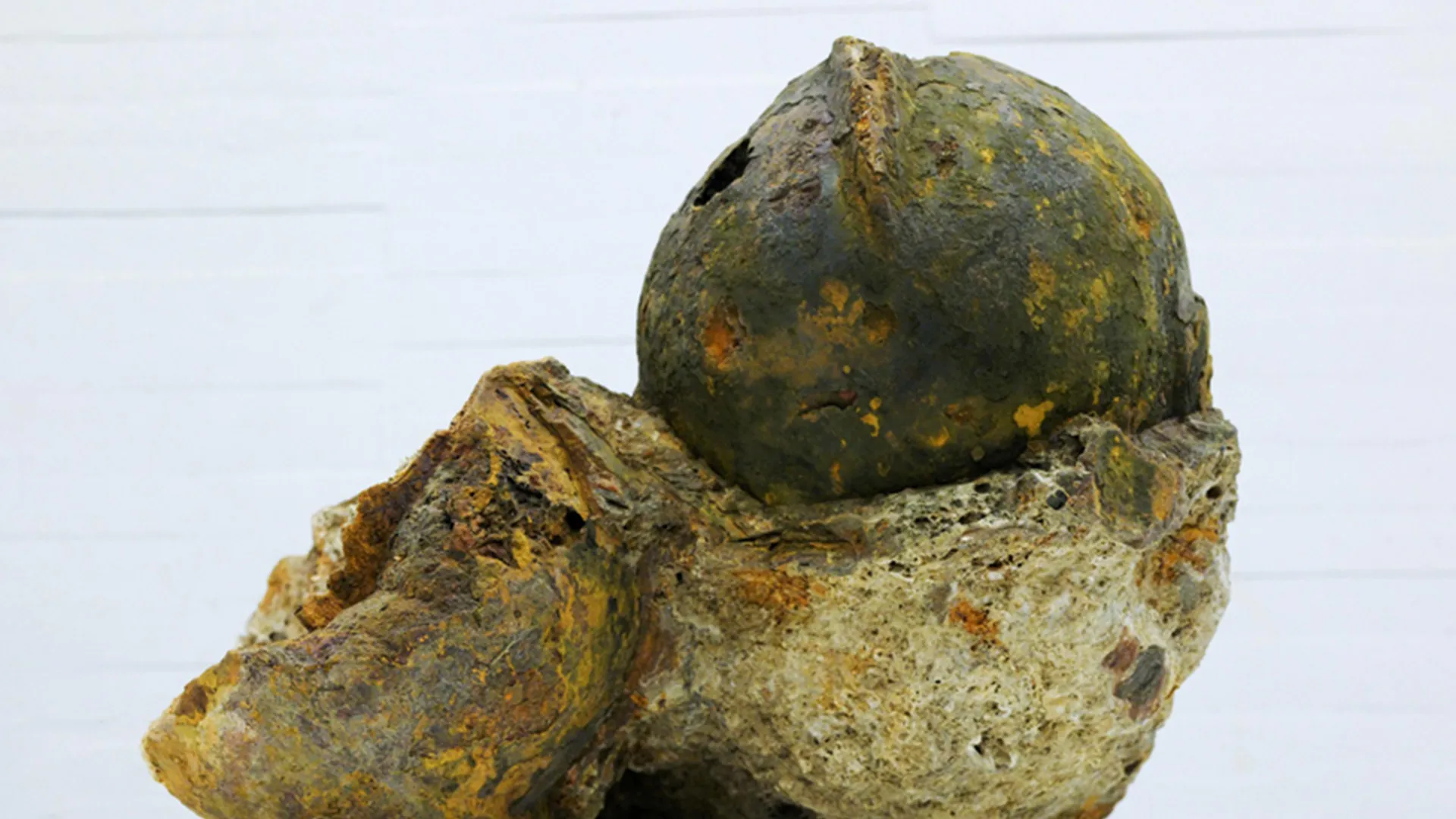
Among the museum material, the researchers identified two leg bones from Megaloceros giganteus, the giant deer, with damage consistent with people butchering the animal while the bones were still fresh. One upper foreleg shows a uniform chopping surface of the kind a heavy stone blade could leave while hacking apart the elbow joint, along with wolf gnaw marks indicating that scavengers got to the carcass afterward. A lower hind leg bone carries a possible strike from a stone tool and tiny fractures from being split open for its nutrient-rich marrow. Radiocarbon dating at the University of Oxford placed that bone between 13,573 and 13,321 years old.
The authors stress an important caveat. Thousands of years of weathering have erased the microscopic scratches that tools leave behind, so the marks cannot be proven to be human-made without additional artifacts. The timing does, however, match human activity across Britain and northwestern Europe during a warm spell near the end of the Ice Age.
The excavation also overturned a long-held belief that Victorian antiquarians had completely cleared out Ireland's so-called bone caves. In an untouched section of sediment in the entrance chamber, the team recovered three giant deer specimens and a red fox jawbone dated to between 13,604 and 13,095 years ago. Preserved pollen points to open grassland edged with ferns, juniper and birch.
"Confirming human activity at Ballynamintra Cave 13,500 years ago would significantly push back the arrival of people in Ireland and reshape how we understand early human dispersal across northwest Europe at the end of the last Ice Age," said Richard Jennings of Liverpool John Moores University, who led the study.
Most of the meatiest parts of the deer, such as upper legs, ribs and pelvises, are missing from the cave. The researchers suggest hunters may have butchered the animals elsewhere, leaving lower limbs that wolves or bears later dragged inside. Ruth Carden, one of the authors, said the pattern points to a kill site that was later scavenged.
More excavation is planned in passages where the Ice Age deposits appear to continue, and the team hopes to find the stone or bone tools that could settle the question. Cóilín Ó Drisceoil of the National Monuments Service said the cave is now a prime site for research into Ireland's earliest human story.