Canada's Top Court Upholds Most of Quebec's Ban on Religious Symbols
The Supreme Court backed the province's use of a constitutional override to shield Bill 21, which bars teachers, police and other officials from wearing items such as hijabs and turbans at work.
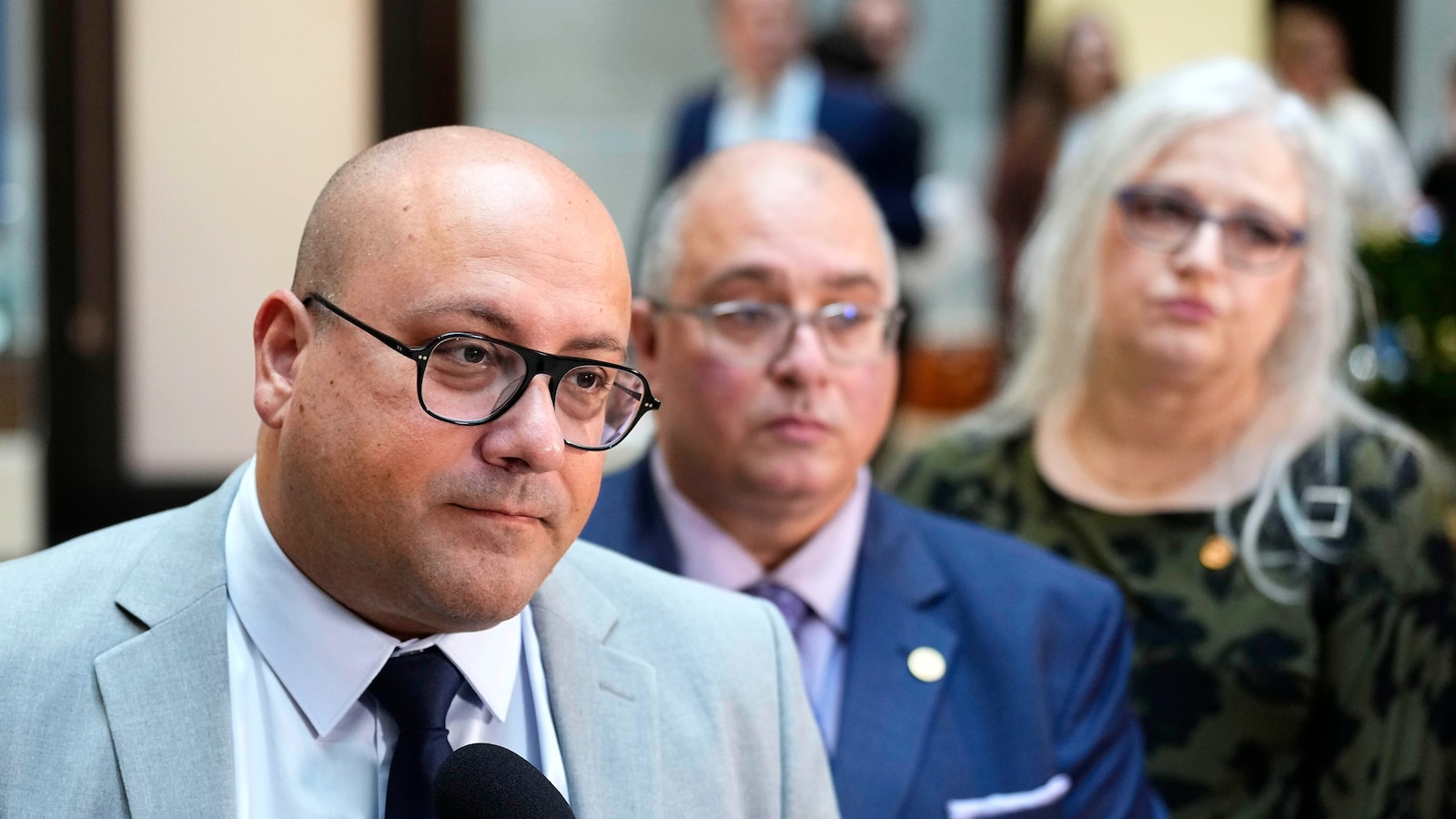
Canada's Supreme Court on Friday upheld most of a Quebec law that forbids public schoolteachers, police officers and other public employees in positions of authority from wearing religious symbols on the job, a landmark ruling with consequences far beyond the province.
The 2019 law, known as Bill 21, covers Muslim headscarves, Sikh turbans, Jewish skullcaps and Christian crosses for workers who fall under the ban. The Quebec government says it protects the separation of religion and the state. Opponents say it discriminates against religious minorities, and in particular against Muslim women who wear headscarves.
At the center of the case was the "notwithstanding clause," a provision that lets lawmakers override certain protections in the Charter of Rights and Freedoms, Canada's counterpart to the U.S. Bill of Rights. Those protections include religious freedom and equality. An override must be renewed every five years to stay in force. The justices upheld Quebec's use of the clause and affirmed that legislatures can invoke it before any court has decided whether a law violates those rights.
The court was divided on how far to go in criticizing the law. It held that judges may still declare that legislation protected by the clause is inconsistent with the Charter, but voted 4-3 against issuing such a declaration about Bill 21. Three of the seven justices who heard the case wrote that the law is incompatible with freedom of religion, freedom of expression and equality.
Chief Justice Richard Wagner wrote that Bill 21 is rooted in Quebec's legitimate and historical commitment to a secular state in a free and democratic society. The court also rejected arguments that the law infringes the education rights of the province's English-speaking minority, while acknowledging it could limit the ability of English school boards to recruit and retain some staff.
The justices were unanimous on one point against the government. They found that a rule preventing members of Quebec's National Assembly from covering their faces infringes the democratic right to vote and to seek election.
Stephen Brown, chief executive of the National Council of Canadian Muslims, condemned the outcome. "In the 21st century, entire categories of people are now barred from entire sectors of employment, not because of what they have done, but because of who they are," he said.
Joe Ortona, chair of the English Montreal School Board, which challenged the law, pledged to keep pressing for political change. "This isn't the end of the road. This is the end of the legal road," he said. The ruling matters elsewhere in Canada, where other provinces have used the same override to protect laws restricting transgender rights and ordering striking workers back to their jobs.