Republicans Signal Openness to Rolling Back Some of Trump's Tariffs
After midterm losses driven by cost-of-living anger, several GOP lawmakers say they would weigh Democratic repeal efforts case by case, with Canada a likely first test.
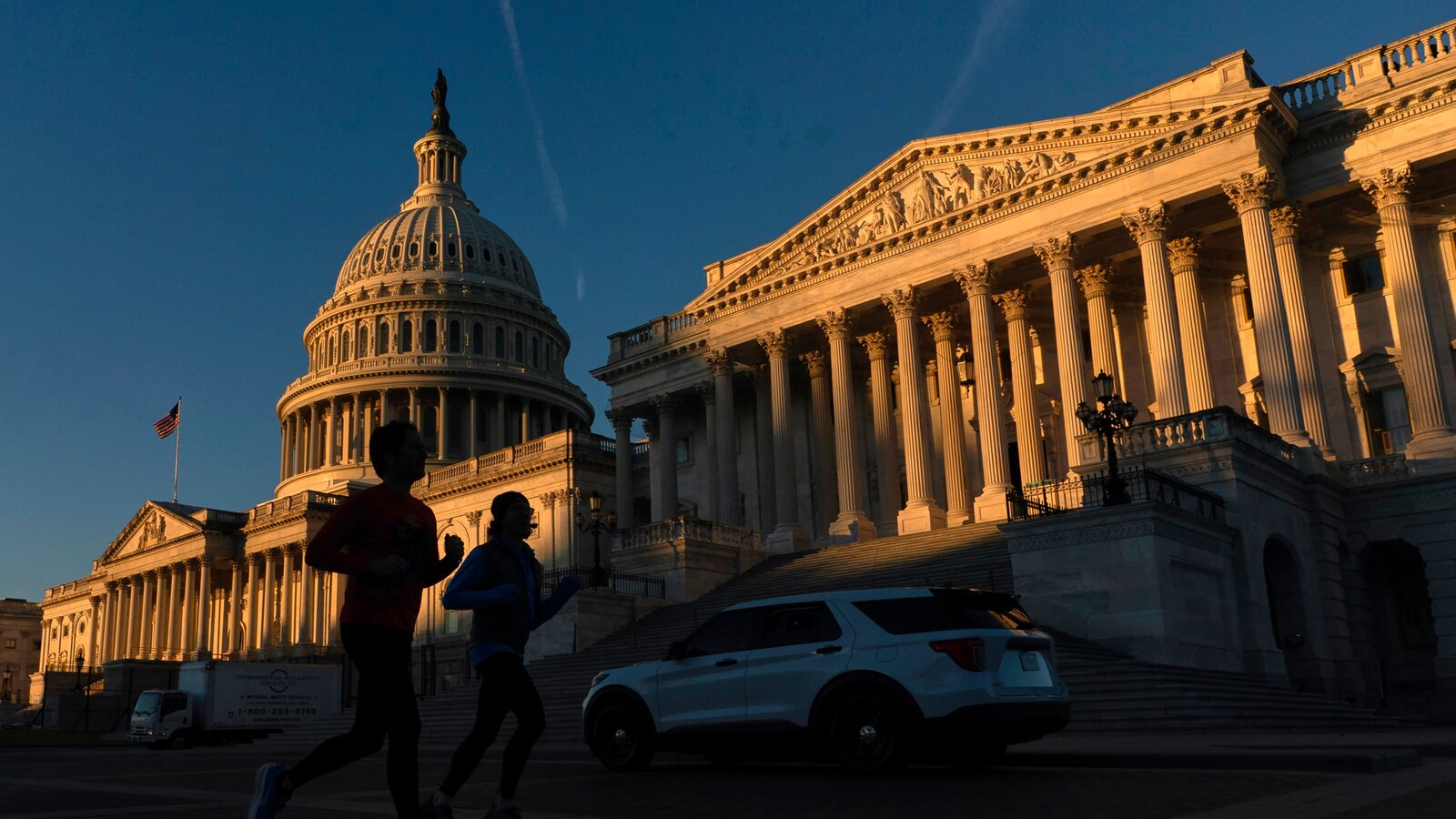
Democrats hoping to blunt President Donald Trump's tariffs when they take control of Congress may find help from an unlikely quarter: members of the president's own party.
Following election losses that centered on rising costs, many Republicans say they are open to reconsidering some of the levies at the heart of Trump's trade agenda, according to Associated Press interviews with more than a half dozen GOP lawmakers published Friday. Most said they would review tariffs at least case by case, wanted more predictability and suggested Congress could reclaim some of its constitutional authority over trade taxes.
"A rethink is indeed in order," said Sen. Todd Young of Indiana, who faces reelection in 2028. "I'll be a bipartisan voice for making sure we have the most consumer friendly tariff approaches." Young said the current structure is "overly broad" and is hurting factory floors, farms, small businesses and family budgets.
Rep. Michael Guest of Mississippi said there may be areas where he agrees with Democrats, though he opposes a blanket limit on the president's tariff powers. Rep. Steve Womack of Arkansas said the levies "have played a role in some of the affordability issues" and noted that producers in his district complain about paying more for goods they cannot buy domestically.
Tariffs on Canada could be the first test. Earlier repeal efforts drew a handful of Republican votes, and Democrats, including incoming Senate Finance Committee Chairman Ron Wyden of Oregon, have named the Canadian levies a top target. "Tariffs with respect to Canada don't make sense to me," said Sen. John Kennedy of Louisiana, who did not back the earlier repeal legislation and distinguished those duties from tariffs on China, which he supports.
Rep. Richard Neal, the incoming chairman of the House Ways and Means Committee, said ending the Canadian tariffs might be a good starting point, while arguing that Congress should take up tariffs as a whole. Wyden said a successful vote on Canada would give Democrats momentum to go after other duties.
The openness has limits. Lawmakers were reluctant to broadly curb the president's tariff powers and acknowledged that Trump could veto any repeal. Sen. Josh Hawley of Missouri said he worried about overcorrection. "I bet a lot of my Republican colleagues will be happy to join Democrats and get rid of a bunch of them, which makes me just a little nervous that it's going to be a dramatic pendulum swing," he said.
The debate comes just after the administration on Wednesday proposed new tariffs on China, the European Union, Japan, South Korea, Taiwan and nine other major trading partners. Trump, who has called himself "Mr. Tariff," argues the duties will revive American manufacturing. White House spokesman Matthew Middleton said the administration is committed to rebuilding communities left behind and to lowering costs.
Voters who backed Republicans are divided. About half of those who supported the GOP candidate in their House race said the tariffs helped the national economy, according to the AP Voter Poll, while about 3 in 10 said they hurt it. Asked about their local economy, about 4 in 10 said the policies had made no impact.