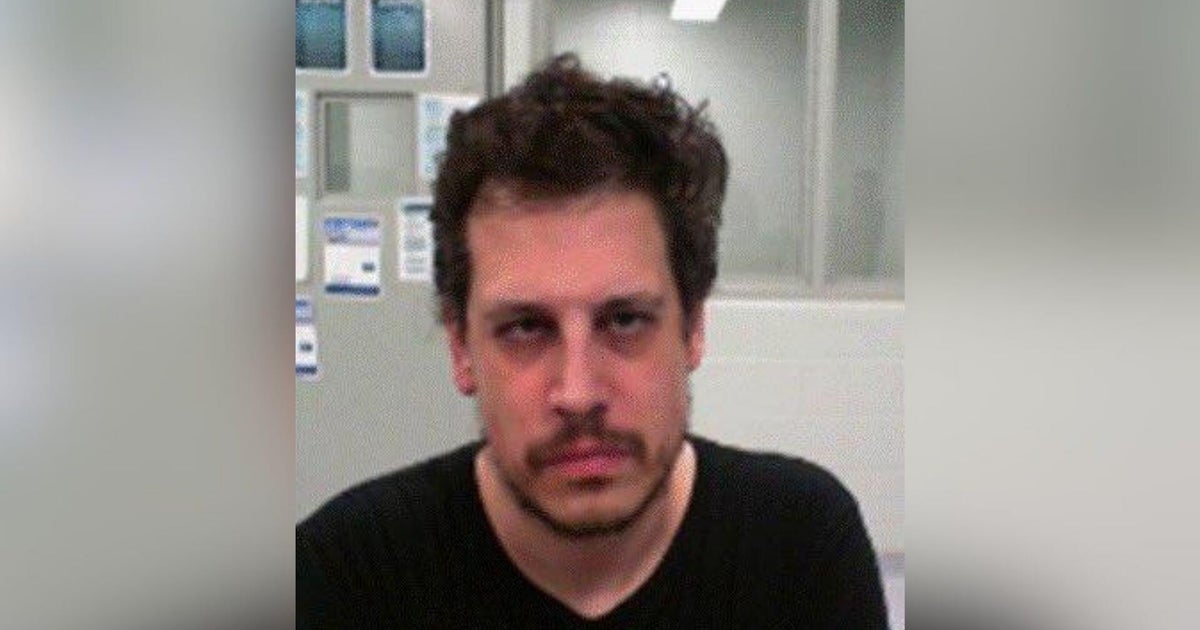
Kilmar Abrego Garcia Leaves U.S. for Spain, Ending a Landmark Case
The man mistakenly deported to El Salvador in 2025 flew to Madrid with his wife. A federal judge has closed his case and lifted her injunctions.

Kilmar Abrego Garcia, whose mistaken deportation to a notorious Salvadoran prison became an early flashpoint in President Donald Trump's immigration crackdown, has left the United States for Spain, his team and the Department of Homeland Security confirmed.
Abrego Garcia flew out on a commercial flight Tuesday night and arrived in Madrid early Wednesday with his wife, Jennifer Vasquez, a U.S. citizen, and his lawyer. Video of his departure showed his Immigration and Customs Enforcement ankle monitor being removed.
"I can now breathe freedom," he said at a virtual news conference on Wednesday. "The government did not decide where my story continues. My family and I decide our future."
His attorney, Simon Sandoval-Moshenberg, said Abrego Garcia entered Spain on his Salvadoran passport. He has a possible path back to lawful permanent residency in the U.S., but it would require a State Department waiver that the current administration is unlikely to grant. The lawyer said the government failed in its effort to send his client to Liberia. "Instead of flying ICE Air, he flew United Airlines," he said.
Homeland Security Secretary Markwayne Mullin said the department was delighted that Abrego Garcia had self-deported, and repeated the administration's allegation that he belongs to a gang, which his legal team denies. The department said he left under a removal order, paid for his own flight and will never be allowed back.
Abrego Garcia came to the United States illegally 15 years ago and was living in Maryland with his wife and children when immigration agents detained him in March 2025. He was among more than 200 immigrants sent to El Salvador's Terrorism Confinement Center, known as CECOT, even though an immigration judge had ruled in 2019 that he could not be returned to that country because he risked persecution by local gangs. A senior administration official later acknowledged the removal was an error.
He was brought back to the U.S. to face criminal charges, and the government then spent months trying to deport him to African nations, including Uganda, Eswatini, Ghana and Liberia. Abrego Garcia had said he was willing to go to Costa Rica, an option officials resisted.
On Wednesday, U.S. District Judge Paula Xinis formally closed the civil case after receiving confirmation of his departure and dissolved the orders that had barred authorities from detaining him. A newly unsealed order shows she had directed the government to remove his GPS monitor and ensure nothing on its end would stop him from boarding the flight.