A Federal Judge Told the Administration It Cannot Deport Students for Criticizing Israel: 'Freedom of Speech Is Illusory'
Judge Noel Wise ruled for The Stanford Daily, whose international staff said they were afraid to report on the war. It is the second federal court in a year to find the deportation policy unconstitutional.
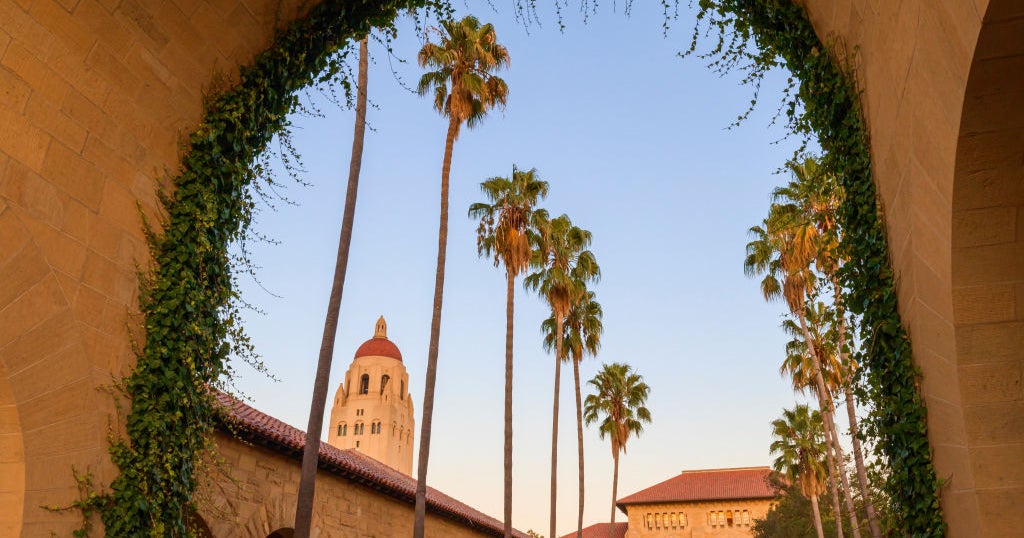
A federal judge in San Jose ruled Friday that the Trump administration cannot revoke visas or deport noncitizen students solely because they criticize Israel or express support for Palestinians, finding the practice violates both the First and Fifth Amendments.
Judge Noel Wise of the U.S. District Court for the Northern District of California wrote that the government's position, taken to its logical end, would leave foreign students in the country on the condition that they praise American foreign policy or say nothing at all. "Freedom of speech is illusory if we are only 'free' to express complementary views about the government," Wise wrote.
The judge was more direct about what the policy had communicated to the roughly one million international students studying in the United States. "The government has offered a chilling message regarding protected speech," she wrote: "speak out against Israel or in support of Palestinians and we will revoke your visa."
The case was brought by The Stanford Daily, the university's independent student newspaper, and the Foundation for Individual Rights and Expression, the free-speech legal organization that has litigated on behalf of both left- and right-leaning speakers. The Daily's argument was narrow and concrete rather than abstract: its international staff members, who write and edit stories about the Middle East as a matter of routine, said they had begun self-censoring because a byline on the wrong story could end their legal status in the country.
George Porteous, the paper's editor-in-chief, welcomed the ruling. The newspaper had argued that the policy did not simply threaten individual students but degraded the reporting the paper could produce, because the people covering the story were the people most exposed to retaliation for covering it.
Wise's decision is the second time in roughly a year that a federal court has struck at the same policy. A judge in Boston reached a similar conclusion in a case brought by university faculty associations, finding that the administration's ideological deportation effort could not be squared with the Constitution. Both rulings trace the practice to March 2025, when the government began detaining and moving to remove noncitizens who had participated in pro-Palestinian campus demonstrations, including graduate students with valid visas and lawful permanent residents.
The Fifth Amendment component of Friday's ruling matters as much as the First. Wise found that the provisions the government relied on failed to give noncitizens fair notice of what speech would cost them their status, leaving people unable to know in advance which sentence in a news article or which sign at a rally would trigger removal.
The administration has appealed adverse rulings in this area before, and the question of how far the government's power over noncitizen speech extends is widely expected to reach the Supreme Court. For now, the injunction stands, and the students who report for The Stanford Daily can put their names on their work.