Carrion Crows Make Decisions in 235 Milliseconds, Twice as Fast as People
A Tübingen study in Science tracked neurons in the birds' brains as they judged moving dots, finding signals that tipped toward a choice just 70 milliseconds after the dots appeared.
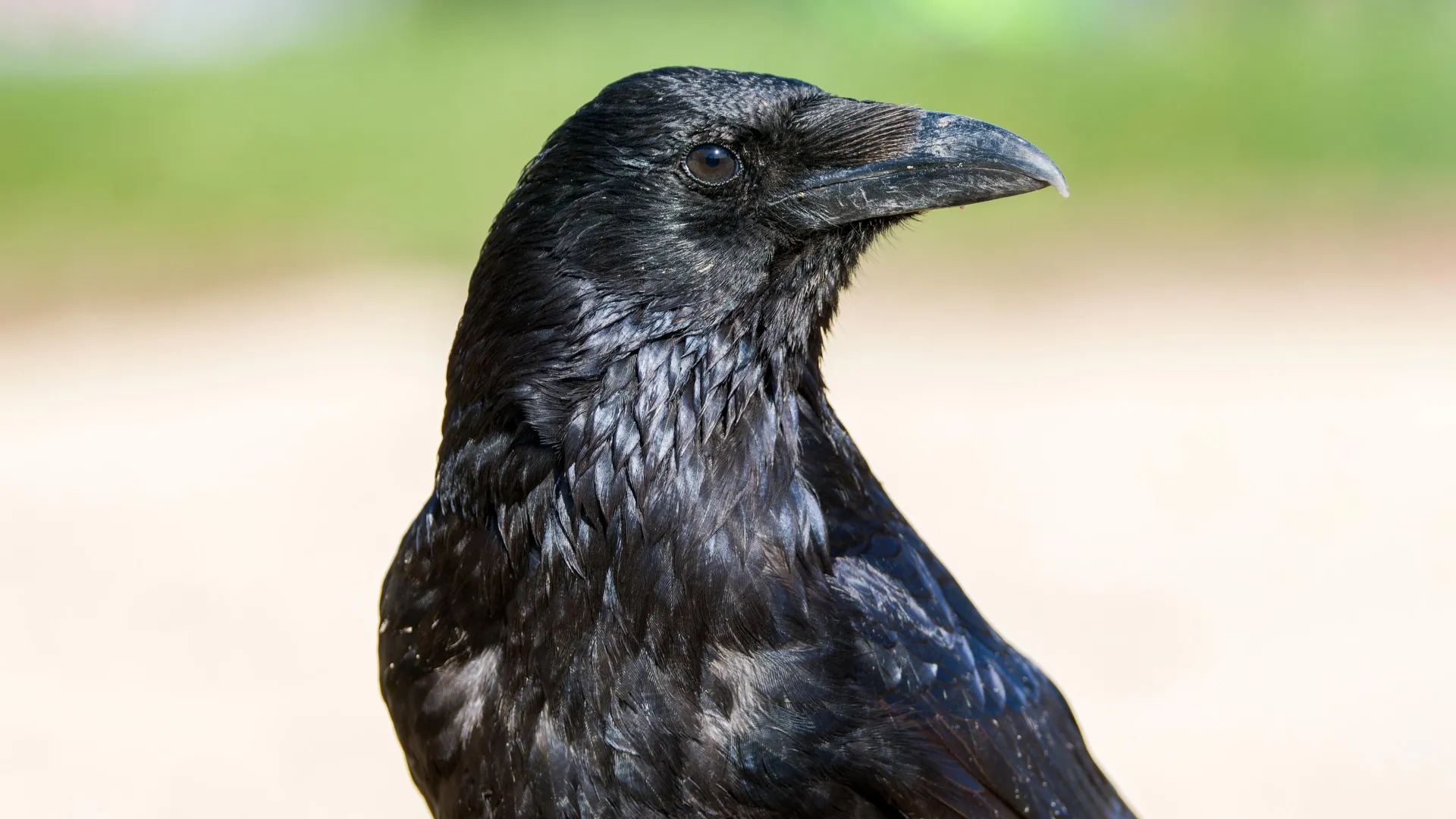
Carrion crows can see, decide and act in about 235 milliseconds, roughly half the time reported for humans and monkeys doing similar tasks, according to a study in the journal Science. The researchers also recorded the brain activity behind those quick calls, and it looks surprisingly like ours.
The work comes from the University of Tübingen's Institute of Neurobiology, where Philipp Schmidbauer and Professor Andreas Nieder trained two carrion crows (Corvus corone) on a touchscreen task. Moving dots appeared on the screen, and the birds had to judge whether most of them were drifting left or right, then peck a target on the matching side. The paper is titled "Ultrarapid decision-making in an avian brain."
The researchers varied the difficulty. When the dots moved clearly in one direction, the crows were right nearly 100% of the time. When the motion was hard to read, they still did better than chance. The average time from the dots appearing to the bird's response was 235 milliseconds.
While the crows worked, the team recorded from neurons in the nidopallium caudolaterale, a region the study likens to the human prefrontal cortex. About 70 milliseconds after the dots appeared, those neurons began to separate the two directions. Activity then climbed until it reached a decision threshold. The build-up reflected both how clear the motion was and which way the bird went, and those signals appeared before the physical response.
That pattern, a signal that accumulates until it crosses a bar, is the standard model of decision-making in humans and monkeys. Nieder said the neuronal dynamics in the avian brain are "consistent with established models of decision-making in humans and non-human primates." Schmidbauer pointed out that the crows' decisions were better than random even when the motion was nearly unreadable.
The similarity is notable because birds lack the layered cerebral cortex found in mammals. Their brains are built differently, yet they appear to reach the same computational solution. The authors suggest the extra speed may reflect evolutionary pressure from flight and from foraging with the beak, where a slow reaction costs a meal or a life.
There are limits. The study used two birds and one type of task, and the exact mechanisms behind the speed advantage remain unknown. The authors say further studies are needed to learn whether the same quick threshold system works across other kinds of choices, and in other species.
Even so, the result adds to a growing body of work showing that corvids, the family that includes crows, ravens and jays, have sophisticated minds. It also suggests that fast, flexible decision-making can arise in more than one kind of brain.