Your Brain Starts Deciding Before You 'Think,' a New Study Finds — With Lessons for AI
University of Illinois researchers found that decision signals reach even the brain's primary sensory areas through rapid top-down feedback, overturning the idea that perception simply flows forward.
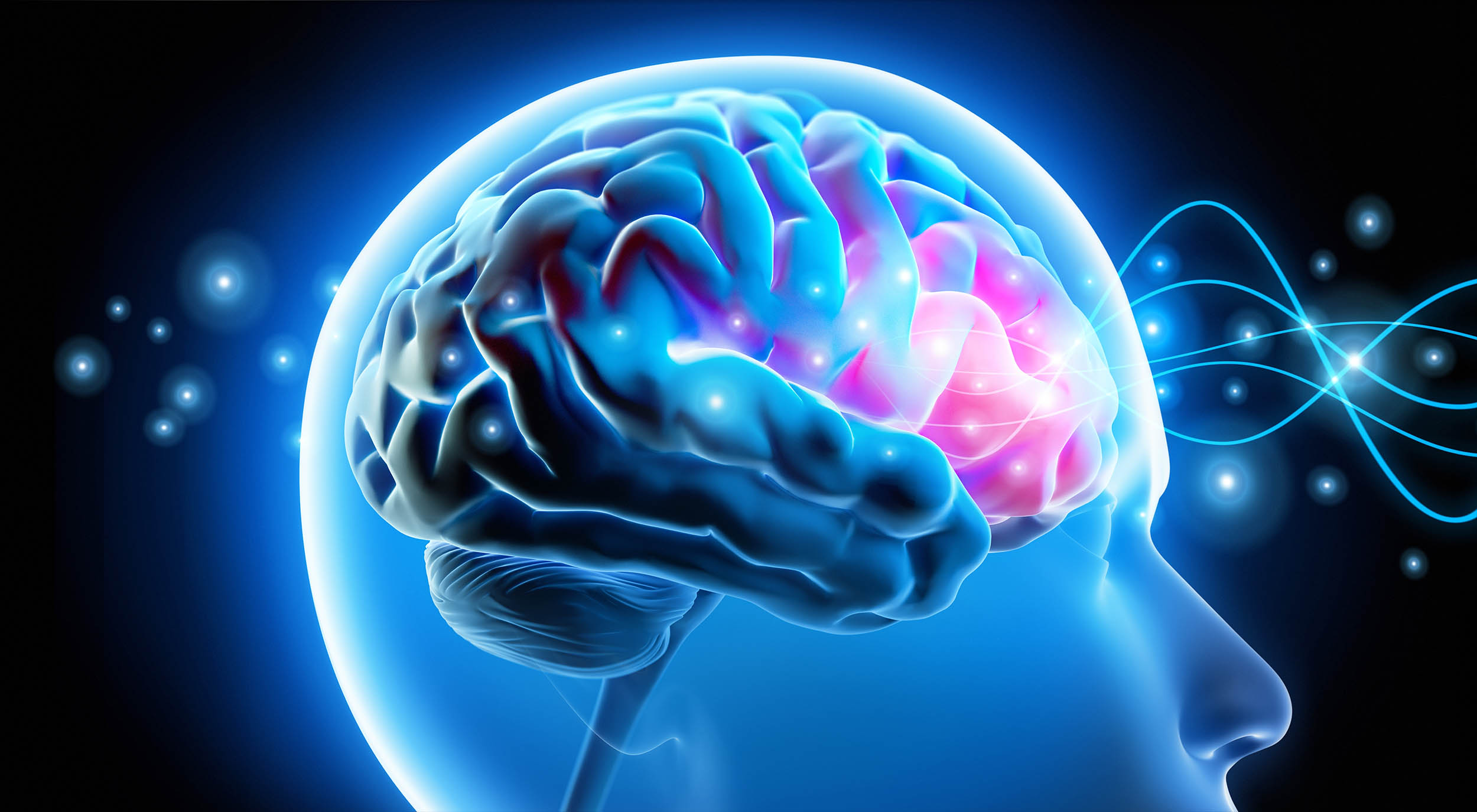
The brain begins committing to a decision far earlier than scientists had assumed, and it does so in a place no one expected to look, according to a new study that could reshape how researchers think about both cognition and artificial intelligence. Working with mice, scientists at the University of Illinois Urbana-Champaign found that signals reflecting an animal's choice appear in the primary somatosensory cortex — a region long regarded as a simple relay for raw touch information — through rapid feedback from higher brain areas.
For decades, the dominant picture of perception has been a largely one-way street: sensory organs gather information, primary sensory regions pass it forward, and only later, in association and decision-making areas, does the brain weigh options and commit. The new work, published in the Proceedings of the National Academy of Sciences by Alex G. Armstrong and Yurii Vlasov, challenges that feedforward assumption. It shows that even the earliest cortical stops in the sensory pathway are shaped in real time by top-down influences carrying the imprint of an impending decision.
The researchers reached that conclusion by recording neural activity as animals performed a sensory task, then tracing when and where choice-related signals emerged. Rather than arising only in downstream "thinking" regions, decision-related activity showed up early in the primary sensory cortex, delivered through fast feedback loops from higher areas. In effect, the brain appears to fold expectation and intention back into perception almost as soon as a stimulus arrives, blurring the line between sensing and deciding.
That dynamic, back-and-forth architecture may help explain how brains make quick, context-sensitive judgments while consuming remarkably little energy. The human brain runs on roughly the power of a dim light bulb, a stark contrast to the enormous electricity demands of modern artificial-intelligence systems, which typically process information in rigid, layer-by-layer sweeps that resemble the outdated feedforward model of perception.
The authors argue that their findings could guide a new generation of AI hardware and algorithms that borrow the brain's trick of pervasive feedback. Systems built to let higher-level goals continuously reshape low-level processing might reach decisions faster and with far greater efficiency than today's networks, which often separate perception and decision into distinct stages. Neuromorphic engineers have long sought such biologically inspired designs, and the study offers concrete evidence of a mechanism worth imitating.
Much remains to be worked out, including how closely the mouse findings map onto human cognition and whether the same feedback signals shape more complex, deliberative choices. But the study adds to a growing body of evidence that perception and decision-making are deeply intertwined rather than cleanly sequential — and that the brain, unlike most machines, may never really stop making up its mind.