Yale Scientists Find a Hidden Network Inside the Eye, Upending How Vision Was Thought to Work
The retina's visual pathways don't work in isolation after all: researchers discovered an electrical network, coordinated by a newly identified 'commander' cell, that lets separate channels share signals to catch the faintest details.
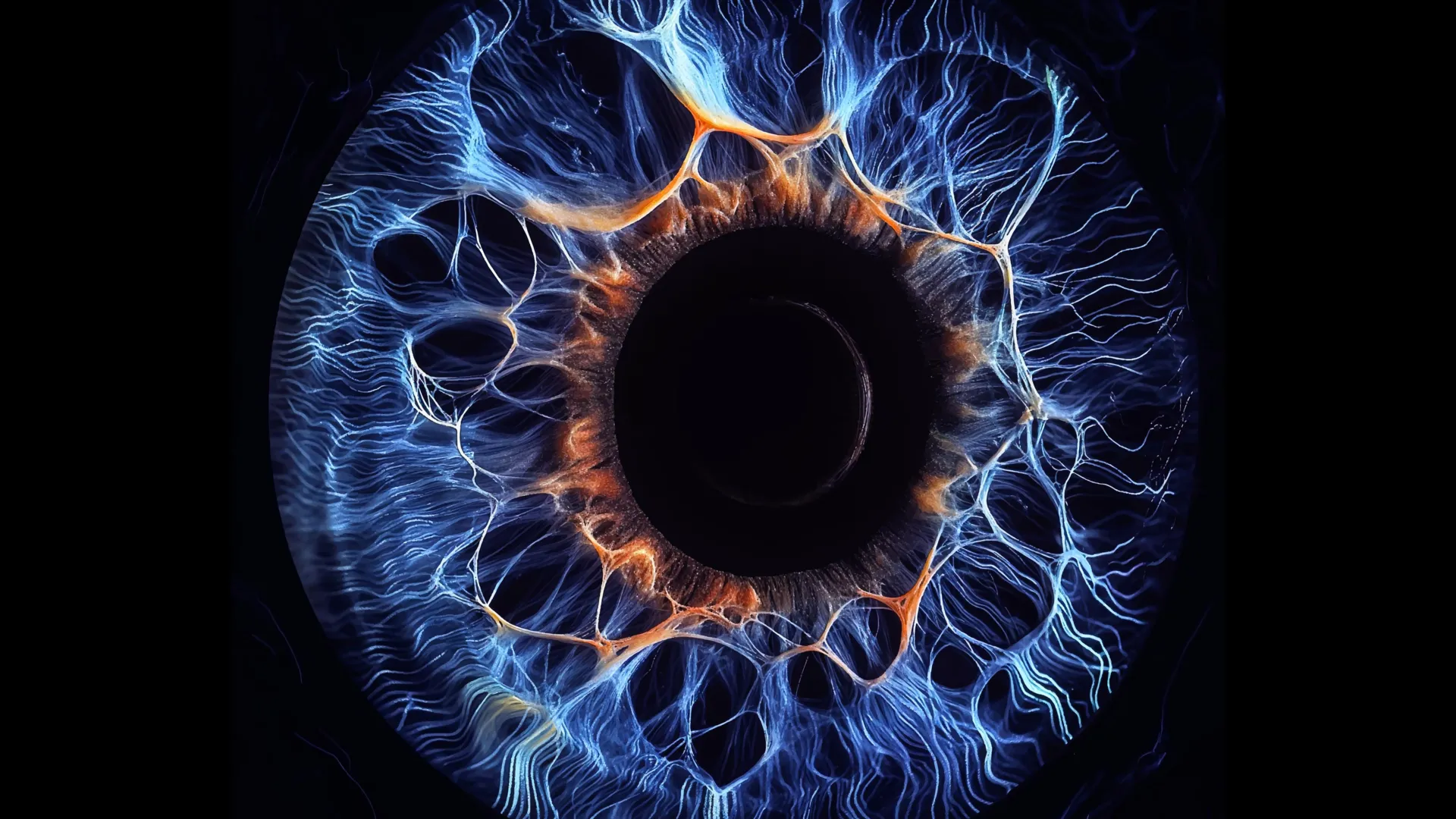
Scientists at Yale School of Medicine have discovered a hidden communication network inside the eye, a finding that overturns a longstanding textbook view of how the retina processes what we see and may help explain how humans detect faint objects and see in near-darkness.
For decades, researchers believed the retina's visual pathways operated as separate, parallel channels, each carrying a specific slice of visual information — motion, contrast, fine detail — deeper into the brain without much cross-talk between them. That model of independent, specialized "wires" has been a cornerstone of vision science. The new study suggests the reality is far more connected.
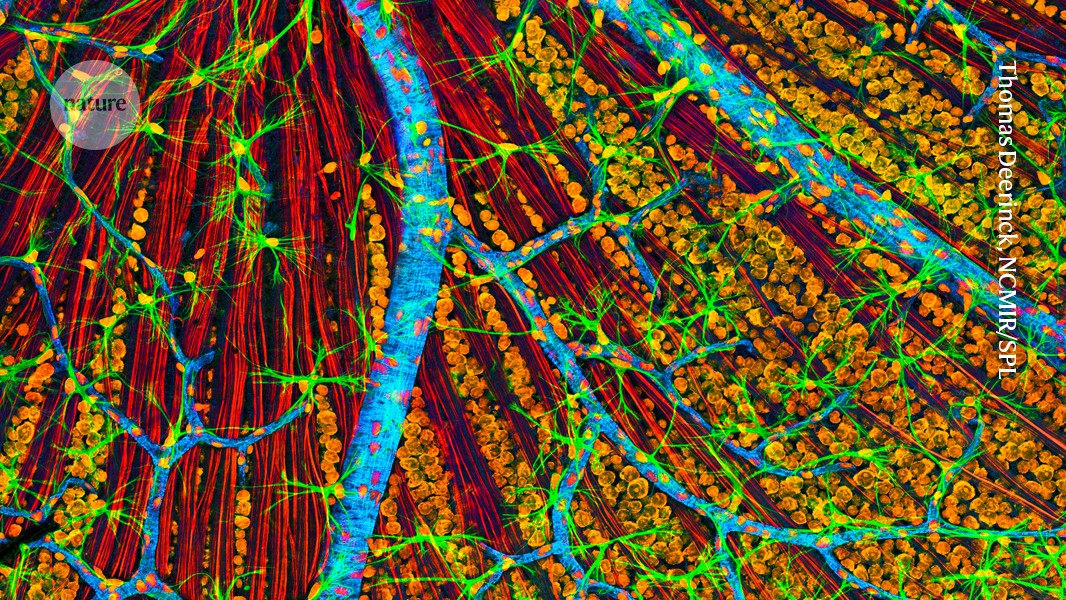
The Yale team found that bipolar cells, the neurons that relay signals from the eye's rods and cones into the visual system, are not isolated conduits. Instead, they are linked through an extensive web of electrical synapses, known as gap junctions, that allow signals to spread laterally between different pathways. Gap junctions act almost like tiny electrical bridges, letting current flow directly from one cell to its neighbor. Coordinating that web, the researchers reported, appears to be a newly identified "commander" cell that helps orchestrate when and how the channels share information.
This architecture, the scientists argue, offers the retina the best of both worlds. When light is plentiful, the separate channels can specialize, each focusing on the particular visual feature it handles best, keeping the image sharp and detailed. But when a signal is especially weak — a dim shape at the edge of vision, a faint star in a dark sky — the electrical connections let the pathways pool their information, boosting the odds of detecting something that any single channel, acting alone, might miss entirely.
The work, published in the journal Neuron, reframes the retina not as a bank of independent sensors but as a collaborative, adaptive network capable of switching strategies depending on the conditions. That flexibility could help account for the remarkable sensitivity of human vision at night, one of the more impressive and least understood feats of the visual system.
Beyond basic biology, the researchers said, a clearer picture of how the retina integrates signals could inform the study of eye diseases in which these connections break down, potentially pointing to new targets for treatment. It could also inspire fresh approaches in artificial vision systems and camera sensors, which have long struggled to match the eye's uncanny ability to see when there is almost nothing to see. Far from being a passive window, the study suggests, the eye is quietly doing sophisticated computing before a single signal ever reaches the brain.