Mount Etna May Be a One-of-a-Kind 'Petit-Spot' Volcano, Rewriting Its Origin Story
A new study suggests Europe's most active volcano is fed by static pockets of magma some 80 kilometers down, defying the three classic ways volcanoes are thought to form.
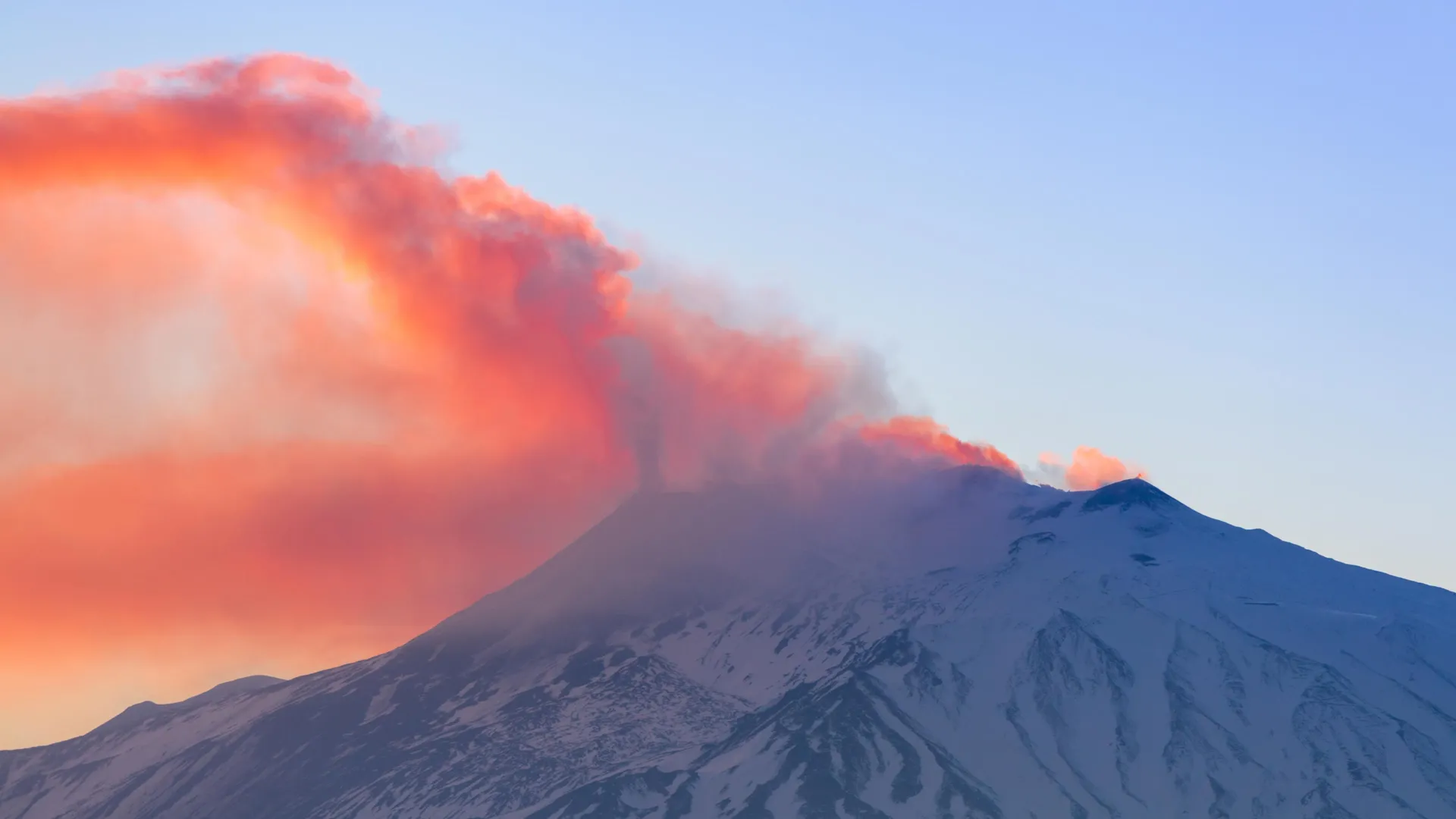
Mount Etna, the towering Sicilian volcano that ranks as the most active in Europe, has long confounded geologists because it refuses to fit neatly into any of the standard categories used to explain how volcanoes form. Now a new study proposes a radical answer: Etna may belong to a rare and little-understood class of volcano, making it potentially one of a kind on Earth.
Volcanoes are typically sorted into three broad groups based on how their magma is generated — those that arise at the boundaries where tectonic plates pull apart, those fueled by subduction zones where one plate dives beneath another, and those that sit atop hotspots welling up from deep within the mantle. Etna has always been a misfit. It sits near a subduction zone, yet the chemical fingerprint of its lava more closely resembles that of a hotspot volcano, frustrating decades of attempts to classify it.
The new research, published in the Journal of Geophysical Research – Solid Earth, offers a fresh explanation. The authors argue that Etna's magma supply originates in distinct pockets in the upper mantle, roughly 80 kilometers beneath the surface. Unlike more conventional volcanic systems, in which magma forms shortly before an eruption, this deep magma appears to remain relatively static over long stretches of time before making its way upward.
That behavior, the researchers say, points to a category known as a "petit-spot" volcano — a type first identified only in 2006 and characterized by magma drawn from small reservoirs in the upper mantle rather than from the more familiar deep plumes or plate-boundary processes. If the interpretation holds, Etna would be the largest known example of such a system, and its formation would stand apart from that of virtually every other major volcano on the planet.
The implications reach beyond a single mountain. Understanding exactly how and where Etna's magma is generated could sharpen scientists' ability to interpret the volcano's frequent eruptions, which regularly disrupt air travel and life across eastern Sicily. A clearer picture of the plumbing beneath Etna may also refine models of how magma moves through the crust in other complex tectonic settings around the Mediterranean.
For now, the study reframes one of geology's enduring puzzles rather than closing it, and researchers caution that further work will be needed to confirm the petit-spot hypothesis. But it offers a compelling new way to think about a volcano that has erupted for hundreds of thousands of years and continues, even now, to defy easy explanation.