100-Million-Year-Old Snake Fossil Reveals Evolutionary Secrets and Lost Bone
Najash rionegrina specimen challenges long-held theories about snake origins, showing early serpents were large predators with hind legs and intact cheekbones.
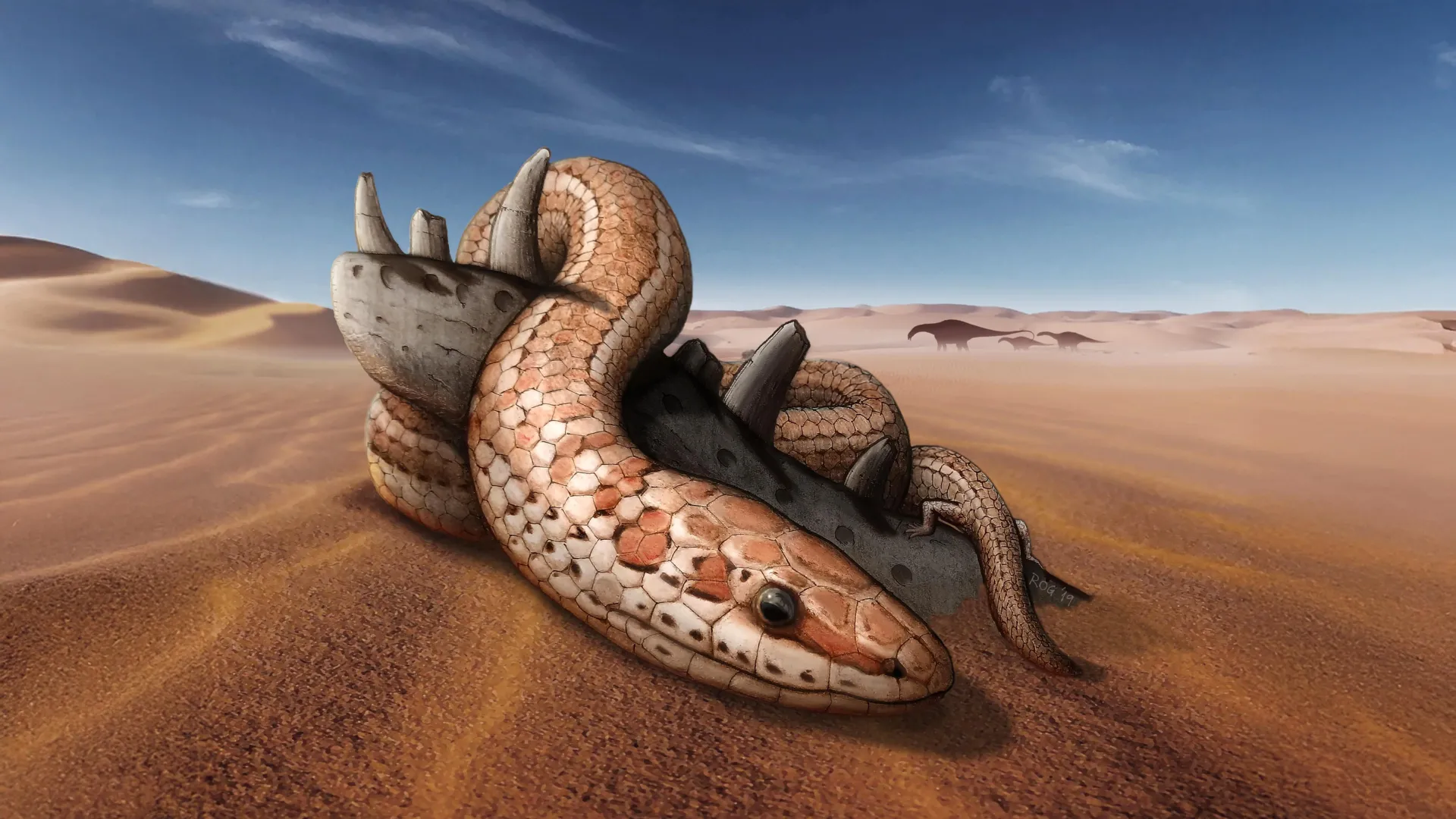
A remarkably preserved fossil from Argentina has fundamentally changed scientists' understanding of snake evolution, revealing that early serpents retained hind legs and possessed a cheekbone that has almost completely disappeared in modern species. The specimen of Najash rionegrina, dating back nearly 100 million years, provides unprecedented insight into how snakes transitioned from their lizard ancestors into the streamlined predators we know today.
The fossil's exceptional preservation allowed researchers to use micro-computed tomography scanning to reconstruct the skull in extraordinary detail, including the paths of nerves and blood vessels as well as bones buried within the rock matrix. This level of detail helped resolve a long-standing anatomical debate that had persisted for more than 160 years regarding the jugal bone, also known as the cheekbone, in snakes and their relatives. The study's findings, published in 2019, provided direct empirical evidence to correct previous misunderstandings about this critical skeletal feature.
Fernando Garberoglio from the Fundación Azara at Universidad Maimónides in Buenos Aires, the study's lead author, explained that their findings support the idea that snake ancestors were large-bodied animals with wide mouths rather than small burrowing forms as previously theorized. This discovery challenges the traditional narrative that snakes evolved from tiny, underground-dwelling creatures, instead suggesting they descended from more substantial surface-dwelling predators. The presence of well-developed hind limbs in these ancient snakes indicates that the transition to a completely limbless body plan occurred much later than scientists had assumed.
Michael Caldwell, professor in the Department of Biological Sciences and Earth and Atmospheric Sciences and co-author of the study, emphasized the revolutionary nature of the research in understanding jugal bone evolution. The study corrected fundamental misconceptions about this anatomical feature that had persisted in scientific literature for generations, replacing speculation with concrete fossil evidence. The Najash specimens provided the missing link needed to understand how modern snake skulls achieved their highly specialized structure through a specific sequence of bone loss over millions of years.
The fossil snakes from Northern Patagonia belong to an ancient southern lineage that once lived across the Gondwana supercontinent, with connections to only a small number of unusual snake species that survive today. This geographic and evolutionary context suggests that snake evolution followed different pathways in different regions of the ancient world, with the southern lineages preserving features that were lost in other snake groups. The discovery has broader implications for understanding how major evolutionary transitions occur and how anatomical innovations arise in vertebrate animals.