Massive 50-Foot Ancient Snake Discovered in India May Rival Legendary Titanoboa
Vasuki indicus lived 47 million years ago and could have stretched up to 49 feet long, making it one of the largest snakes ever discovered.
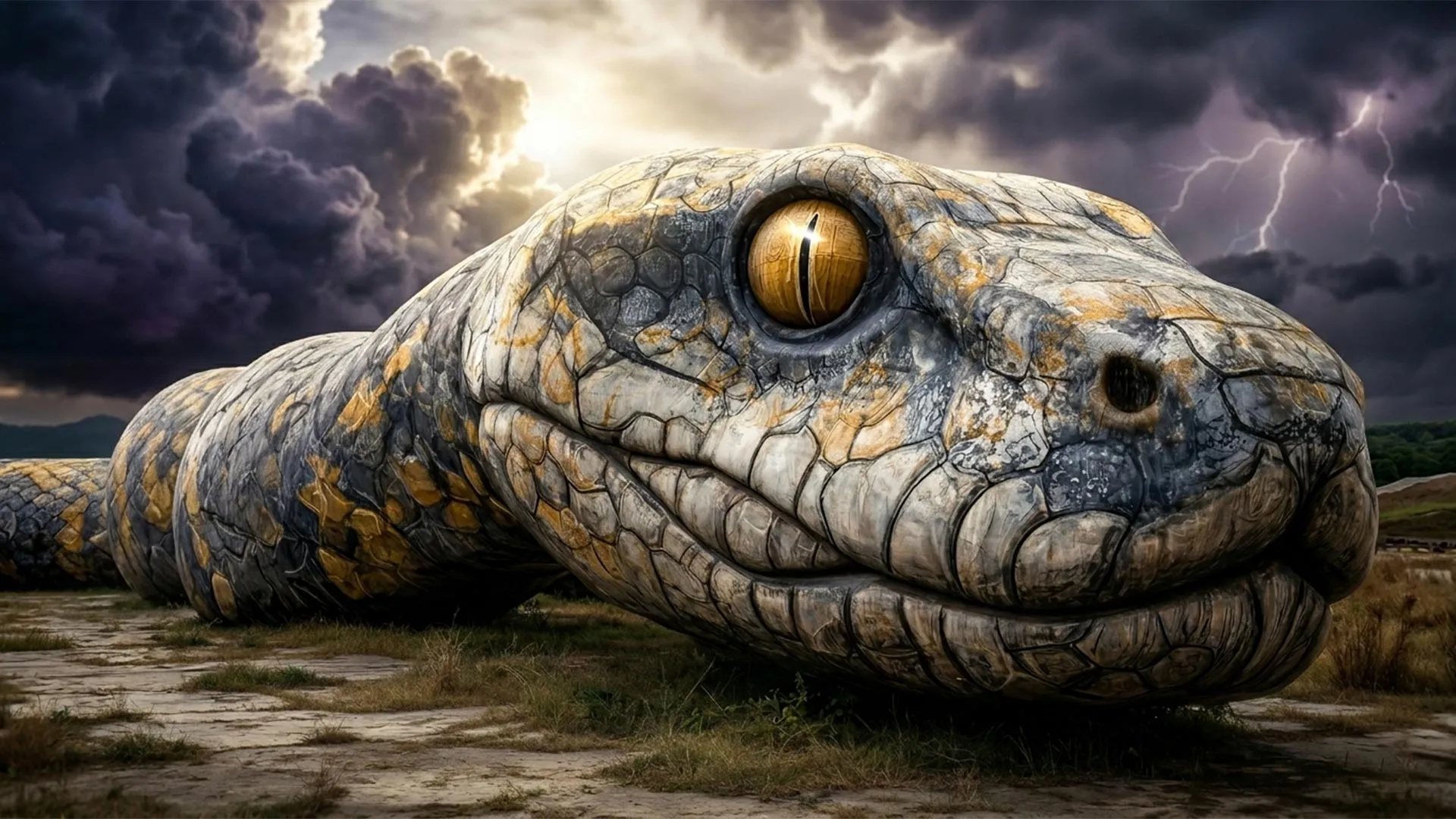
Scientists have discovered the fossilized remains of a colossal prehistoric snake in India that may rank among the largest serpents ever to exist on Earth, challenging the size record currently held by the famous Titanoboa. Named Vasuki indicus after the mythical serpent associated with the Hindu deity Shiva, this ancient giant lived approximately 47 million years ago during the Middle Eocene period and is estimated to have reached an extraordinary length of 11 to 15 meters, or roughly 36 to 49 feet. The discovery comes from 27 well-preserved vertebrae recovered from the Panandhro Lignite Mine in Kutch, Gujarat State, providing crucial insights into the massive reptile's size and structure.
The fossil specimen was described by researchers Debajit Datta and Sunil Bajpai in a study published in Scientific Reports, with the vertebrae measurements revealing a snake of truly impressive proportions. Each individual vertebra measured between 37.5 and 62.7 millimeters in length and 62.4 to 111.4 millimeters in width, indicating a thick, cylindrical body structure similar to modern anacondas. The preservation quality was exceptional, with some vertebrae still connected in their original positions, suggesting the remains belonged to a fully grown adult specimen rather than a juvenile that might have grown even larger.
Vasuki indicus belonged to the extinct madtsoiidae family, a group of snakes that dominated various ecosystems for nearly 100 million years, spanning from the Late Cretaceous to the Late Pleistocene periods. These ancient serpents had a remarkably wide geographic distribution, with fossil evidence found across Africa, Europe, and India. The researchers suggest that Vasuki indicus may represent a unique lineage that first evolved on the Indian subcontinent before spreading to other regions, potentially reaching southern Europe and Africa during the Eocene epoch when global temperatures were significantly warmer than today.
Given its massive build and estimated weight, Vasuki indicus was likely a slow-moving predator that relied on ambush tactics rather than active pursuit of prey, much like modern anacondas and pythons. The snake's enormous size would have made it the apex predator in its ancient ecosystem, capable of taking down large mammals, birds, and other reptiles that shared its environment. The warm, humid climate of the Eocene period would have provided ideal conditions for such a large cold-blooded predator, with abundant prey and favorable temperatures supporting its massive metabolism.
The discovery of Vasuki indicus adds important evidence to our understanding of how ancient ecosystems supported such massive predators and highlights the incredible diversity of life that existed during the Eocene period. The snake's size rivals that of Titanoboa, the previous record holder from South America, suggesting that multiple lineages of giant snakes evolved independently in different parts of the world during this warm period in Earth's history. While the exact size comparison between Vasuki indicus and Titanoboa remains uncertain due to estimation methods, the Indian discovery demonstrates that truly colossal serpents were not unique to South America but represented a global phenomenon during the age of giant reptiles.