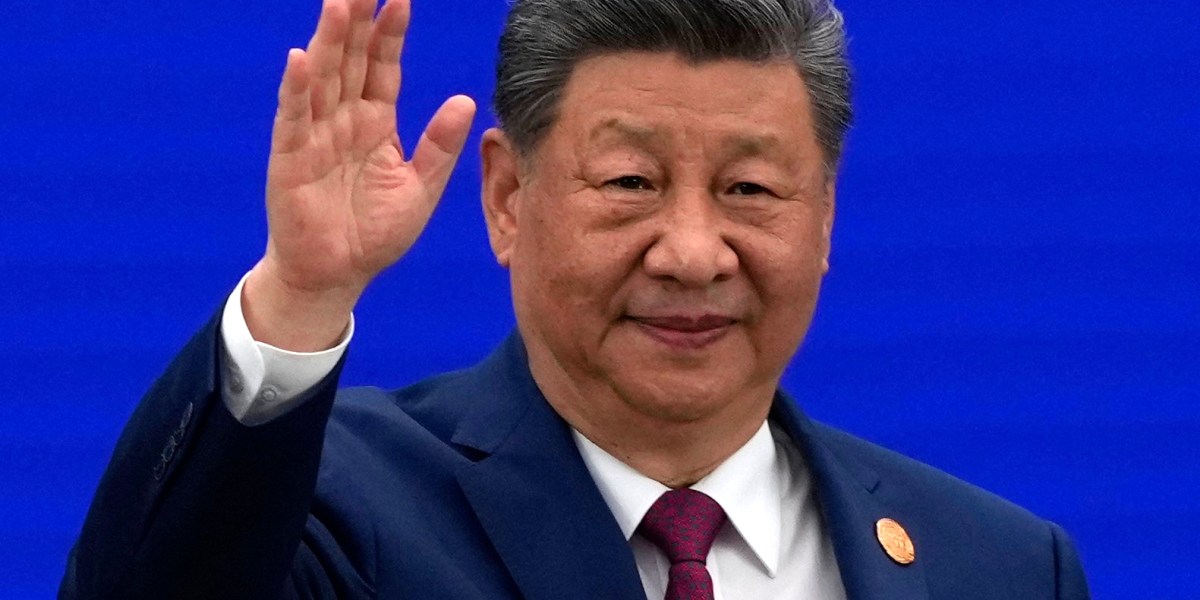
Trump Hosts Xi at the White House, Calls It a 'Great Meeting' and Won't Say What They Discussed
Xi Jinping's first White House visit in more than a decade brought fighter-jet flyovers, a pledge of two pandas for Atlanta and talk of AI "always under human control." Trump ignored shouted questions about Taiwan and Jimmy Lai.
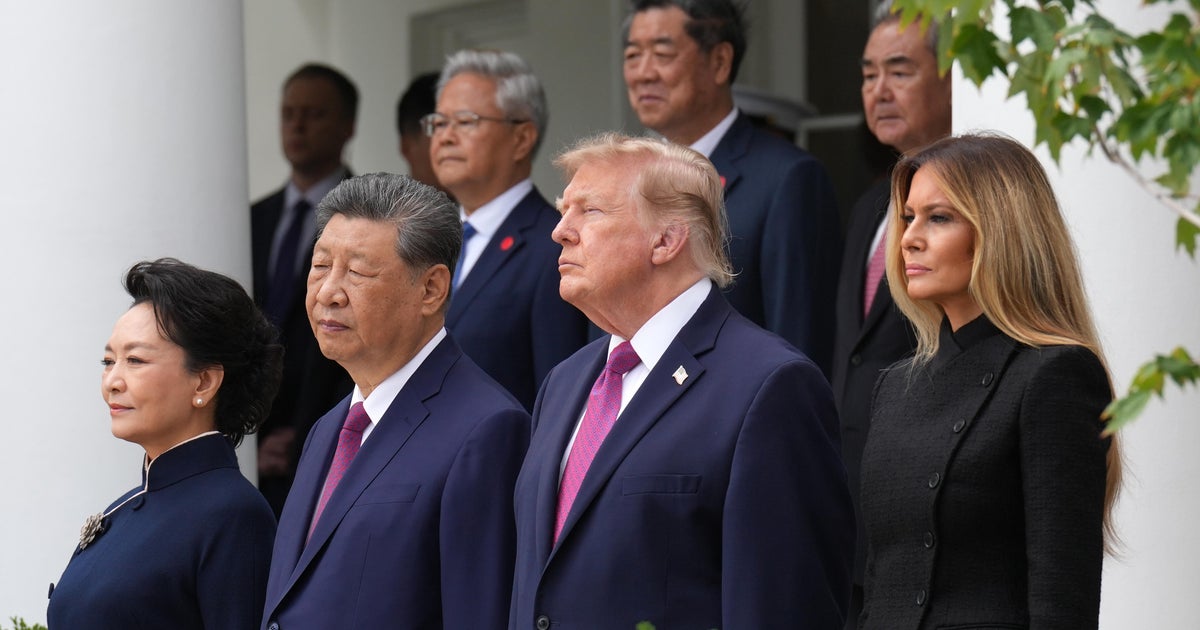
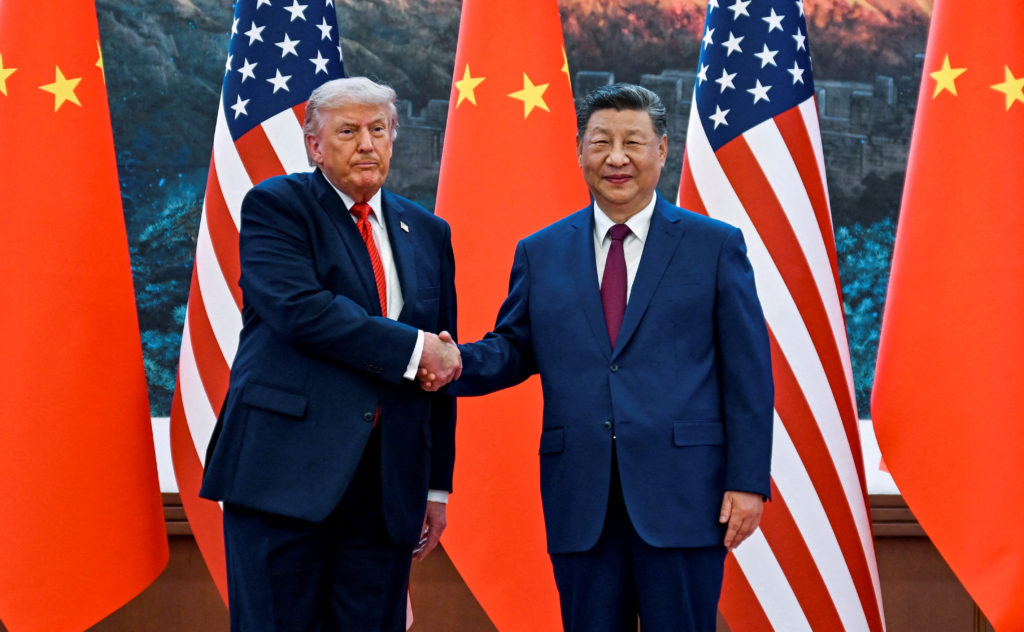
President Donald Trump welcomed Chinese President Xi Jinping to the White House on Thursday for his first visit in more than a decade, staging an elaborate arrival ceremony with military bands and fighter-jet flyovers before the two leaders sat down in the Oval Office for talks on trade, technology and artificial intelligence.
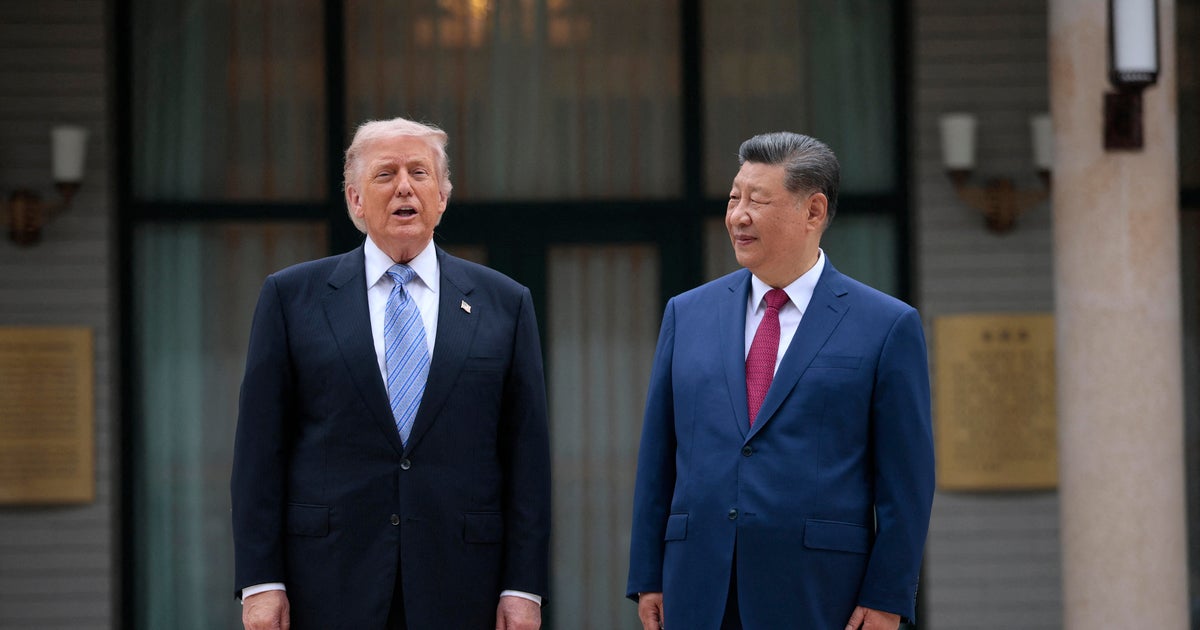
Xi and his wife, Peng Liyuan, arrived shortly after 10 a.m. and were greeted by Trump and first lady Melania Trump. The leaders walked into the Rose Garden to a performance by the U.S. Army Old Fife and Drum Corps and then along the colonnade lined with portraits of past presidents. Vice President JD Vance, Treasury Secretary Scott Bessent, Trade Representative Jamieson Greer and White House chief of staff Susie Wiles were among the officials on hand.
"In May, we had the great privilege of visiting you in Beijing, where you received our delegation with spectacular and very beautiful hospitality," Trump said in the Grand Foyer. "From the time of my first election in 2016, President Xi and I have forged a friendship, a truly great friendship, actually, built on mutual respect and the vital interests of our people." He said the talks would cover security, technology and what he calls super intelligence.
Xi, speaking through a translator, said both countries lead the world in artificial intelligence and called for the "development of AI, always under human control." He said the two nations "set to gain from cooperation and will both lose in competition," adding: "We do not need to avoid mentioning competition, but our competition should be a healthy one, and should be kept within bounds." He also said he hoped Chinese companies would be treated fairly in the United States, and announced that China will send two giant pandas to Zoo Atlanta.
Trump had flagged AI as the centerpiece that morning. "Super Intelligence (SI) will be a big topic of discussion, but I want to leave it exactly where it is. That is China's position also. Our guardrail is the DOJ!" he posted on Truth Social. Earlier in the week he told the U.N. General Assembly that "whoever wins AI, wins."
After the Oval Office session, Trump told reporters on the South Lawn that the two had "a great meeting," but he declined to answer shouted questions about whether they discussed Taiwan, AI or Jimmy Lai, the Hong Kong pro-democracy publisher sentenced in February to 20 years in prison. Trump called Xi "an expert on stone" who "loves good granite," showed him the new White House helipad and took him aboard Marine One. Xi left at about 1:30 p.m. without answering questions, and was due back with his wife at about 6:45 p.m. for a state dinner that opens with a sparkling-wine toast recalling the one Richard Nixon and Zhou Enlai shared in Beijing in 1972.
The visit comes days after the two sides agreed to extend their tariff truce by two months, a deal Bessent announced earlier in the week. It also unfolded without the usual television pool. After journalists from CNN, Politico and MS NOW were turned away at the gate Thursday morning, despite a federal judge's order temporarily blocking the president's ban on their outlets, the network pool did not cover the president's movements.
Not everyone in Washington welcomed the pageantry. Sen. Roger Wicker, the Mississippi Republican who chairs the Senate Armed Services Committee, said on the Senate floor Tuesday that he would have advised against "such a lavish welcome." Sen. Richard Blumenthal, a Connecticut Democrat, pointed to reports that Beijing has helped Tehran during the Iran war. "The president should not be feting and praising Xi," he said. "He should be telling him, 'Knock it off!'"
Chinese analysts expect little from the summit. "I think after all these years, Americans should understand pressure doesn't work," Zhao Hai of the Chinese Institute of Hong Kong told CBS News. "It doesn't work on Xi. It doesn't work on China, and it doesn't work on the Chinese people."