Trump Greets Xi on the Tarmac as the U.S. and China Extend Their Trade Truce to Jan. 10
The Chinese leader's first state visit in more than a decade opened with a rare planeside welcome at Joint Base Andrews. Bessent announced a two-month truce extension, far shorter than many expected.
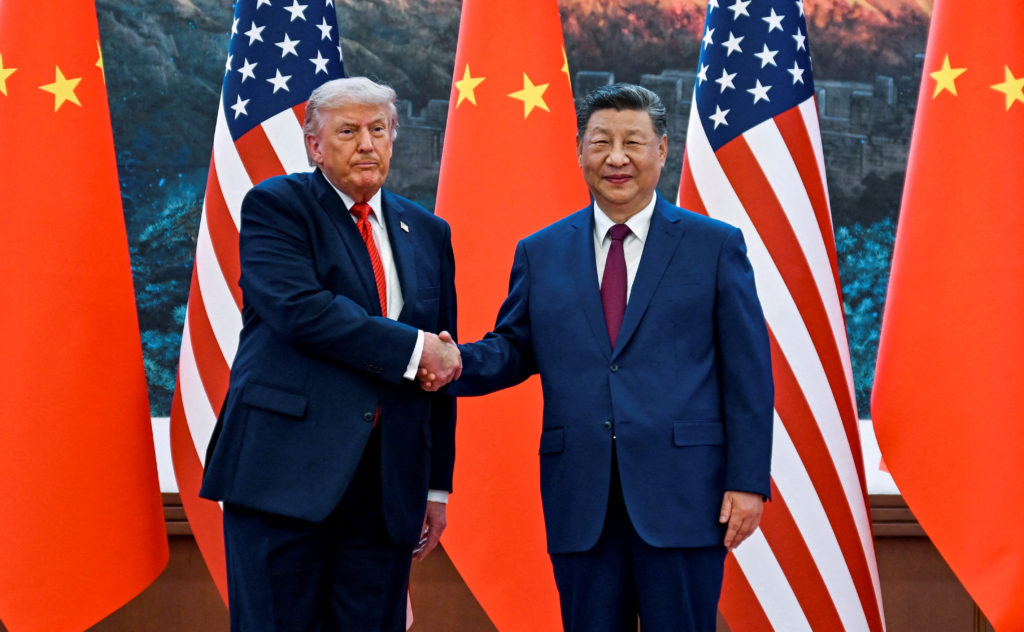
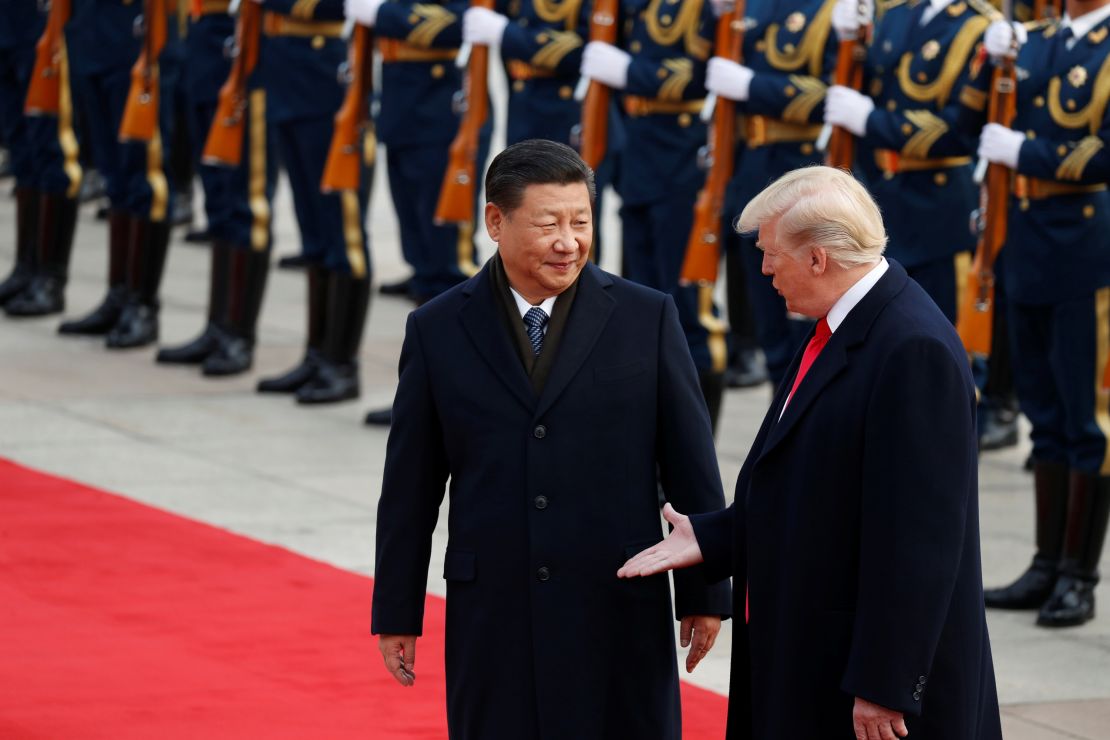
WASHINGTON — Chinese President Xi Jinping landed outside Washington on Wednesday evening and found President Donald Trump waiting for him at the foot of his plane, a rare planeside welcome that opened the Chinese leader's first state visit to the U.S. capital in more than a decade.
Trump and first lady Melania Trump greeted Xi and his wife, Peng Liyuan, at Joint Base Andrews instead of receiving them at the White House, as presidents usually do. Melania Trump told Fox News earlier in the day that her husband chose to go to the airport because "they have a great relationship." "He's coming on our soil, and we need to welcome them with the most respect," she said.
As the ceremony played out, Treasury Secretary Scott Bessent told Fox News that the two countries had agreed to extend their trade truce to Jan. 10. The deal, struck by Trump and Xi in Busan, South Korea, last October, lowered tariffs, kept Chinese rare earth minerals flowing and barred new trade restrictions. It was due to expire in November. Bessent said Beijing still needs to deliver more. Many analysts had expected an extension of six months or longer. "The two-month extension suggests to me the U.S. is unsatisfied with China's offers and wants to keep the heat on, with a bonus being it is more likely that Xi goes to the G20 in Miami," said Scott Kennedy of the Center for Strategic and International Studies.
The announcement followed an unscheduled meeting between Bessent and Chinese Vice Premier He Lifeng. Bessent said the two sides also discussed an alert channel for artificial intelligence incidents with national security implications. Xi, in an official readout of his arrival, said he was confident the visit would produce "fruitful results" and that the two countries should be "partners, not rivals." The readout did not mention tariffs, rare earths or AI. Trump told reporters after the greeting that he would raise the Iran war with Xi, among "many other subjects."
The three-day visit is built around pageantry. Thursday brings a White House arrival ceremony, a review of troops, closed-door talks and a black-tie state dinner whose guests are expected to include Nvidia's Jensen Huang and SpaceX's Elon Musk. No Chinese tech executives are expected. On Friday the two couples will have a private tea and tour the National Archives. Trump has said he was pleased his new helicopter landing pad, which he called a "work of art," would be ready, and disappointed that his White House ballroom would not.
Not every Republican is comfortable with the welcome. Sen. Roger Wicker of Mississippi, chairman of the Senate Armed Services Committee, said on the Senate floor Tuesday that Trump should not have invited Xi at all. He urged Trump to ask Xi about "the purposes of China's massive military buildup, or about China's clear support for Iran," and to remember that "his guest is a brutal, unelected and oppressive dictator." Secretary of State Marco Rubio pushed back Wednesday. "The idea that we would not interact with them at the highest levels is irresponsible. It's outrageous. We have to," he said.
The visit repays the ceremony Trump received in Beijing in May, when a military band and about 300 flag-waving children met Air Force One. Xi himself was not at the airport then; he sent Vice President Han Zheng. The two leaders could meet again in November at the APEC summit in Shenzhen and in December at the G20 in Miami.