Xi Landed in New Delhi for the First Time in Seven Years
By Evening, BRICS Had a Declaration and Modi Had a Handshake.
India pushed a consensus text through an 11-member bloc that includes both Iran and the UAE, then sat down with China's president for the first bilateral on Indian soil since the 2020 Galwan clash. Putin arrived a night earlier and denounced 'ugly' Western trade tactics.

Chinese President Xi Jinping arrived in New Delhi on Saturday for his first visit to India in nearly seven years, and by the end of the opening day of the 18th BRICS summit the bloc had adopted a joint declaration that Indian officials had feared might not come together at all.
Prime Minister Narendra Modi welcomed Xi at Bharat Mandapam, the convention complex that hosted the G20 in 2023, and announced the adoption of the New Delhi Declaration at the close of the day's sessions. "The New Delhi Declaration adopted today provides a clear direction for our shared resolve," Modi said in his concluding remarks. "It is now our responsibility to translate these resolutions into tangible results." BRICS operates by consensus, so any one of its 11 members can sink a communiqué. Iran and the United Arab Emirates, on opposite sides of the war in the Gulf, had both hardened their positions on the language covering the conflict, and the text was settled only after a series of back-channel negotiations that ran down to the wire, according to Indian news agency reports.
Modi used his remarks to press the reform agenda India has made the centerpiece of its chairmanship. "Today's discussion makes it evident that the changing world cannot be steered by outdated institutions; reforms are essential in representation, responsiveness and rule-making," he said, adding that "the Global South must have equal participation in the development of future technologies and the rules governing them." India's theme for the summit, "Building for Resilience, Innovation, Cooperation and Sustainability," was designed to spell out BRICS, and the two-day agenda includes a closed session on "Inclusive Global Governance and Strengthening Multilateralism."
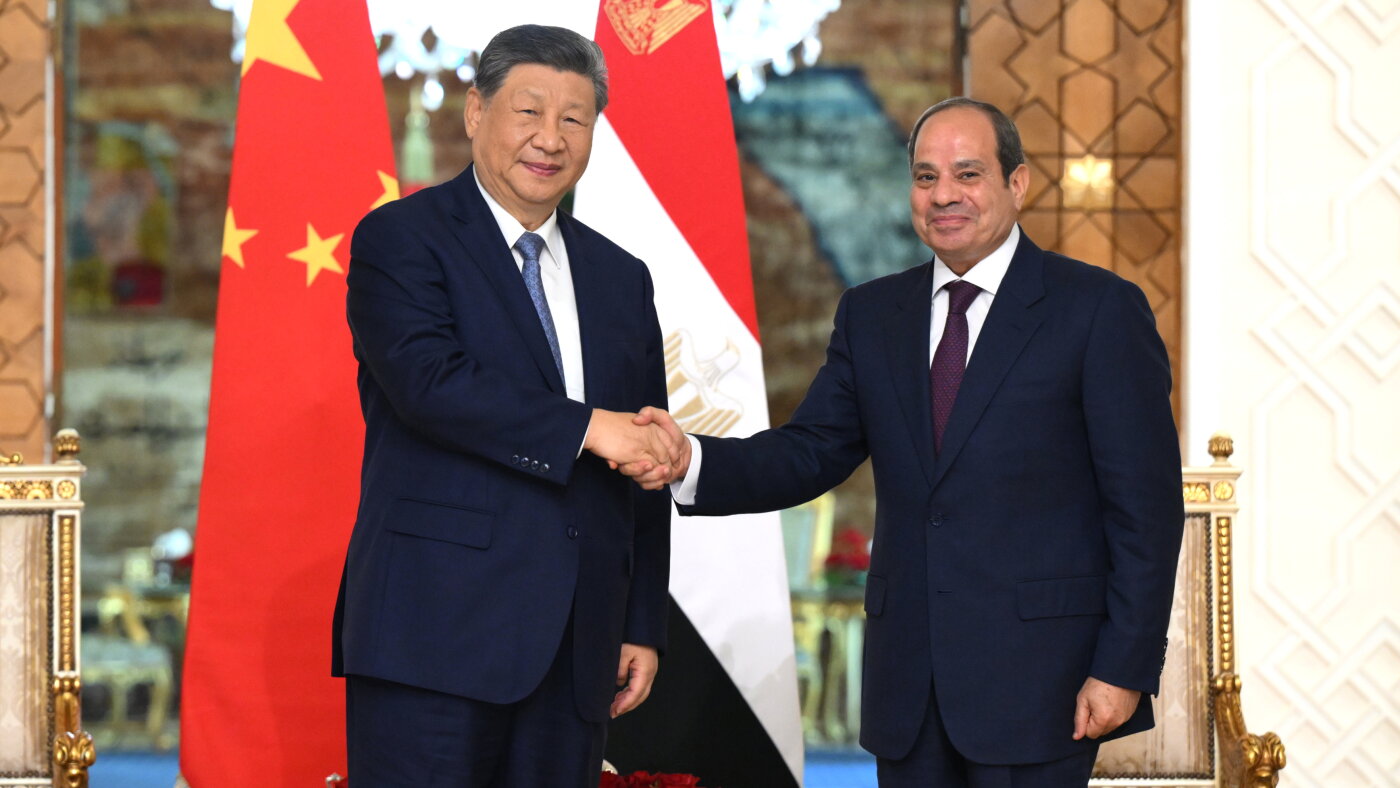
The more closely watched event was scheduled for the evening: a formal bilateral meeting between Modi and Xi, the first on Indian soil since the deadly 2020 clash in the Galwan Valley froze relations for years. Modi opened by thanking China for its support during India's chairmanship, and officials said the talks would review boundary stabilization measures, trade and investment channels and the restoration of broader economic engagement. Beijing had called ahead of the visit for "proper" handling of differences. Xi traveled with Cai Qi, the Politburo Standing Committee member who runs the party's General Office, and Foreign Minister Wang Yi, a delegation that signaled the weight China attached to the trip. Photographers caught Modi and Xi shaking hands at the end of the inaugural session.
Russian President Vladimir Putin had arrived Friday night and held his own bilateral with Modi covering trade, defense and energy. At the BRICS Business Forum he attacked what he called the West's "ugly" trade tactics and said Russia now faces more than 30,000 sanctions. Iranian President Masoud Pezeshkian, Egyptian President Abdel Fattah El-Sisi, South African President Cyril Ramaphosa, Indonesian President Prabowo Subianto and Ethiopian Prime Minister Abiy Ahmed were also in the hall, along with Abu Dhabi Crown Prince Sheikh Khaled bin Mohamed bin Zayed Al Nahyan representing the UAE and Brazilian Foreign Minister Mauro Vieira. Ten partner countries were invited alongside the 11 members. Delhi Police deployed roughly 15,000 officers and 200 companies of paramilitary forces, and the Foreign Ministry expected 1,200 to 1,300 journalists at the media center.
For India, the day delivered two things it wanted: a document that shows BRICS can still speak with one voice on a war that divides its own members, and a photograph of its prime minister beside China's president in the Indian capital. Whether the evening's talks produce anything on the border remains the harder test, and the summit runs through Sunday.