Vucic Concedes Defeat as Serbia's Student-Led List Wins Parliament After 14 Years of His Rule
Serbia's strongman said the Students' List would take 135 to 140 of 250 seats, ending a grip on power that began with a train-station disaster and two years of street protests.
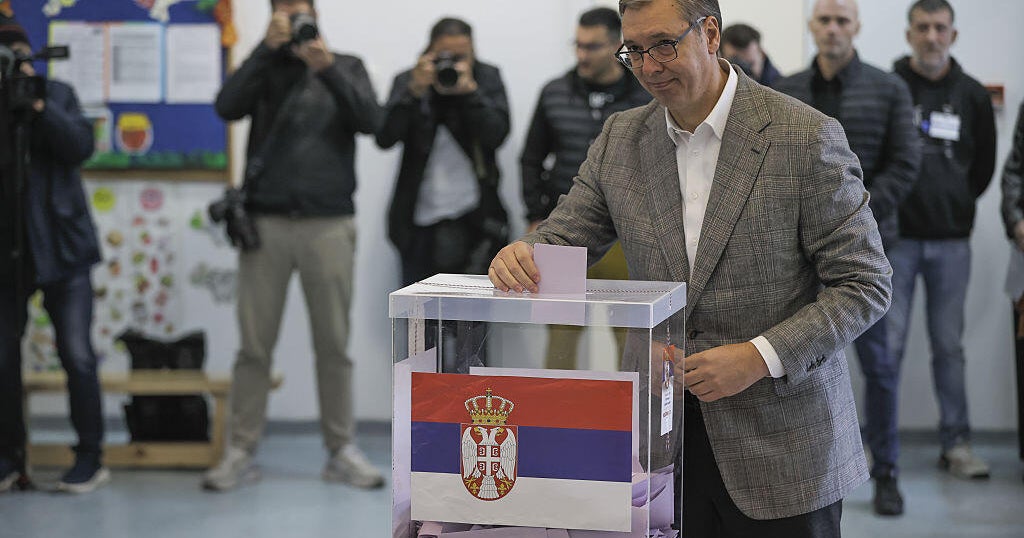
Serbian leader Aleksandar Vucic conceded defeat on Sunday night in a parliamentary election that his own numbers say was won by a student-led opposition movement, ending 14 years of near-absolute rule. He announced the result about an hour and a half after the polls closed.
"The Students' List has won," Vucic told supporters. He said the movement would take 135 to 140 seats in the 250-member Parliament, against about 105 for his right-wing Serbian Progressive Party. By his count, his party drew roughly 1.7 million votes and the Students' List about 2.2 million. About 6.4 million Serbians were eligible to vote, and monitors predicted turnout near 70%, the highest since 2000.
Vucic, who has been endorsed by Russian President Vladimir Putin, had resigned the presidency last month to run for prime minister. He is barred from a third presidential term. He blamed independent media, alleged interference by unnamed European countries and an "American deep state" for the loss. He has described the student movement as a foreign-led effort to unseat him.
The movement grew out of a 2024 disaster at the Novi Sad train station, where a concrete canopy collapsed and killed 16 people. Young protesters blamed high-level corruption, cronyism and graft during the station's renovation, and they spent two years in the streets. The Students' List was formed by university students, though no students appear on its candidate list. Its candidates include experts, athletes, farmers and artists. Students cycled and walked across the country to reach rural voters, who have traditionally backed Vucic.
The result echoes the defeat of Viktor Orban in Hungary, where high youth turnout helped end his 16-year rule. Vucic had retained support among voters who saw him as a capable leader in uncertain times, which is why many analysts called this the closest Serbian election in 14 years.
Scenes on election day were tense. Supporters of the Students' List poured into the streets of Belgrade and other cities, chanting "Aleksandar is gone." Police in anti-riot gear cordoned off central Belgrade around the election commission headquarters. Special police vehicles were seen near a Belgrade park where Vucic loyalists have camped for more than a year, and groups of black-clad men gathered at several points in the city. Diaspora voters, some in the middle of the night, faced long queues after authorities tied voting hours to local Serbian time.
Independent monitors reported dozens of irregularities, including ballot photographing that suggested voter pressure and attempted vote buying. Local elections earlier this year in 10 municipalities saw violent attacks on journalists and activists, and observers cited detentions, near-total government control of the media, and surveillance and cyberattacks against activists. The European Union, which Serbia hopes to join, watched the vote closely.
What comes next is unclear. Vucic's concession is not the same as a handover, and the formation of a government will test whether his party and the security services accept the outcome.