Putin Arrives in Beijing for Two-Day Xi Summit Just 48 Hours After Trump's State Visit, as China Cements Role as 'Focal Point of Global Diplomacy'
Russian President Vladimir Putin landed in the Chinese capital Tuesday evening to commemorate the 2001 Treaty of Good-Neighborliness with Xi Jinping. Energy supplies, Ukraine peace talks and the Iran war are expected to dominate the closed-door agenda.

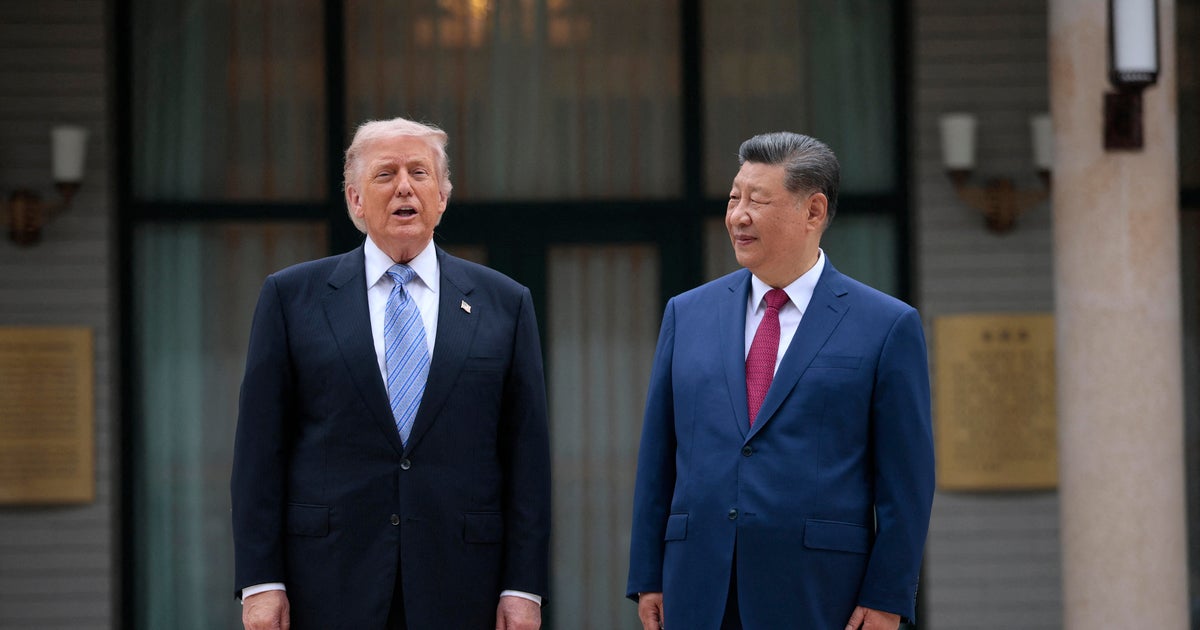
Russian President Vladimir Putin arrived in Beijing on Tuesday evening for a two-day state visit with Chinese President Xi Jinping, landing on a tarmac at Beijing Capital International Airport that Chinese protocol officers had cleared just 48 hours earlier of the red carpet rolled out for U.S. President Donald Trump. The unusually tight sequencing was no accident, Chinese state media made clear, with the Communist Party-owned Global Times trumpeting in a Tuesday-morning editorial that hosting "the leaders of the world's two largest economies and its largest nuclear power in a single week" demonstrated that Beijing has become "the focal point of global diplomacy."
The official purpose of Putin's trip, his second to China in the past 12 months, is to commemorate the 25th anniversary of the 2001 Sino-Russian Treaty of Good-Neighborliness and Friendly Cooperation, the foundational document of what Putin and Xi have repeatedly called a "no-limits partnership." Russian Presidential Aide Yuri Ushakov told reporters before the flight that the two leaders would sign "more than two dozen" bilateral agreements covering energy, infrastructure, agriculture and finance, and that a full state banquet and military honor guard would be held at the Great Hall of the People on Wednesday morning.
Energy is expected to dominate the closed-door agenda. China has become Russia's largest customer for crude oil and pipeline gas since European demand collapsed in 2022, buying Russian barrels at discounts that Western analysts estimate have cost Moscow between $80 billion and $120 billion in lost revenue over three years. Both sides are quietly pushing for a final investment decision on the long-stalled Power of Siberia 2 gas pipeline, which would carry 50 billion cubic meters of Russian gas annually to northern China through Mongolia. Russian state-owned Gazprom and China National Petroleum Corp. have negotiated price terms on and off since 2014 without agreement.
Ukraine will also be on the table. Beijing has publicly positioned itself as a neutral mediator since launching its 12-point peace plan in 2023, and Xi told Trump during last week's summit that China was "ready to play a constructive role in ending the conflict at an early date," according to a Chinese readout. But Western diplomats remain deeply skeptical of Beijing's claimed neutrality given the depth of Chinese dual-use exports to Russian defense manufacturers — exports the European Commission documented in a confidential April report estimating that Chinese components now account for roughly 60% of microelectronics in Russian missiles and drones.
The optics of the back-to-back summits have triggered alarm in Washington. "Xi is enjoying being courted by both Trump and Putin in the same week, and he's not subtle about it," said Bonnie Glaser, managing director of the Indo-Pacific program at the German Marshall Fund, in a Tuesday note to clients. The visit also comes amid mounting U.S. tensions with Iran — a third pole of the loose Russia-China-Iran axis — after Trump postponed a planned military strike on Tehran at the request of Gulf allies. Chinese Foreign Ministry spokesperson Mao Ning declined Tuesday to say whether Iran would feature in the talks but called on "all parties" to "exercise maximum restraint."