Tiny X-Ray Telescope Could Map Moon's Hidden Chemistry for First Time
Researchers demonstrate that compact satellite-based instrument could reveal complete elemental composition across entire lunar surface.
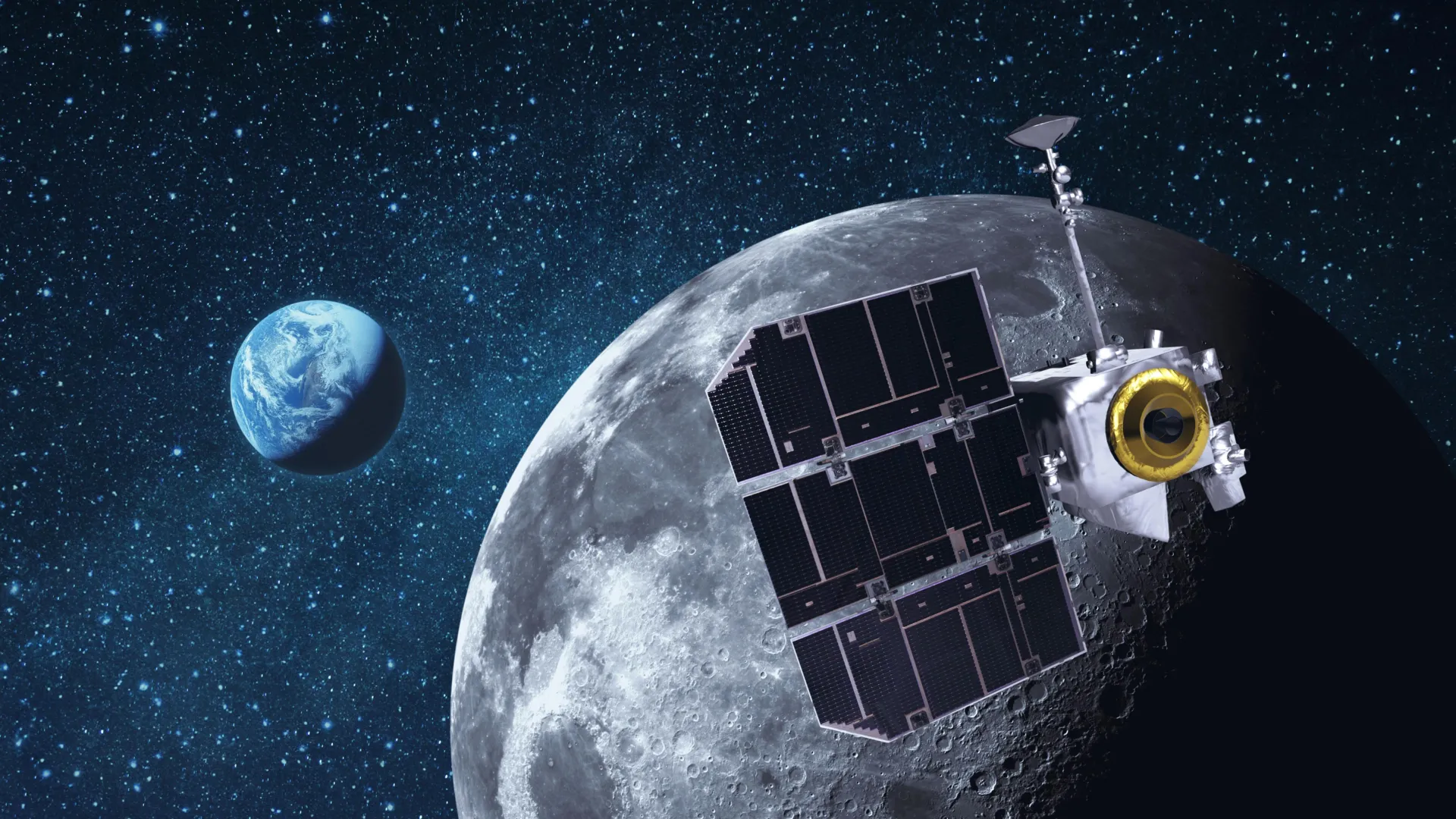
Scientists at Tokyo Metropolitan University have demonstrated through detailed simulations that a lightweight X-ray telescope could finally provide something researchers have long sought: a complete chemical map of the Moon's surface. Their modeling shows that a compact telescope orbiting the Moon could identify five key elements across the entire lunar surface in approximately two years, potentially revolutionizing our understanding of how the Moon formed and evolved over billions of years.
The breakthrough addresses a significant gap in lunar science. While previous missions like Apollo and Chandrayaan have produced useful partial maps of lunar surface chemistry, scientists have never possessed a complete global view of the Moon's elemental composition. Creating such comprehensive maps has proven technically challenging due to limited mission duration, detector degradation during extended space exposure, and particularly weak X-ray signals near the lunar poles where solar illumination is reduced.
The research team's approach centers on X-ray fluorescence imaging, a remote sensing technique that detects X-rays emitted by specific elements after they are struck by solar radiation. The signals can reveal which elements are present across different regions of the surface without requiring physical sample collection. However, the method depends on sufficient solar X-ray intensity, which has limited previous mapping efforts to periods of strong solar activity and certain geographic regions.
To overcome these limitations, the researchers propose using a compact X-ray telescope originally designed for studying Earth's magnetosphere. Weighing less than ten kilograms, the instrument is significantly smaller and lighter than traditional X-ray telescopes, making it practical for long-term lunar orbital missions. The detector has been tested in radiation conditions harsher than those expected in lunar orbit, suggesting it could maintain performance during extended operations.
The team's simulations incorporated realistic mission parameters, including 300 solar flares per year and a single telescope aboard a Moon-orbiting satellite. Their results indicate that wide-area observations during strong solar flares could provide the X-ray illumination necessary to map oxygen, magnesium, aluminum, silicon, and iron across the entire lunar surface. A larger array of five detectors could produce higher-resolution maps and complete the work more quickly, offering flexibility in mission design depending on available resources and scientific priorities. The complete chemical maps could help scientists understand the Moon's formation history and guide future lunar exploration missions.