Compact X-Ray Telescope Could Create First Complete Chemical Map of Moon
Tokyo researchers show lightweight detector could identify key elements across entire lunar surface in two-year mission.
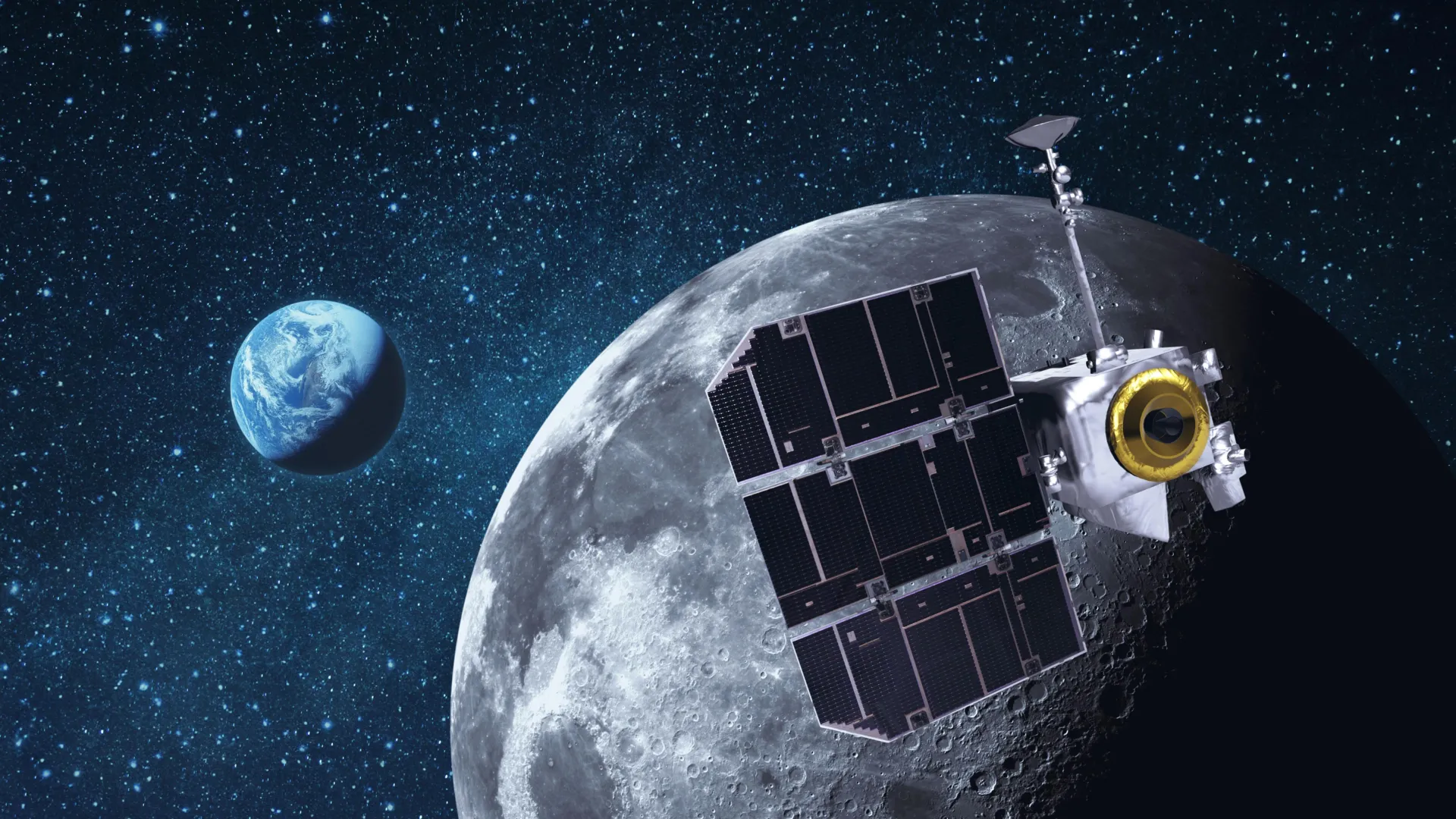
Scientists at Tokyo Metropolitan University have demonstrated through detailed simulations that a compact X-ray telescope could finally provide researchers with something they have never possessed: a comprehensive chemical map of the entire lunar surface. The lightweight detector, originally designed for studying Earth's magnetosphere and weighing less than ten kilograms, could revolutionize understanding of how the Moon formed and evolved over billions of years.
The research team, led by Airi Toida and Professor Yuichiro Ezoe, used sophisticated mission modeling that incorporated both the telescope's technical specifications and realistic orbital parameters for a Moon-orbiting satellite. Their simulations showed that a single telescope could map five critical elements across the lunar surface in approximately two years, while a larger array of detectors arranged in a five-by-five configuration could produce higher-resolution maps and complete the work more rapidly.
Creating a complete geochemical map of the Moon has remained elusive despite decades of lunar exploration missions. Previous observations from Apollo and Chandrayaan missions produced valuable but incomplete maps, leaving significant gaps in scientists' understanding of lunar composition. The challenge is particularly acute near the Moon's poles, where weaker solar X-ray illumination makes it difficult to collect the fluorescence signals needed to identify surface elements.
The proposed compact telescope addresses these technical challenges by taking advantage of solar flares, which provide intense X-ray illumination that can excite elements across the lunar surface. The detector has been tested under radiation conditions far harsher than those expected in lunar orbit, suggesting it could maintain performance throughout an extended mission. Its small size and proven durability make it practical for long-term lunar satellite observations.
The ability to map oxygen, silicon, aluminum, magnesium, and iron across the entire Moon would provide unprecedented insights into lunar geological processes. Such comprehensive data could help resolve fundamental questions about the Moon's formation, the distribution of water ice in polar regions, and the history of impact events that have shaped the lunar surface. The research represents a significant step toward making complete lunar chemical mapping technically and economically feasible.