Scientists Discover Ice Clouds on Giant Alien Planet Using James Webb Telescope
Unexpected water-ice clouds found on Jupiter-like exoplanet challenge atmospheric models and reveal new complexity in giant planet weather systems.
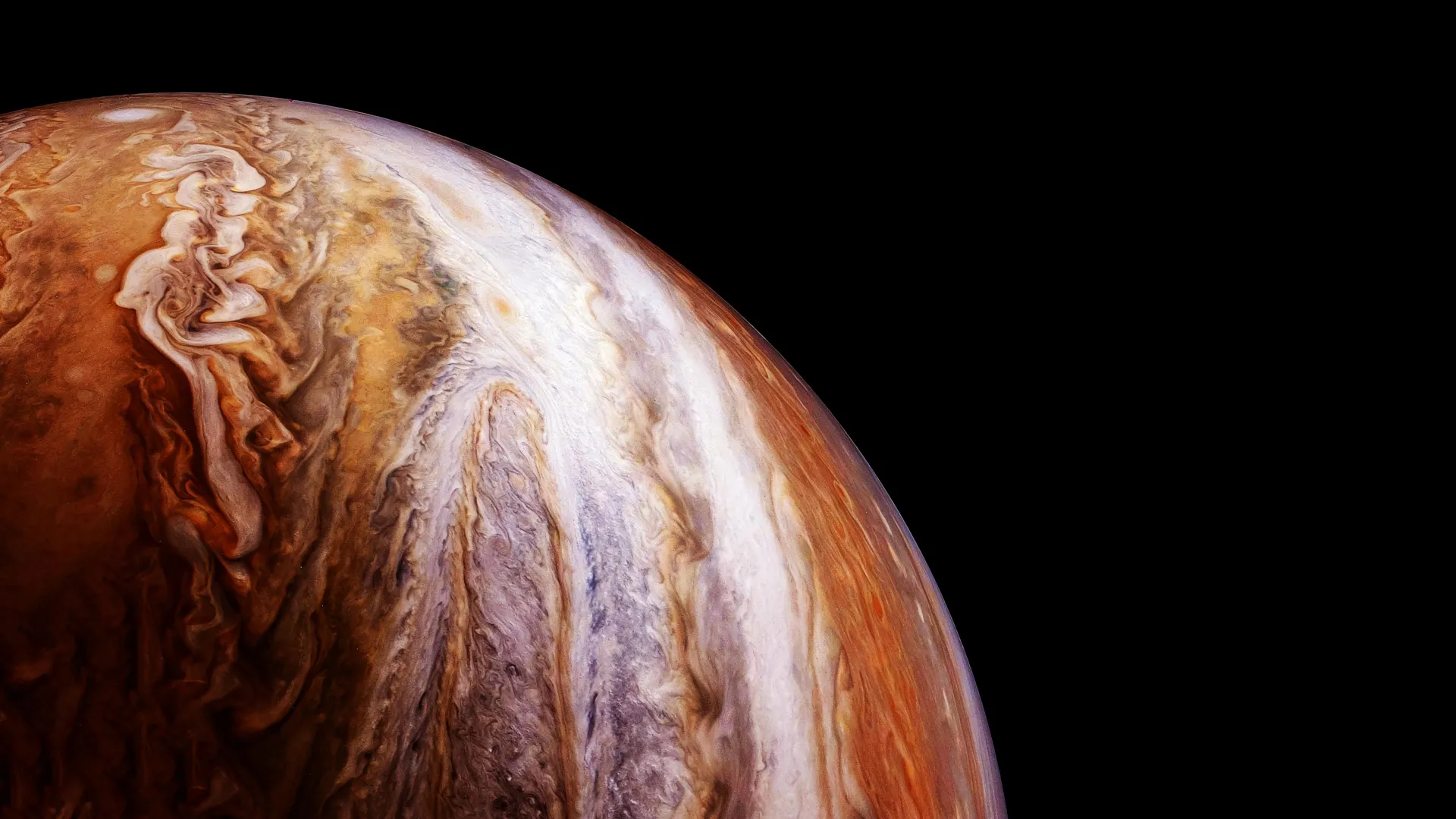
Astronomers have made a surprising discovery on a distant gas giant planet: water ice clouds that challenge existing models of exoplanet atmospheres. Using the James Webb Space Telescope, a team led by Elisabeth Matthews at the Max Planck Institute for Astronomy detected these unexpected features on Epsilon Indi Ab, a Jupiter-like world that appears far more complex than scientists anticipated. The finding marks an important advancement in the study of planetary atmospheres and brings researchers closer to eventually detecting signs of life on distant worlds.
The discovery represents a significant leap forward from earlier exoplanet research, which focused primarily on detecting new worlds rather than studying their atmospheric composition in detail. Since the James Webb Space Telescope began operations in 2022, astronomers have gained unprecedented ability to analyze exoplanet atmospheres, though most gas giants studied so far have been much hotter than Jupiter due to their proximity to their host stars. Epsilon Indi Ab offers a rare opportunity to study a true Jupiter analog in detail.
"JWST is finally allowing us to study solar-system analogue planets in detail," explained Matthews. "If we were aliens, several light years away, and looking back at the Sun, JWST is the first telescope that would allow us to study Jupiter in detail." The planet, located in the constellation Indus, has a mass 7.6 times greater than Jupiter but maintains approximately the same diameter, creating unique atmospheric conditions not found in our solar system.
Using JWST's mid-infrared instrument MIRI, the team directly imaged Epsilon Indi Ab and analyzed its atmospheric composition. They found significantly less ammonia than atmospheric models predicted, likely because thick, patchy ice clouds are hiding the gas from detection. This discovery reveals that even well-established theories about giant planet atmospheres may need revision when applied to the diverse range of exoplanets throughout the galaxy.
The research has implications extending far beyond a single planet, as it demonstrates the complexity astronomers will encounter as they work toward the ultimate goal of detecting signs of life on Earth-like exoplanets. While current technology allows detailed study of giant planets like Epsilon Indi Ab, detecting and analyzing truly Earth-like worlds will require even more advanced telescopes. The unexpected ice clouds serve as a reminder that planetary atmospheres can harbor surprises that fundamentally challenge our understanding of how worlds beyond our solar system operate.