JWST Maps Weather Patterns on Hot Gas Giant 700 Light-Years Away
James Webb Space Telescope provides unprecedented view of atmospheric conditions on distant exoplanet.
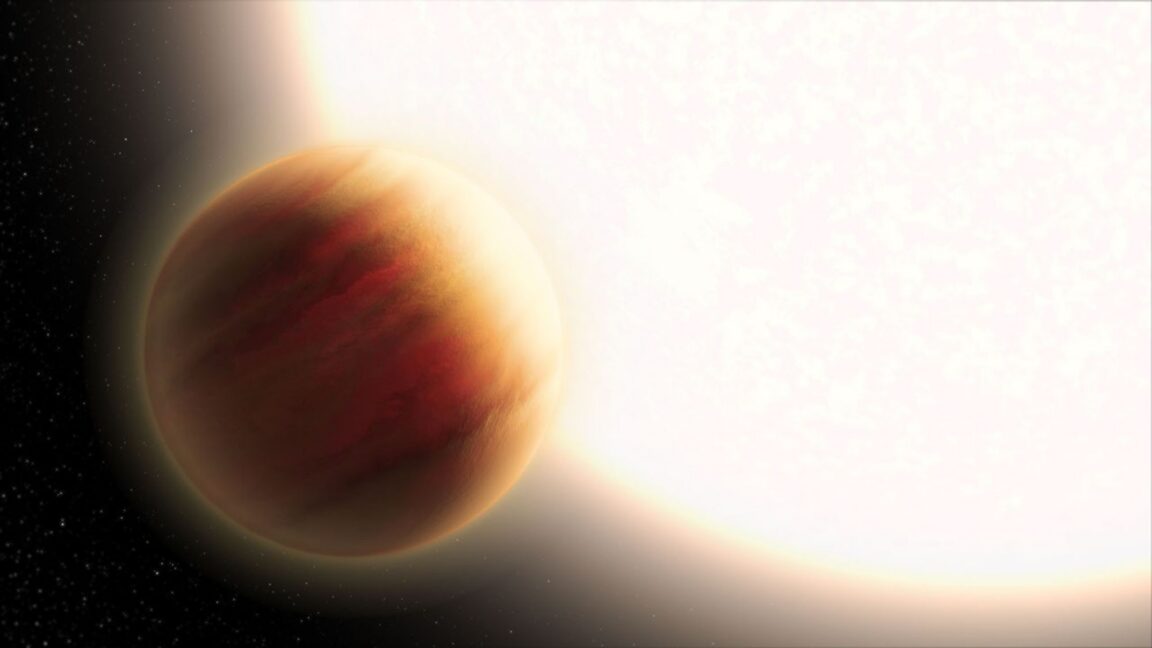
The James Webb Space Telescope has successfully mapped weather patterns on a hot gas giant located 700 light-years from Earth, providing scientists with an unprecedented view of atmospheric conditions on a distant exoplanet. The observations represent a significant advance in humanity's ability to study alien worlds and understand the complex atmospheric dynamics that govern planets beyond our solar system.
The telescope's advanced infrared capabilities allowed researchers to detect temperature variations and atmospheric circulation patterns across the exoplanet's surface. These measurements provide insights into how heat moves through the planet's atmosphere and how weather systems develop on worlds with conditions vastly different from Earth.
Hot gas giants like the one studied orbit very close to their host stars, resulting in extreme temperatures and intense radiation exposure. The proximity to their stellar companions creates unique atmospheric conditions, including powerful winds and dramatic temperature gradients between the day and night sides of these tidally locked worlds.
The successful weather mapping demonstrates JWST's remarkable precision and sensitivity, confirming the telescope's ability to study exoplanetary atmospheres in detail previously impossible from Earth-based observations. The data collected will help scientists better understand planetary formation and evolution processes, particularly how gas giant atmospheres behave under extreme conditions.
This research represents a crucial step toward eventually studying smaller, potentially habitable worlds that might harbor conditions suitable for life. As JWST continues its observations, scientists expect to map weather patterns on increasingly diverse types of exoplanets, building a comprehensive understanding of atmospheric physics across the galaxy and expanding our knowledge of planetary systems beyond our own.