Webb Telescope Finds 'Impossible' Atmosphere on Lava World That Should Have None
An ancient super-Earth so hot its surface is molten rock turned out to be 1,700°F cooler than expected — evidence of a thick volatile-rich atmosphere defying everything scientists thought they knew about planet evolution.

NASA's James Webb Space Telescope has detected compelling evidence of a thick atmosphere surrounding an ultra-hot ancient super-Earth called TOI-561 b — a finding that defies the current scientific understanding of which rocky planets can retain an atmosphere and for how long. Published in The Astrophysical Journal Letters in March 2026, the discovery upends assumptions that have guided the search for habitable worlds and raises new questions about planet evolution around the universe's oldest stars.
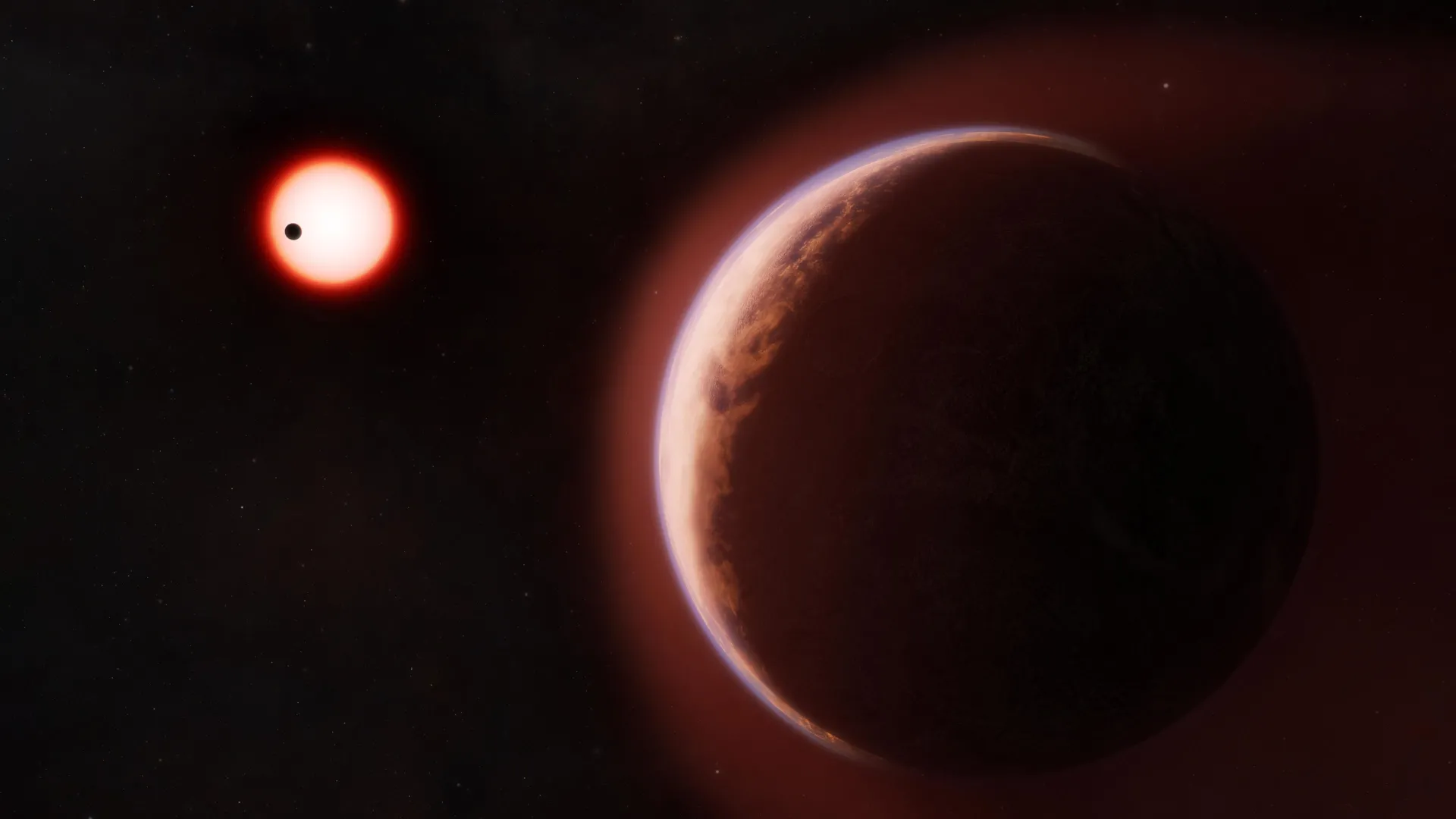
TOI-561 b is what astronomers call a "super-Earth" — a rocky planet roughly twice Earth's mass and 1.4 times Earth's radius. It orbits its host star at a distance just one-fortieth that of Mercury from our Sun, completing a full year in 10.56 hours. Its star is an ancient, iron-poor body in the Milky Way's thick disk, approximately twice as old as the Sun. The planet's dayside is permanently bathed in searing radiation; its surface is almost certainly a global ocean of molten rock at temperatures exceeding 2,700°C. Under every established rule of planetary science, a body this hot, this small, and this old should have lost any primordial atmosphere billions of years ago to stellar radiation stripping and geological outgassing.
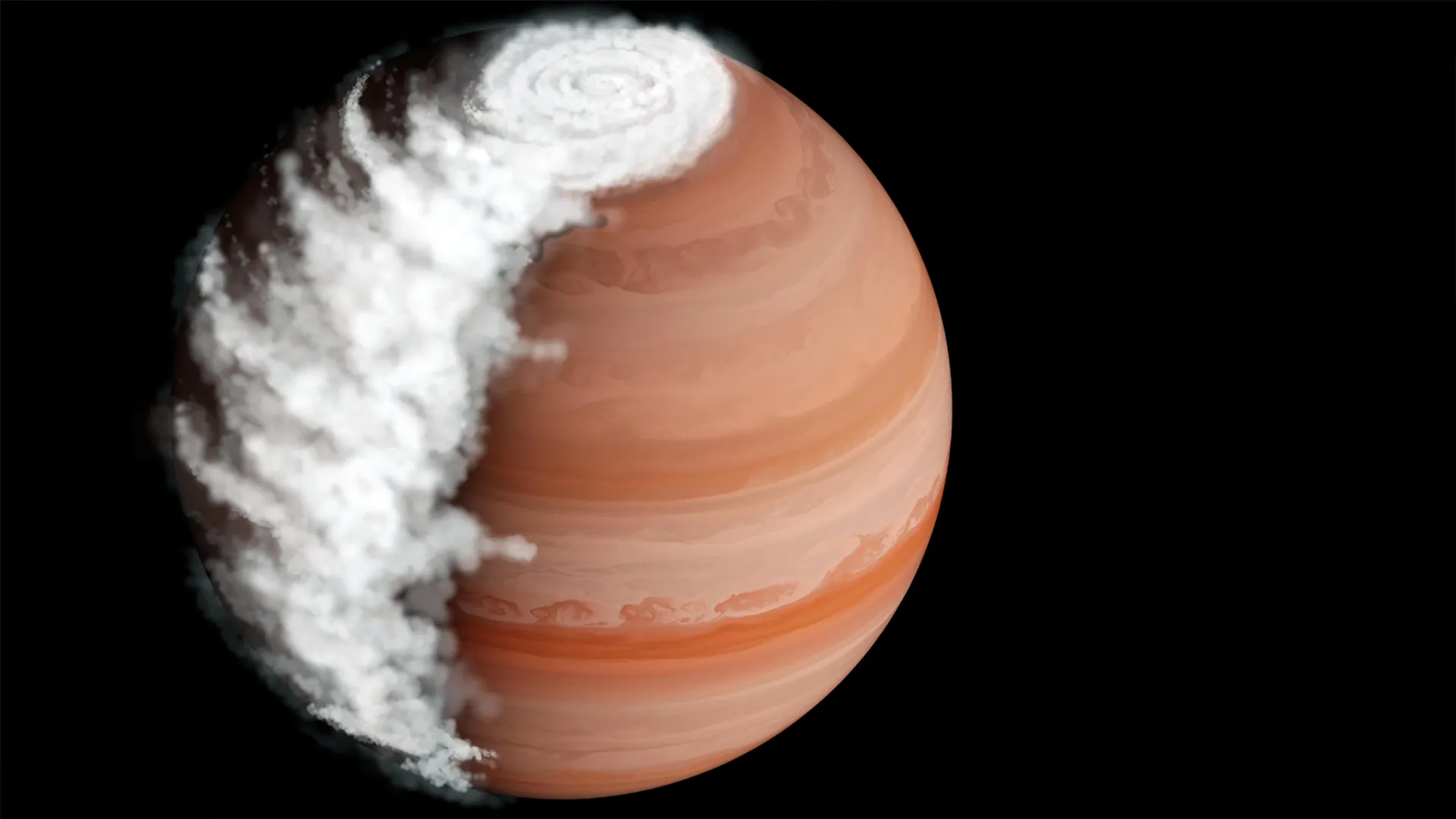
Yet Webb's NIRSpec spectrograph, staring at the system for more than 37 continuous hours in May 2024, found the dayside of TOI-561 b approximately 1,700°F cooler than a bare rock body would be. A bare-rock dayside at this orbit would reach roughly 4,900°F. The planet measured closer to 3,200°F. That 1,700-degree gap is what a thick atmosphere, with powerful winds transporting heat from the blazing dayside to the dark nightside, would produce. "We really need a thick volatile-rich atmosphere to explain all the observations," said Anjali Piette of the University of Birmingham, a co-author. "Strong winds would cool the dayside by transporting heat."
The atmosphere's composition, as the team models it, is likely rich in water vapor, carbon dioxide, and silicate clouds — materials that would be released by and recycled through the magma ocean below. The planet's measured density is also unusually low for a body of its size, suggesting it contains significantly more volatile material — water, carbon compounds — than an Earth-like rocky composition would predict. Lead author Johanna Teske of Carnegie Science's Earth and Planets Laboratory described the planet as likely a "wet lava ball," where the magma ocean continuously replenishes the atmosphere from below, creating a dynamic equilibrium that persists over geological timescales despite the punishing stellar environment.
The finding has broad implications for the search for potentially habitable worlds. Current planet detection surveys identify thousands of rocky planets, but astronomers have generally assumed that only planets in cooler, more temperate orbits could maintain atmospheres over billions of years. TOI-561 b demonstrates that some rocky planets around ancient stars may have held onto substantial atmospheres through mechanisms not previously appreciated, expanding the range of conditions under which atmospheric studies are scientifically productive. "What's really exciting is that this new data set is opening up even more questions than it's answering," Teske said. The James Webb Space Telescope, now in its fourth year of science operations, continues to challenge textbook assumptions about planets with nearly every new dataset it delivers.