NASA's Four-Person Mars Simulation Crew Emerges After More Than a Year Sealed Inside
The CHAPEA volunteers grew crops, rationed supplies, rehearsed spacewalks and worked through communication delays; NASA says the lessons will shape Moon and Mars planning.
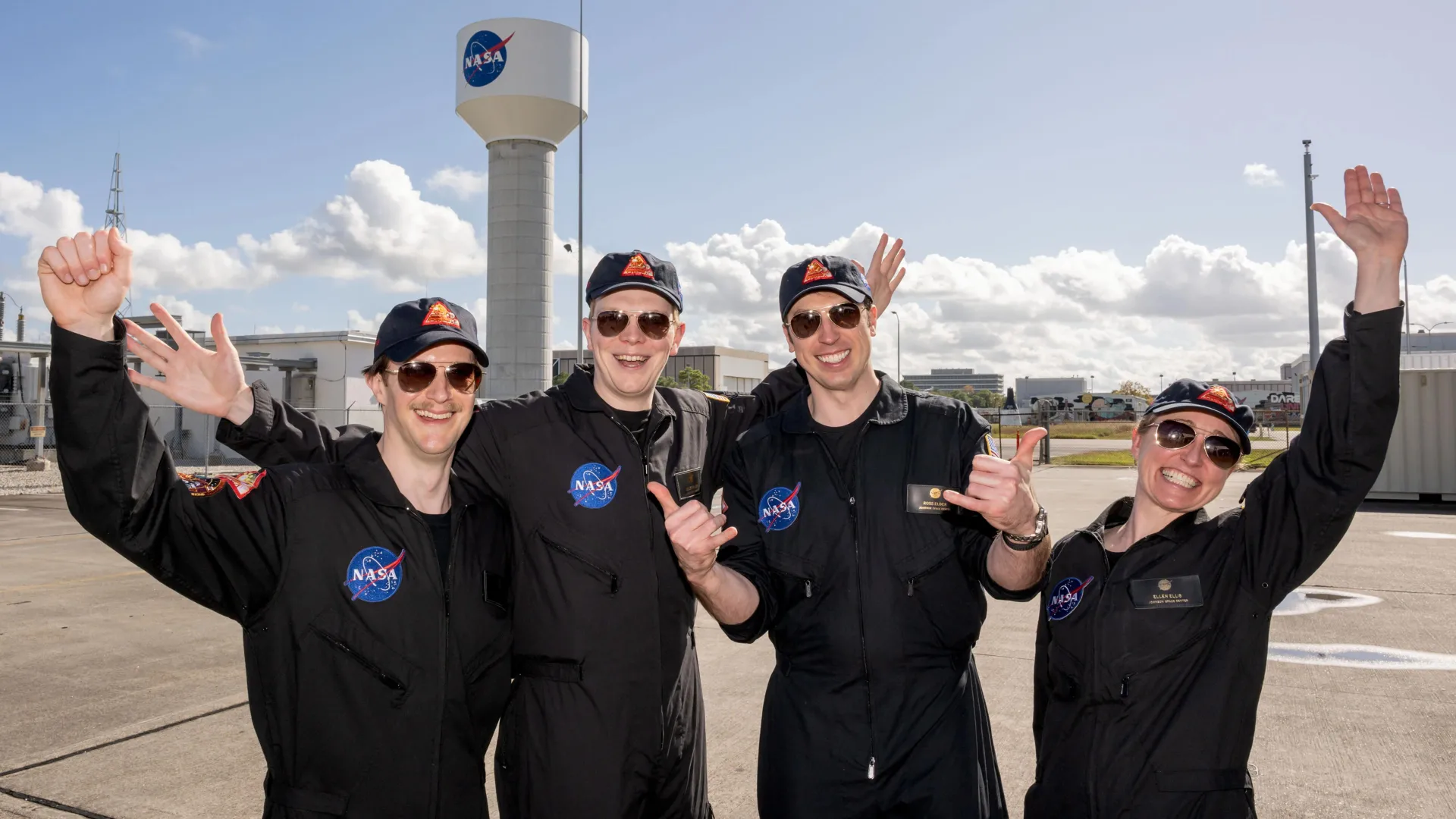
Four NASA volunteers walked out of a simulated Mars habitat on Oct. 31, ending a mission that kept them in isolation for more than a year. They never left Earth, but the experiment was built to recreate the pressures astronauts will face living and working millions of miles from home.
The crew members are Matthew Montgomery, James Spicer, Ross Elder and Ellen Ellis. Their stay was part of NASA's CHAPEA program, an analog mission, which is a realistic simulation that reproduces selected conditions of spaceflight so scientists can study how people respond in a controlled setting.
Throughout the mission the volunteers performed the kind of tasks a Mars crew would. They operated and tested essential systems, cared for crops, conserved limited supplies and carried out extravehicular activities, the simulated spacewalks that astronauts perform outside a habitat. Researchers use those exercises to examine how crews might prepare for and carry out work beyond the safety of their living quarters.
The crew also had to manage communication delays. Astronauts on the International Space Station can talk to Earth almost instantly, but radio signals take far longer to cross the distance to Mars. That means a Mars crew cannot always count on immediate guidance from mission control. The volunteers had to solve problems, make decisions and handle unexpected situations on their own.
One of the biggest hurdles of sending people to Mars is keeping them healthy, productive and safe through long stretches away from Earth. A crew has to manage food, equipment, living conditions and daily responsibilities while sharing a confined space, and the way a team holds together under those conditions is as important as the hardware.
NASA says CHAPEA gives it a chance to study the practical demands of extended missions. The program looks at resource limits, equipment maintenance, food production and communication delays, all problems that cannot be fully tested on a short flight or in a laboratory.
The agency says the experiences of Montgomery, Spicer, Elder and Ellis will help it plan future human exploration. The lessons are expected to inform the development of NASA's planned Moon Base and preparations for eventual crewed expeditions to Mars.
Analog missions like this one are a cheap way to find problems before real crews are in danger. A failing watering system or a strained crew dynamic in a simulation costs time. The same failure in deep space could cost lives. Finishing more than a year of this kind of isolation gives NASA a long stretch of data on both.