275-Million-Year-Old Animal Had Twisted Jaw Unlike Anything Alive Today
Tanyka amnicola, discovered in Brazilian riverbed, was a 'living fossil' even in its own time with unique sideways-pointing teeth for grinding plants.
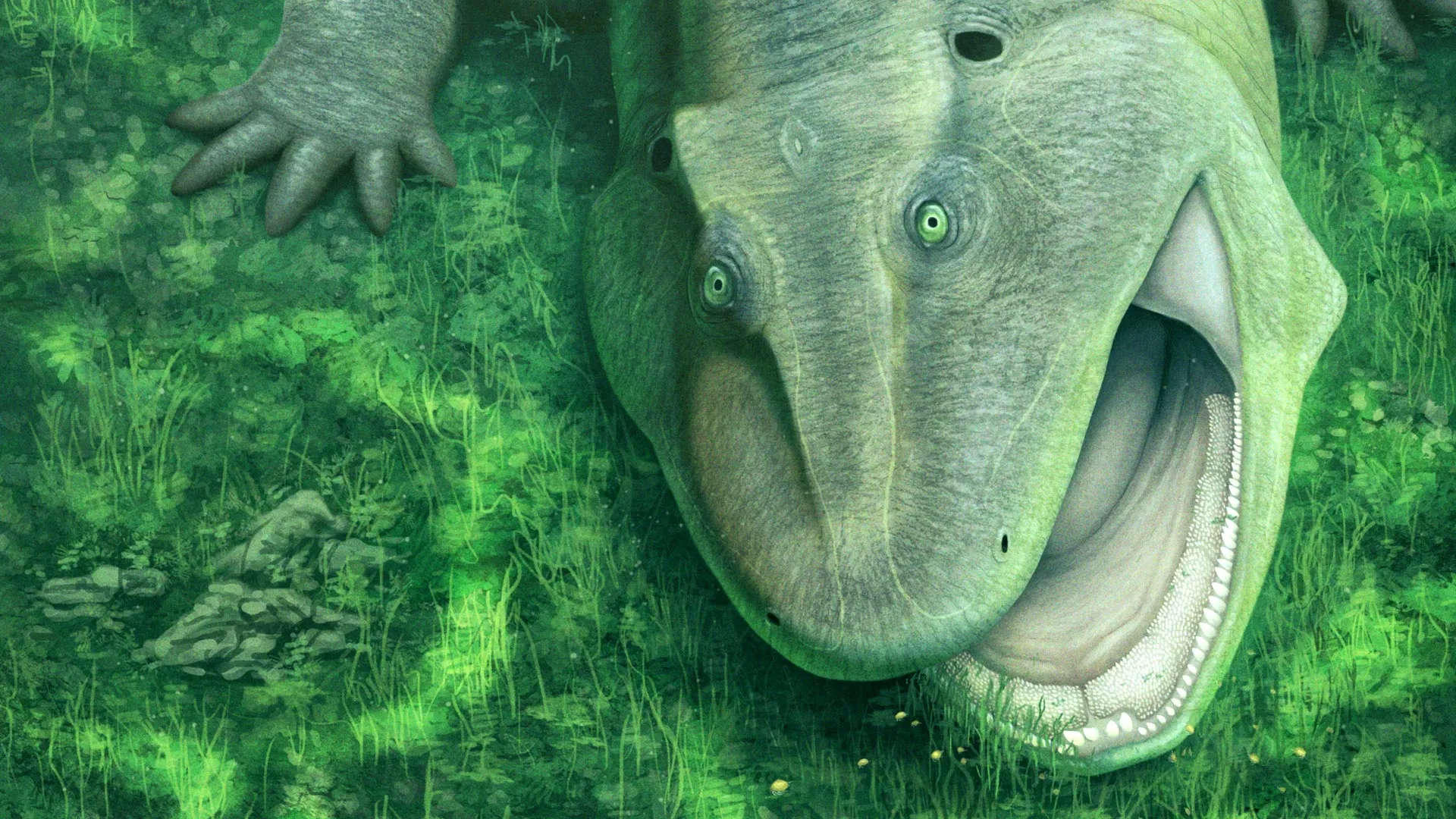
Paleontologists working in a dried riverbed near the Amazon in Brazil have discovered fossils from a bizarre ancient animal with a twisted jaw unlike anything seen in the modern world. The creature, named Tanyka amnicola and dating back 275 million years, possessed a highly unusual jaw structure that would have made it a "living fossil" even during its own era.
The research team, led by Jason Pardo from the Field Museum in Chicago, initially found a single fossilized jawbone about six inches long before uncovering eight additional similar specimens. Despite the absence of complete skeletal remains, these jaw fossils revealed extraordinary details about an animal that defied conventional understanding of ancient vertebrate anatomy.
The most striking feature of Tanyka was its twisted jaw configuration, where some teeth pointed outward and sideways while rows of smaller teeth lined the inner surfaces. This peculiar arrangement initially puzzled researchers, who spent years trying to determine whether the distortion was caused by fossilization processes or represented the animal's actual anatomy. After examining nine separate jaw specimens, including exceptionally well-preserved examples, scientists confirmed that the twisted structure was indeed natural.
Tanyka belonged to the stem tetrapods, an ancient group that existed before the major evolutionary split that led to modern reptiles, birds, mammals, and amphibians. The creature's survival until 275 million years ago was remarkable, as most of its lineage had already been replaced by more advanced tetrapod groups. Pardo compared Tanyka to the modern platypus, noting that both represent evolutionary holdovers that retained primitive characteristics long after their relatives had evolved more advanced features.
The unique jaw structure suggests that Tanyka may have been among the earliest vertebrates capable of grinding plant material, representing a significant innovation in feeding strategies. The discovery, published in Proceedings of the Royal Society B, provides valuable insights into the diversity of ancient ecosystems and demonstrates that even well-studied evolutionary periods can yield surprising new discoveries. Much about Tanyka remains unknown, including its full body structure and exact ecological role, leaving ample opportunities for future research into this enigmatic ancient creature.