A Fossil Bed in Canada's Mackenzie Mountains Pushes the Dawn of Animal Life Back 10 Million Years
More than 100 specimens dated to 567 million years ago include six groups never before found in North America, and evidence that early animals moved, reproduced sexually and built recognizable body plans earlier than thought.
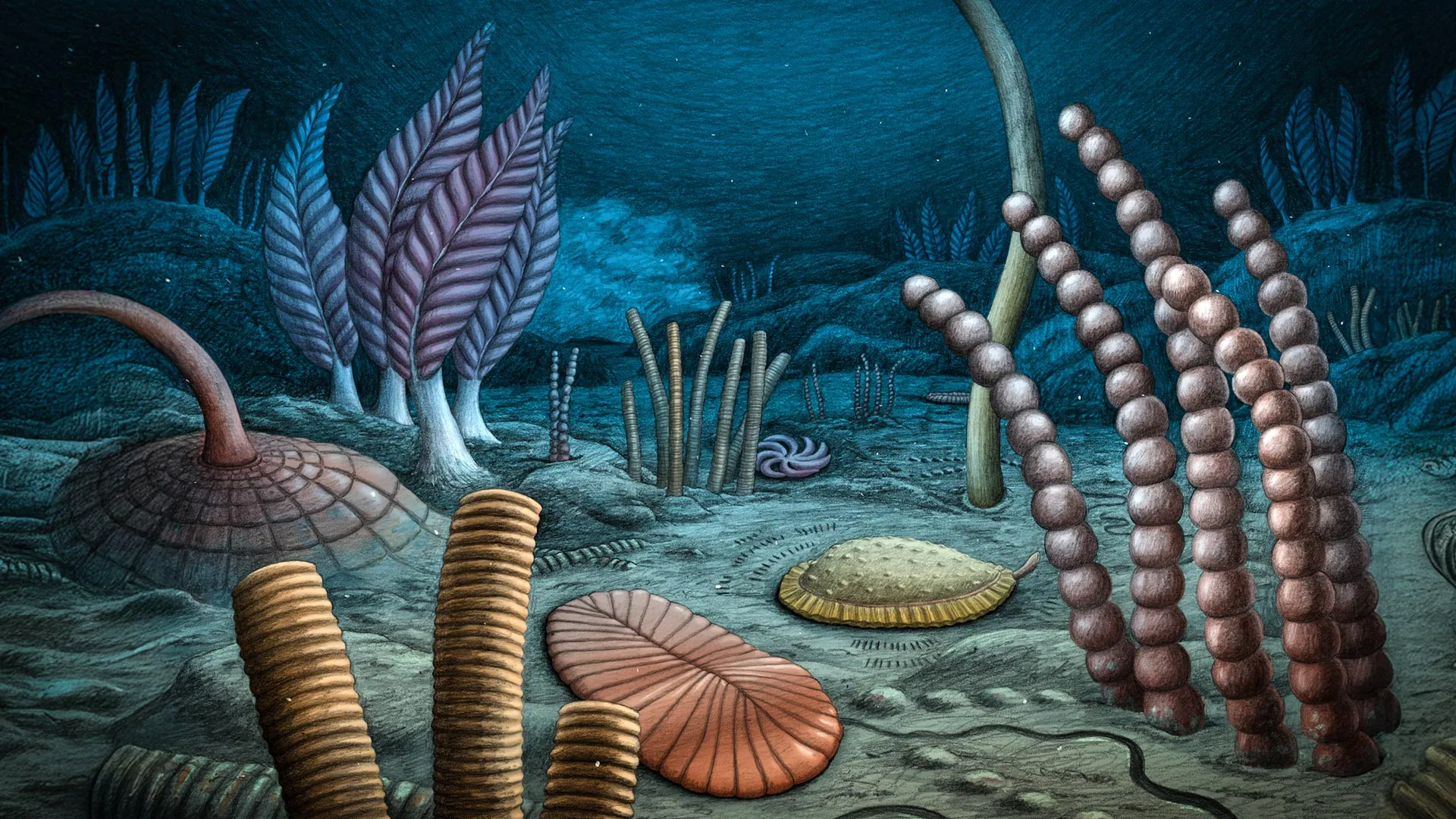
A fossil site high in the Mackenzie Mountains of Canada's Northwest Territories has produced more than 100 specimens of the earliest known animals, dated to roughly 567 million years ago — pushing several milestones in the origin of animal life back by five to ten million years.
The research, published in Science Advances this month, was led by Scott Evans, assistant curator of invertebrate paleontology at the American Museum of Natural History, with colleagues from Dartmouth, Stanford and Penn State. The site sits on traditional Sahtú Dene and Métis lands, and the specimens will eventually be housed at the Prince of Wales Northern Heritage Centre.
The fossils belong to the Ediacaran, the geological period immediately preceding the Cambrian explosion. Ediacaran organisms are strange even by the standards of deep time — mostly soft-bodied, often frond-like or quilted, and hard to place on the modern tree of life. The Mackenzie assemblage includes six groups never before documented anywhere in North America, among them Dickinsonia, the flat oval organism that left trails showing it moved across the seafloor; Funisia, which appears to have reproduced sexually; Kimberella, thought to have grazed on microbial mats using something like a mouth; and Eoandromeda, an eight-armed spiral form.
"We get these strange-looking marine animals big enough to see and capable of behaviors we would find familiar today," Evans said. That combination — visible size, self-directed movement, sexual reproduction, differentiated body plans — is the package that makes something recognizably animal rather than a colony of cells. Finding all of it at 567 million years ago means each of those innovations was in place earlier than the previous fossil record established.
The location carries a second implication that may matter more than the dates. Most well-known Ediacaran sites — in South Australia, the White Sea coast of Russia, and Newfoundland — record shallow-water or slope environments. The Mackenzie Mountains rocks were laid down in deep water. Finding this full a cast of characters in a deep-water setting suggests early animal innovation may have begun in the deep ocean and spread toward shallower coastal waters afterward. That is the reverse of the pattern seen in later evolutionary radiations, where shallow, sunlit, resource-rich margins are typically the engines and the deep sea the recipient.
Ediacaran assemblages this rich are rare because the animals had no shells or skeletons; preservation requires unusual conditions, typically rapid burial under fine sediment in low-oxygen water that prevents scavenging and decay. Sites that meet those conditions and are also accessible, well-dated and stratigraphically constrained can be counted on two hands. Adding a deep-water one in northern Canada, with six groups new to the continent, gives paleontologists a geographic and environmental comparison point the record has been missing.
Originally reported by ScienceDaily.