Tyrannosaur Fossil Reveals 75-Million-Year-Old Cannibalistic Feeding Behavior
High-resolution 3D scans of bite marks on massive foot bone show smaller tyrannosaur scavenged remains of much larger relative.
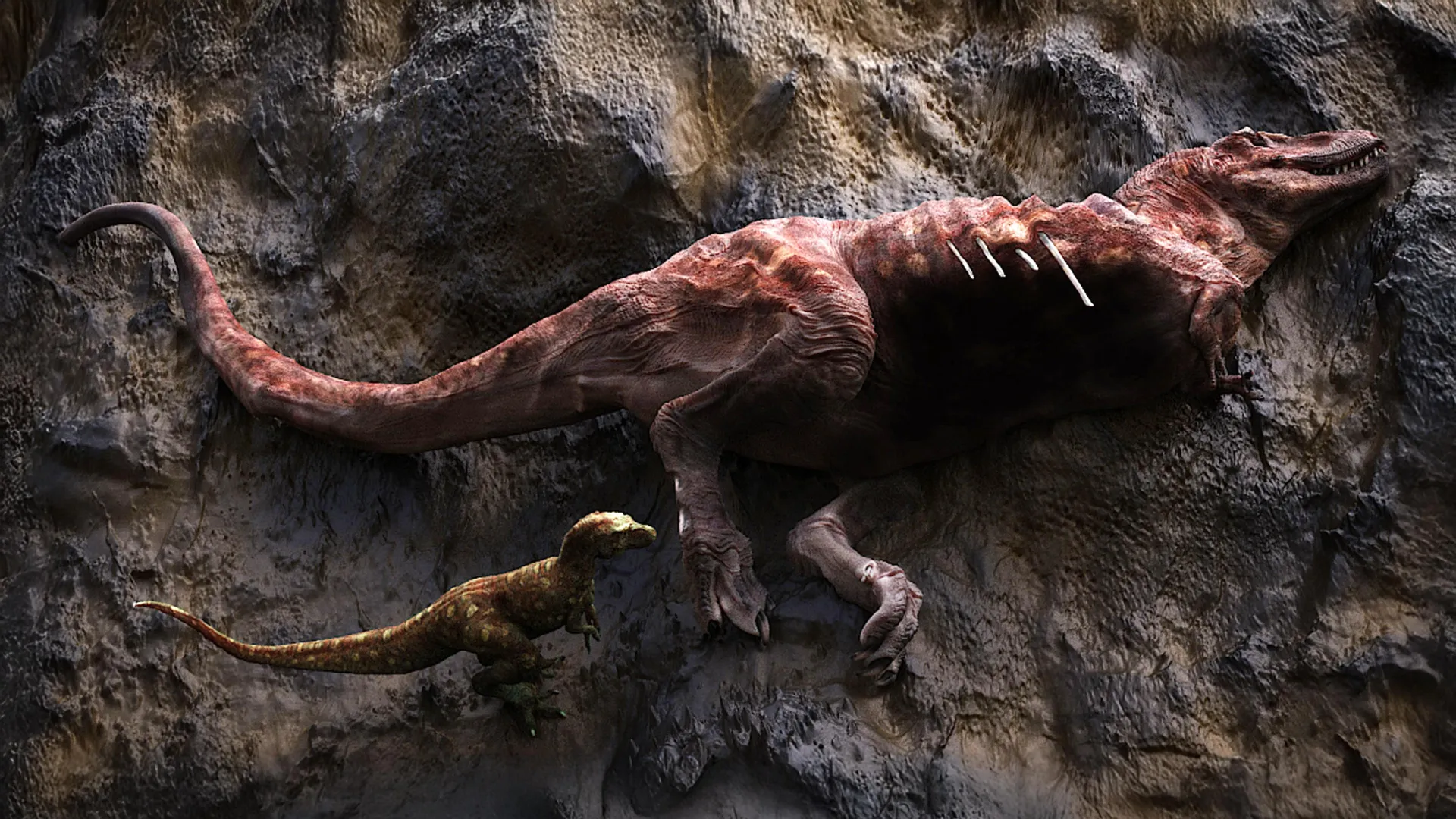
A 75-million-year-old tyrannosaur fossil has revealed shocking evidence of cannibalistic behavior among these apex predators, challenging traditional views of how these fearsome dinosaurs obtained food. Using cutting-edge 3D scanning technology, researchers at Aarhus University identified 16 distinct bite marks on a massive tyrannosaur foot bone, providing the first detailed evidence that smaller tyrannosaurs scavenged the remains of their larger relatives. The discovery offers unprecedented insight into the opportunistic feeding strategies that helped these predators survive in ancient ecosystems.
Josephine Nielsen, a Master's student in geoscience who led the research published in Evolving Earth, used advanced digital modeling techniques to analyze a fossilized metatarsal measuring 10 centimeters in length. The bone belonged to a tyrannosaur that likely reached 10-12 meters in length and weighed several tons during its lifetime. Nielsen's meticulous analysis of the bite marks' depth, angle, and placement in a virtual 3D environment revealed they were not random damage but precise feeding behavior from a smaller tyrannosaur that systematically consumed the remains.
The bite marks tell a grim story of ancient scavenging behavior that extended well beyond typical predator-prey relationships. 'The bone shows no signs of healing after the smaller dinosaur bites into it,' Nielsen explains. 'Since the marks are located on the foot, where there is very little meat, it suggests that the dinosaur was 'cleaning up' and eating the last remains of an old carcass.' This indicates that tyrannosaurs were thorough scavengers who left nothing to waste, consuming even tough bones with minimal nutritional value late in the decay process.
The fossil, discovered by an amateur collector in Montana's Judith River Formation and now housed at the Badlands Dinosaur Museum in North Dakota, represents a 75-million-year-old ecosystem where tyrannosaurs demonstrated remarkable adaptability in their feeding strategies. Rather than being solely active hunters, these predators clearly took advantage of available carrion, including the remains of their own species. The systematic nature of the bite marks suggests this was not unusual behavior but rather a common survival strategy in environments where food sources could be unpredictable.
The research methodology represents a breakthrough in paleontological analysis, demonstrating how digital technology can unlock secrets from ancient fossils without risking damage to irreplaceable specimens. Nielsen worked with digital models and 3D-printed replicas rather than the original fossil, using the systematic CM (Category-Modifier) classification system to objectively categorize each bite mark. This approach, which Nielsen describes as 'solving an ancient murder mystery,' provides a new template for analyzing predator behavior in deep time and could reveal similar evidence of complex feeding strategies in other extinct species.