Supreme Court Agrees to Decide Whether Immigrants Get Bond Hearings Before Detention
The justices take up Trump's policy of holding anyone who entered illegally without a hearing, a fight the ACLU says could affect millions of people.

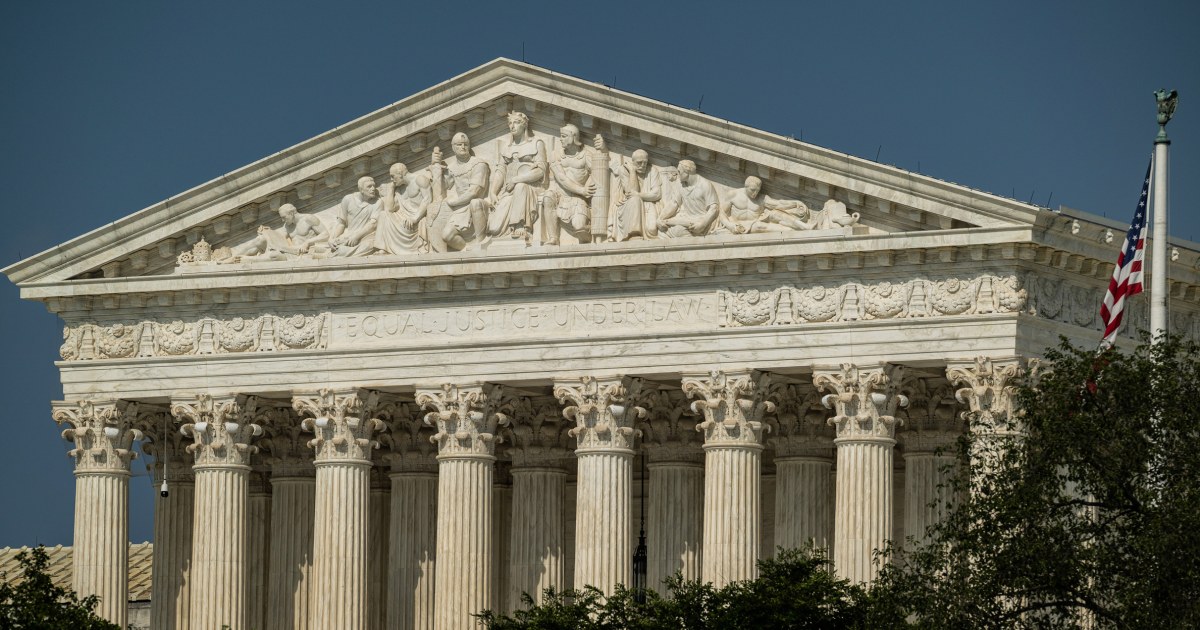
The Supreme Court agreed Thursday to decide whether immigrants who have lived in the United States for years have a right to a bond hearing before being locked up while they fight deportation, taking up a central piece of President Donald Trump's immigration crackdown.
The justices granted review in the case of Ricardo Aparecido Barbosa da Cunha, a Brazilian citizen who entered the country illegally about two decades ago and applied for asylum in 2016. He was arrested in September 2025 and denied a bond hearing. His attorneys say he has never been charged with a crime.
The administration contends that a 1996 immigration law requires mandatory detention of anyone who is present in the country without having been formally admitted, a reading that departs from the practice of earlier administrations. Under that approach, immigrants arrested anywhere in the United States can be held without any chance to ask a judge for release, regardless of how long they have lived here.
Lower courts have split. Most federal appeals courts have rejected the policy, while the 5th and 8th Circuits have backed it. The Justice Department cited that conflict in asking the Supreme Court to step in. "The result is an unworkable patchwork of inconsistent immigration enforcement, where aliens present without admission are subject to mandatory detention in some circuits but are entitled to bond hearings and often released in others," the government wrote.
Immigrant advocates say the stakes are enormous. Attorneys for the ACLU argued that "millions of noncitizens could be affected by the government's new interpretation." Detention without a hearing can last months or longer, and people held that way can lose jobs, housing and contact with family while their cases move through immigration court.
The Court did not set an argument date, but said it expects to hear the case in the coming months.
The grant follows a busy week of immigration rulings. On Tuesday, the Court voted 6-3 to let the administration resume rapid deportations to third countries without advance notice, and set arguments on that question for December. Justices Sonia Sotomayor, Elena Kagan and Ketanji Brown Jackson dissented, with Sotomayor warning that the order exposes "thousands to the risk of torture or death." Human rights groups estimate that about 25,000 people have been deported to third countries under Trump.
Together the two cases will let the Court weigh in on how the administration treats people both before and after an immigration judge decides their fate, as ICE detention numbers hover near record highs. The detention case could also affect how many beds, jails and warehouses the government needs to hold people while their cases are pending.