Seventeen Scientists Filed a Class Action Against the NIH Over a 235-Word Screening List That Flags 'Gender,' 'Latinx' and 'Climate Change.' Its Director Says He's 'Deeply Against Banned Word Lists.' His Own Agency Admitted Using Them in a Court Filing.
The ACLU-backed suit names Jay Bhattacharya, Robert F. Kennedy Jr. and DOGE. One plaintiff's Alzheimer's study was cut off mid-appointment. Another says she can no longer describe 15 years of work on sexual harassment in medicine without tripping the filter.
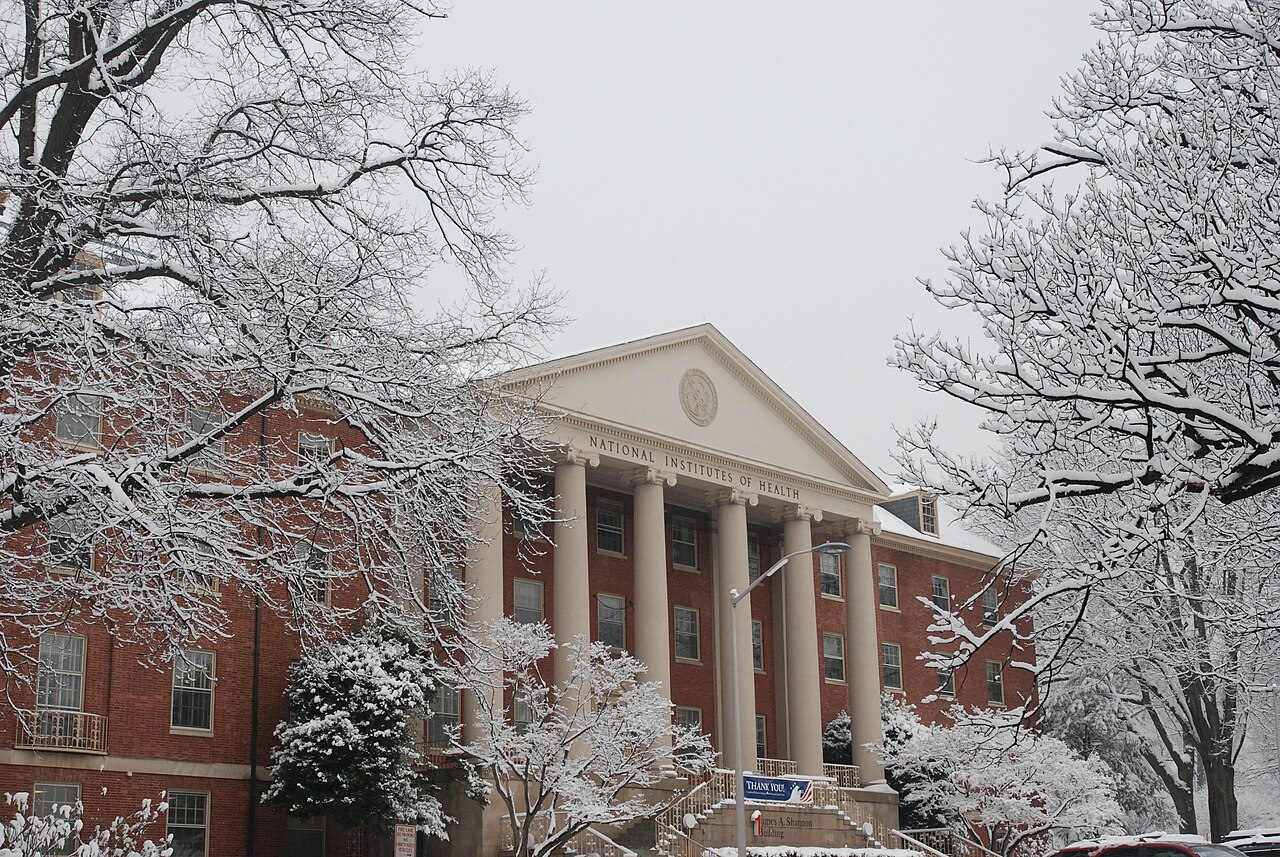
A group of researchers filed a class-action lawsuit on Wednesday accusing the National Institutes of Health of unconstitutionally screening grant applications and existing awards for words the Trump administration dislikes, then terminating, denying or forcing the rewrite of any project that trips the filter. The suit, filed in the U.S. District Court for the Northern District of California by 13 named and four anonymous scientists, names NIH Director Jay Bhattacharya, Health Secretary Robert F. Kennedy Jr. and the Department of Government Efficiency as defendants. It is backed by the American Civil Liberties Union, the ACLU of Northern California, Protect Democracy, the Center for Science in the Public Interest and Jacobson Lawyers Group.
At the center of the complaint is a list of 235 keywords the plaintiffs say the agency uses as proxies for disfavored viewpoints. The terms include "equity," "advancing diversity," "racist," "gender," "Latinx," "climate change" and "pregnant individual." According to the filing, grants and applications that contain them are either summarily cut or sent back for "renegotiation," a process NIH staff and grantees have used to describe demands that researchers scrub flagged language. Refuse, and the grant is terminated or the application stops advancing. In 2025, more than 700 grantees changed the titles of their projects to remove words such as "equity," "disparity" and "racism." The review has been aided by what the agency calls a "computational text analysis" tool.
Bhattacharya has repeatedly denied that any such list exists. "I am deeply against banned word lists. I don't believe in them. I will not have my institution embrace them," he told the conservative group PragerU in a July interview. That same month, in a stipulation filed in a separate case brought by University of California researchers, the NIH's head of extramural research wrote that "NIH used search terms, keywords, or phrases to identify and terminate grants presumed to express viewpoints, such as subjects and/or topics of the grant, that HHS-NIH no longer wished to subsidize." The agency said Wednesday it does not comment on pending litigation.
The plaintiffs describe concrete damage. Ann D. Cohen, an associate professor of psychiatry at the University of Pittsburgh, said losing funding for her Alzheimer's study forced her team "to abruptly cancel appointments for participants" in communities that had taken more than a decade to recruit. Jonathan Kyle Daw, a Penn State sociologist, lost a grant examining why patients of different racial and ethnic backgrounds experience kidney failure at different rates and receive different treatment. Arghavan Salles, a Stanford surgeon whose R01 on sexual harassment during medical training was terminated and never reinstated, said she now cannot accurately describe her own field. "I couldn't talk about my research on implicit bias or microaggressions or sexual harassment or belonging," she told STAT. "It's really hard to demonstrate that you're a leader in a field without being able to say any of the words that describe that field." Michael Green, a Johns Hopkins epidemiologist, was asked to strip "discrimination" and "Black" from a grant titled "Assessing the Impact of Discrimination in Healthcare on the Cardiovascular and Cognitive Health of Aging Black Adults." He has stopped applying to NIH.
This is the second round. When the administration terminated hundreds of grants en masse in early 2025, a federal judge ruled in June of that year that the process violated the Administrative Procedure Act and ordered many reinstated; the Supreme Court in August 2025 allowed $783 million in cuts to proceed anyway, and a federal appeals court found this May that the terminations likely violated the First Amendment. The agency then shifted from mass cancellations to language screening. "NIH supplemented the directives at issue in APHA with a series of additional directives, guidance, and policies that purported to replace the vacated directives, but in fact just continued the viewpoint-based purge of existing grants," said Olga Akselrod, a senior ACLU counsel who worked on both cases. "It's more of the same."
Because the case was filed as a class action, a ruling for the plaintiffs would cover every researcher whose grant was cut and not yet restored by court order, plus everyone currently facing termination, forced renegotiation, delay or denial under the screening policy. The suit argues the First Amendment bars the government from rejecting projects because of the views it expects them to express, and that federal statutes require public health grants to be awarded on scientific merit through the peer review process Congress established, not through an extra layer of ideological review layered on top. "To this day, I didn't get clarity on why my work was targeted," Green said. If the plaintiffs lose, he added, "the bottom falls out from under the NIH."
Originally reported by STAT News.