The House Voted 417-3 to Make Data Centers Over 100 Megawatts Pay for Their Own Grid Upgrades, Then Adjourned Until After the Midterms. States Only Have to 'Consider' It, and Have Two Years to Decide.
It is the first data center bill to pass the 119th Congress. The three no votes were progressives who wanted a moratorium. Nearly 70% of Americans don't want a data center near them, and the bill's Republican sponsor is in a toss-up race.
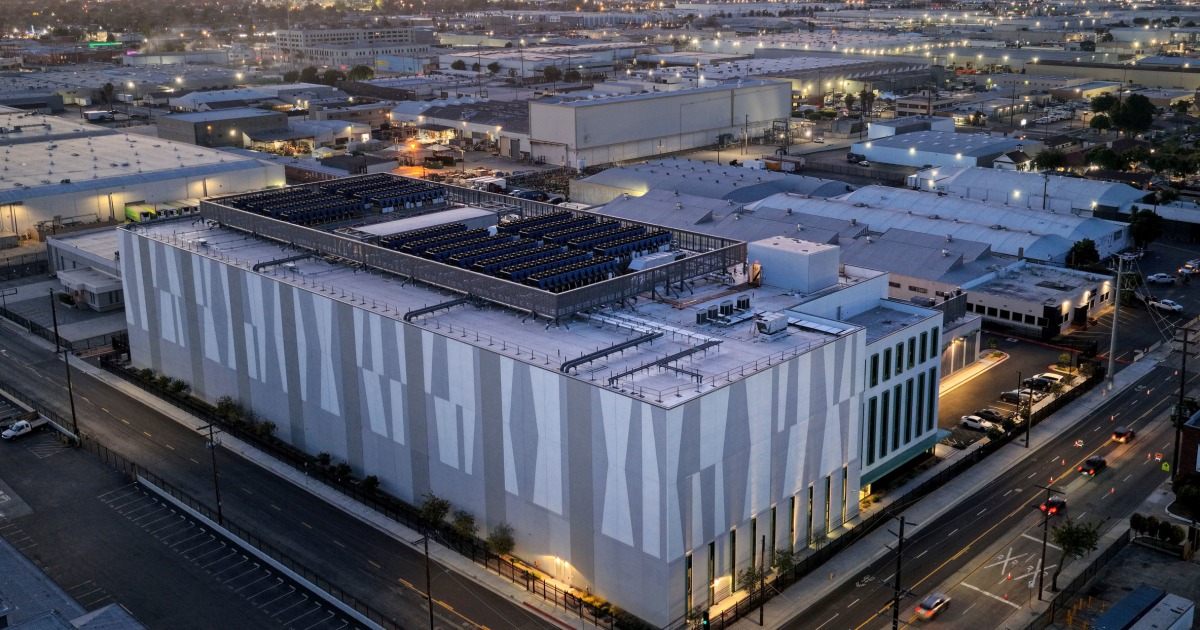
The House passed the Ratepayer Protection Act on Wednesday by a vote of 417 to 3, a nearly unanimous answer to the most potent local issue of the midterm campaign, and then Speaker Mike Johnson canceled Thursday's votes and sent members home until after November 3. It is the first bill related to data centers to clear either chamber in the 119th Congress, and by the admission of lawmakers in both parties, a modest one.
The bill, sponsored by Representatives Gabe Evans, a Colorado Republican, and Kathy Castor, a Florida Democrat, both members of the Energy and Commerce Committee, amends the 1978 Public Utility Regulatory Policies Act to create a federal standard for how utilities recover the cost of serving very large customers. Under that standard, any data center creating 100 megawatts or more of peak demand would pay "the full, incremental cost of any generation, transmission, or distribution upgrade necessary" to serve it, rather than spreading those costs across every household on the grid. Operators would also have to post financial assurances so that communities are not left with the bill if a project is canceled or relocated.
What the bill does not do is order anyone to adopt that standard. Because Congress cannot compel state utility regulation under PURPA, the measure requires state public utility commissions and nonregulated utilities only to "consider" the federal standard and reach a decision within two years. It sets no moratorium, no siting limits and no regulatory guidelines for the facilities themselves. GOP leaders brought it to the floor under suspension of the rules, a fast-track procedure that requires a two-thirds majority, and got it easily.
"Hardworking families should not have to subsidize the energy demands of data centers," Evans said after the vote. "America needs the infrastructure to lead the world in AI and outcompete Communist China, but we cannot have that growth at the expense of hardworking families, farmers, seniors, and small businesses." Evans, a first-term member, is one of the most vulnerable House Republicans of the cycle; the Cook Political Report rates his race against Democratic state Representative Manny Rutinel a toss-up, and he was among the at-risk members who pressed leadership for a data center vote before the recess.
The three no votes came from the left. Representative Rashida Tlaib of Michigan said the bill "fails to meaningfully protect our communities" and that "the strongest action Congress can take right now is to pass a national moratorium on data centers and enact a prohibition on federal lands." Representative Delia Ramirez of Illinois said her district "is demanding more than a bill that suggests states take action," adding that "many members are on the same page that the bill does not address the concerns of our constituents." Representative Summer Lee of Pennsylvania was the third. Most other Democrats voted yes while calling the bill weak.
The politics are not subtle. A recent NBC News Decision Desk Poll powered by SurveyMonkey found that nearly 70% of respondents oppose building AI data centers in their neighborhoods, with 45% strongly opposed. President Trump has fully backed the buildout as essential to beating China in artificial intelligence, but voters in swing districts have been organizing against specific projects, and campaigns have poured tens of millions of dollars into ads attacking them. Oil remains above $100 a barrel, and the cost of living is the top issue heading into the election, which makes electricity bills a proxy for everything else.
The bill was the only AI-related measure scheduled for a vote this week, even as more than 100 House Democrats urged Johnson to cancel the recess and take up safety legislation in response to warnings from former AI company employees. The Senate, which stays in session a few more weeks, has its own set of data center bills and has moved none of them. Whether the Ratepayer Protection Act gets a Senate vote, a conference or a quiet death in the lame-duck session is an open question. For now, the House has voted to tell the states to think about it.
Originally reported by NBC News.